
교과서 질문
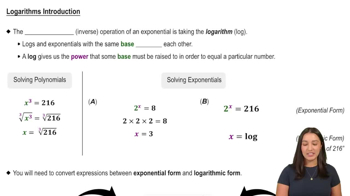
Solve each exponential equation in Exercises 1–22 by expressing each side as a power of the same base and then equating exponents. 2x=64
595
views

 검증된 단계별 안내
 7:30
7:30
 5:02
5:02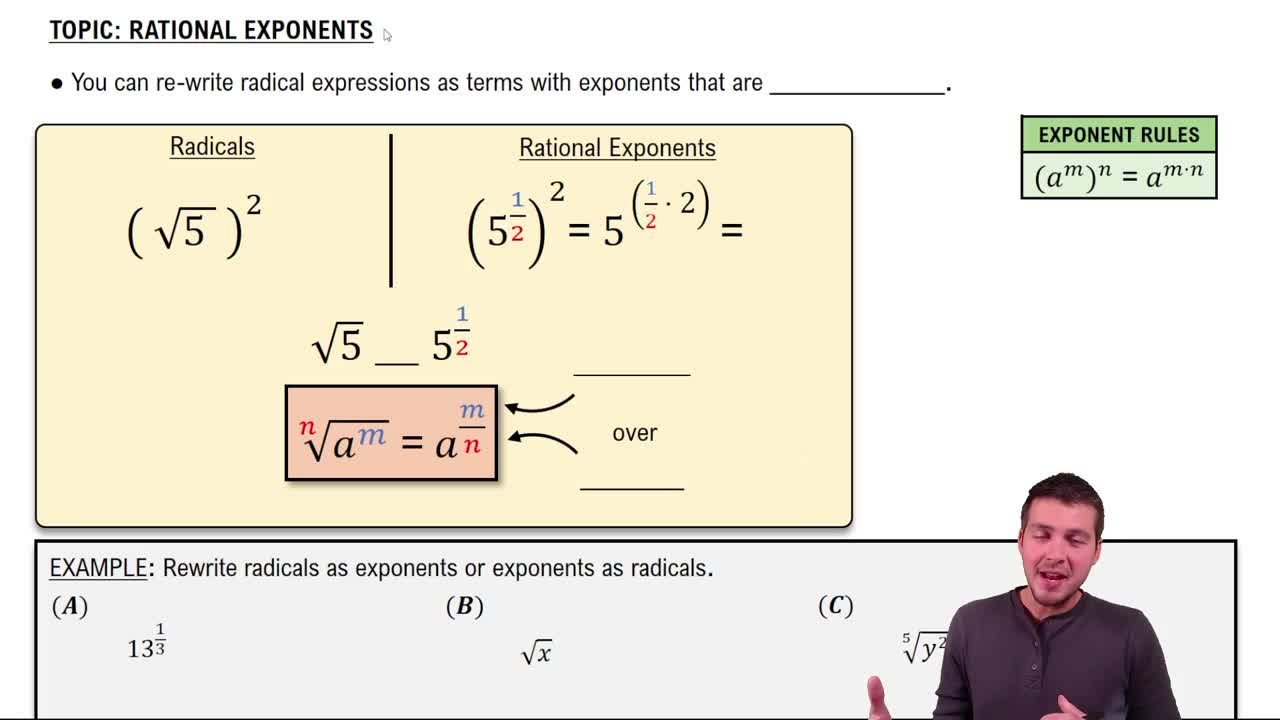 04:06
04:06Solve each exponential equation in Exercises 1–22 by expressing each side as a power of the same base and then equating exponents. 2x=64
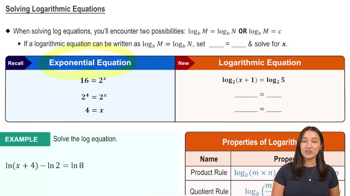
Use properties of logarithms to expand each logarithmic expression as much as possible. Where possible, evaluate logarithmic expressions without using a calculator. log5 (7 × 3)
Use properties of logarithms to expand each logarithmic expression as much as possible. Where possible, evaluate logarithmic expressions without using a calculator. log7 (7x)
In Exercises 1–10, approximate each number using a calculator. Round your answer to three decimal places. 23.4
The graph of an exponential function is given. Select the function for each graph from the following options: f(x) = 4x, g(x) = 4-x, h(x) = -4-x, r(x) = -4-x+3