
교과서 질문
Simplify each rational expression. Find all numbers that must be excluded from the domain of the simplified rational expression.
1480
views

 검증된 단계별 안내
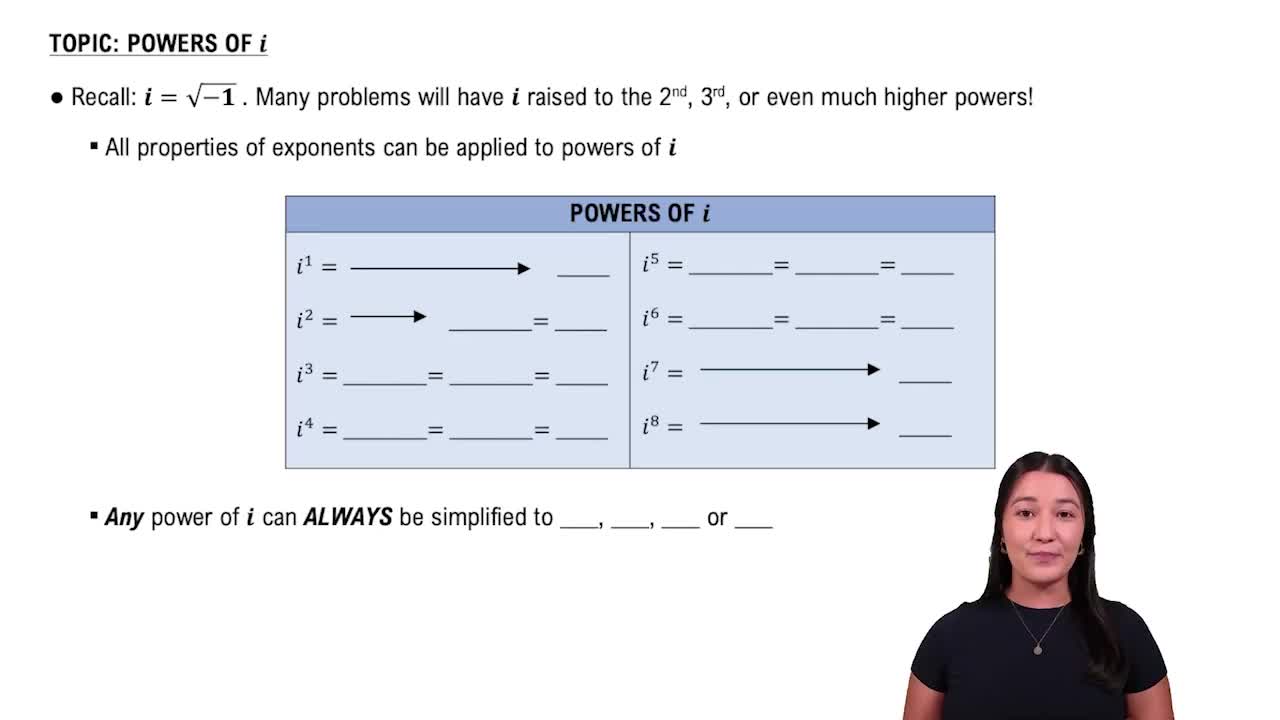
 04:10
04:10
 6:37
6:37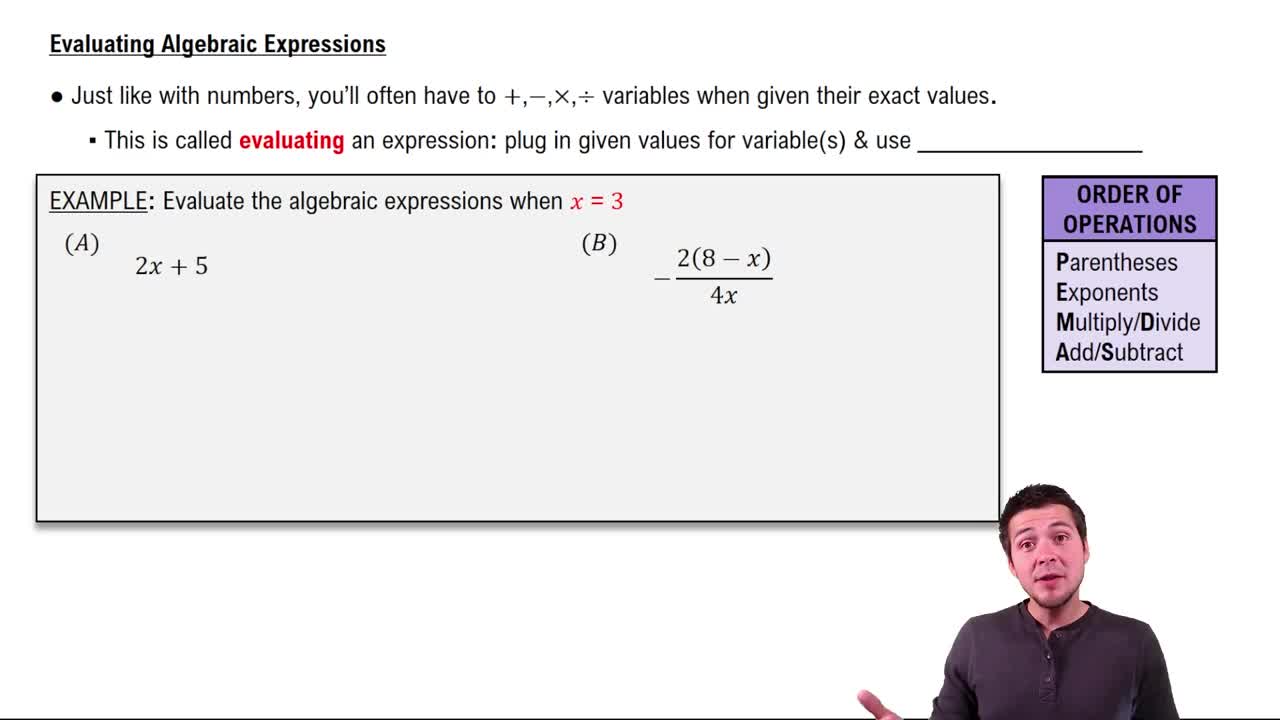 03:11
03:11Simplify each rational expression. Find all numbers that must be excluded from the domain of the simplified rational expression.
In Exercises 11–16, factor by grouping. x3−3x2+4x−12
In Exercises 1–16, evaluate each algebraic expression for the given value or values of the variable(s). x2-3(x-y), for x=8 and y=2
Evaluate each expression in Exercises 1–12, or indicate that the root is not a real number.
In Exercises 9–14, perform the indicated operations. Write the resulting polynomial in standard form and indicate its degree. (17x3−5x2+4x−3)−(5x3−9x2−8x+11)
Express the distance between the numbers -17 and 4 using absolute value. Then evaluate the absolute value.