 뒤로
뒤로Acid-Base Reactions and Properties of Acids and Bases
스터디 가이드 - 스마트 노트
 자료에 맞춘 맞춤형 노트, 핵심 정의, 예시, 맥락을 확장해 제공합니다.
Acid-Base Reactions
Brønsted-Lowry Theory
The Brønsted-Lowry theory defines acids and bases based on their ability to donate or accept protons (H+). An acid is a chemical species that can release a proton, while a base is a species that can accept a proton.
Acid: AH → H+ + A-
Base: H+ + A- → AH
Example: NH4+ → NH3 + H+
Example: C6H5OH → C6H5O- + H+
Example: CH3CO2H → CH3CO2- + H+
Example: HCl → H+ + Cl-
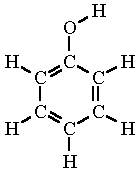
Bond Polarity and Acid Strength
The strength of an acid is influenced by the polarity of the H–A bond and the electronegativity of atom A. Highly electronegative atoms and large electronegativity differences create polar bonds, which generally lead to stronger acids.
H–C: Weakly polar, weak acid
H–A (A = highly electronegative): Stronger acid
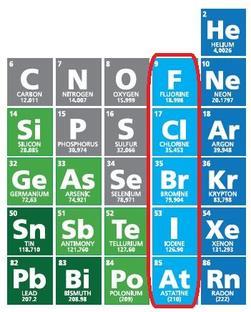
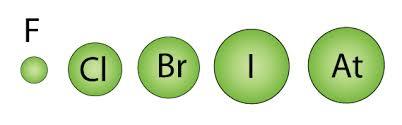
Strong and Weak Acids
Acids are classified as strong or weak based on their degree of dissociation in water. Strong acids dissociate completely, while weak acids only partially dissociate.
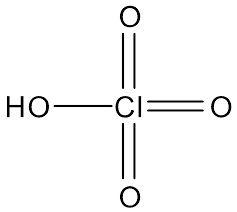
Strong Acids: HCl, HBr, HI, HNO3, HClO4
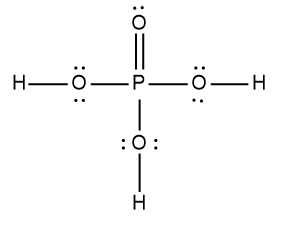
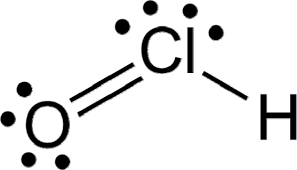
Weak Acids: HF, CH3COOH, H3PO4, H2CO3, H2SO3, HClO, H2S, HCOOH, C6H5OH
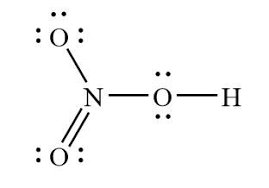
Acid Classification Table
The following table summarizes the classification of common acids:
Acid | Formula | Notes |
|---|---|---|
Hydrochloric acid | HCl | Strong monoprotic acid |
Hydrobromic acid | HBr | Strong monoprotic acid |
Hydroiodic acid | HI | Strong monoprotic acid |
Nitric acid | HNO3 | Strong oxoacid |
Perchloric acid | HClO4 | Very strong oxoacid |
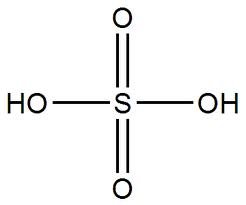
Sulfuric acid (1st H+) | H2SO4 | First proton strong, second weak |
Hydrofluoric acid | HF | Strong bond, weak acid |
Acetic acid | CH3COOH | Organic weak acid |
Phosphoric acid | H3PO4 | Triprotic, weak |
Carbonic acid | H2CO3 | Weak, forms CO2 |
Sulfurous acid | H2SO3 | Weak oxoacid |
Hypochlorous acid | HClO | Weak, few oxygens |
Hydrogen sulfide | H2S | Weak binary acid |
Formic acid | HCOOH | Weak organic acid |
Phenol | C6H5OH | Weak |
Acid Dissociation and Chemical Equilibrium
Acid Dissociation in Water
When an acid is dissolved in water, it establishes a chemical equilibrium between the acid and water. The acid dissociates to form its conjugate base and hydronium ion (H3O+).
General Reaction: AH + H2O ⇌ H3O+ + A-
Monoacid Example: C6H5OH + H2O ⇌ C6H5O- + H3O+
Polyacid Example: H2SO4 + H2O → H3O+ + HSO4- HSO4- + H2O → H3O+ + SO42-
Electrolyte Strength
Strong acids and bases: Dissociate completely in water, forming strong electrolytes.
Weak acids and bases: Partially dissociate, forming weak electrolytes.
Amphoteric and Ampholytic Species
Definition and Examples
A species is amphoteric or ampholytic if it can act as both an acid and a base. Water (H2O) is a classic example, as it can donate or accept a proton.
Water: H2O/HO- (acid), H3O+/H2O (base)
Hydrogen sulfide: H2S/HS- (acid), HS-/S2- (base)
Autoprotolysis of Water
Self-Ionization Reaction
Water can react with itself to form hydronium and hydroxide ions. This process is called autoprotolysis.
Reaction: 2H2O(l) ⇌ H3O+(aq) + OH-(aq)
Lewis Theory of Acids and Bases
Electron Pair Concept
The Lewis theory defines acids and bases based on their ability to accept or donate electron pairs. A Lewis acid accepts an electron pair, while a Lewis base donates an electron pair.
Lewis Acids: AlF3, BH3, AlCl3 (electron pair acceptors)
Lewis Bases: Chloride ion, ammonia (electron pair donors)
Acidity and Basicity Constants
Acidity Constant (Ka)
The acidity constant (Ka) characterizes the strength of an acid in water. It is defined as:
pKa:
Strong acids: Large Ka, small pKa
Basicity Constant (Kb)
pKb:
Solvent Constant (Kw)
At 25°C:
Relationship Between Ka, Kb, and Kw
pKa Scale and Acid/Base Strength
pKa Values in Water
The pKa scale in water ranges from 0 to 14, allowing classification of acid-base pairs. The strongest acid in water is H3O+ (pKa = 0), and the strongest base is OH- (pKa = 14).
Acid/Base Pair | pKa |
|---|---|
H2O/OH- | 14 |
H3O+/H2O | 0 |
NH4+/NH3 | 9.2 |
H2CO3/HCO3- | 6.4 |
CH3COOH/CH3COO- | 4.8 |
Definition of pH
pH Calculation
The pH of a solution is defined as the negative logarithm of the hydronium ion concentration:
For neutral solutions: pH = 7
For strong acids: pH approaches 0
For strong bases: pH approaches 14
Acid-Base Reactions in Water
General Reaction
An acid-base reaction involves the exchange of a proton between two acid-base pairs. The reaction typically forms the weakest acid and base present.
Example: HCl(aq) + NH3(aq) → NH4+(aq) + Cl-(aq)
Example: NaOH(aq) + HNO3(aq) → NaNO3(aq) + H2O(l)
Example: CH3COOH(aq) + H2O(l) ⇌ CH3COO-(aq) + H3O+(aq)
Summary Table: Strong vs. Weak Acids and Bases
Type | Examples | Dissociation |
|---|---|---|
Strong Acid | HCl, HBr, HI, HNO3, HClO4 | Complete |
Weak Acid | HF, CH3COOH, H3PO4 | Partial |
Strong Base | NaOH, KOH | Complete |
Weak Base | CH3COO-, C6H5O- | Partial |
Exercises and Applications
Sample Exercise
Identify acids and bases according to Brønsted-Lowry definition and write their reactions with water.
Justify the basic character of PO43- and (H3C)3N in water.
Write the species present when a mole of NaOH, HClO4, or CH3COOH dissolves in water.
Conclusion
Acid-base chemistry is fundamental to understanding chemical reactions in aqueous solutions. The classification of acids and bases, their dissociation, and the calculation of pH are essential concepts in general chemistry.
