Ch.14 - Chemical Kinetics
Brown - Chemistry: The Central Science 14th Edition
Brown14th EditionChemistry: The Central ScienceISBN: 9780134414232당신이 사용하는 게 아니라요?교과서 변경
14장, 문제 69a

(a) Based on the following reaction profile, how many intermediates are formed in the reaction A→D?

검증된 단계별 안내
1
Identify the peaks and valleys in the reaction profile diagram. Each valley between peaks represents an intermediate state in the reaction pathway.
Count the number of valleys in the diagram, as each one corresponds to a different intermediate formed during the transformation from reactant A to product D.
Verify that each intermediate is distinct and not a recurrence of a previous state in the reaction pathway.
Consider any catalysts or external factors that might alter the number of observed intermediates, ensuring the count is solely for the reaction A→D.
Summarize the total number of unique intermediates formed as indicated by the reaction profile.

비슷한 문제에 대한 검증된 영상 답변:

이 영상 해법은 위 문제에 도움이 된다고 튜터들이 추천한 것입니다.
영상 길이:
2m

주요 개념

질문에 올바르게 답하기 위해 반드시 이해해야 하는 핵심 개념들은 다음과 같습니다.

Reaction Profile

A reaction profile is a graphical representation that illustrates the energy changes during a chemical reaction. It typically shows the energy of the reactants, products, and any intermediates, along with the activation energy required for the reaction to proceed. Understanding the reaction profile is crucial for identifying the stages of the reaction and the number of intermediates formed.
추천 영상:
가이드 코스
01:30
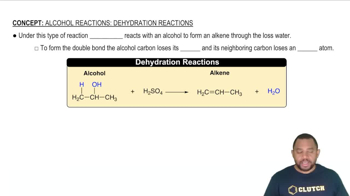
Alcohol Reactions: Dehydration Reactions

Intermediates

Intermediates are species that are formed during the course of a chemical reaction but are not present in the final products. They exist temporarily and are often unstable, playing a critical role in the reaction mechanism. Identifying intermediates is essential for understanding how reactants transform into products and can be determined from the peaks and valleys in a reaction profile.
추천 영상:
가이드 코스
02:14
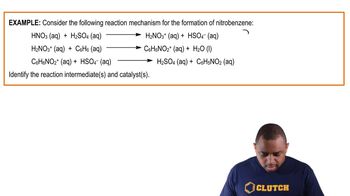
Reaction Mechanism Example

Activation Energy

Activation energy is the minimum energy required for a chemical reaction to occur. It represents the energy barrier that must be overcome for reactants to be converted into products, including any intermediates. In a reaction profile, activation energy is depicted as the height of the energy barrier between reactants and the transition state, influencing the rate and pathway of the reaction.
추천 영상:
가이드 코스
02:02
Activity Series Chart