Ch.14 - Chemical Kinetics
Brown - Chemistry: The Central Science 14th Edition
Brown14th EditionChemistry: The Central ScienceISBN: 9780134414232당신이 사용하는 게 아니라요?교과서 변경
14장, 문제 70b

Consider the following energy profile.
(b) How many intermediates are formed in the reaction?

검증된 단계별 안내
1
Identify the peaks and valleys in the energy profile diagram. Each valley between peaks represents a stable intermediate formed during the reaction process.
Count the number of valleys in the energy profile, as each valley corresponds to one intermediate.
Ensure that you are only counting the valleys that occur between the reactants and the products, excluding the starting reactant state and the final product state.
Verify if any intermediates are revisited or if any intermediate appears more than once in the reaction pathway, as each unique intermediate should be counted only once.
Sum up the total number of unique intermediates formed throughout the reaction pathway as indicated by the energy profile.

비슷한 문제에 대한 검증된 영상 답변:

이 영상 해법은 위 문제에 도움이 된다고 튜터들이 추천한 것입니다.
영상 길이:
1m

주요 개념

질문에 올바르게 답하기 위해 반드시 이해해야 하는 핵심 개념들은 다음과 같습니다.

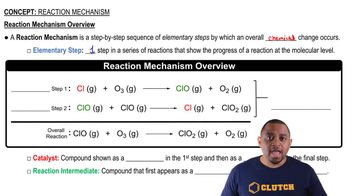
Reaction Mechanism

A reaction mechanism is a step-by-step description of the pathway taken during a chemical reaction. It outlines the sequence of elementary steps, including the formation and consumption of intermediates. Understanding the mechanism helps in identifying how reactants transform into products and the role of intermediates in this process.
추천 영상:
가이드 코스
03:06
Reaction Mechanism Overview

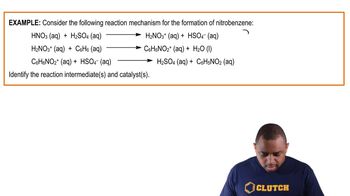
Intermediates

Intermediates are species that are formed during the course of a chemical reaction but are not present in the final products. They exist only transiently and are crucial for understanding the reaction pathway. Identifying intermediates can provide insights into the stability and reactivity of different species involved in the reaction.
추천 영상:
가이드 코스
02:14
Reaction Mechanism Example

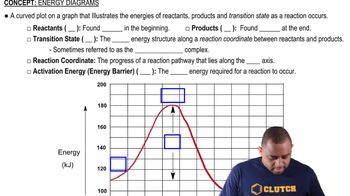
Energy Profile Diagram

An energy profile diagram visually represents the energy changes that occur during a chemical reaction. It typically shows the energy of reactants, intermediates, and products, along with activation energy barriers. Analyzing this diagram helps in determining the number of intermediates and the overall energy changes associated with the reaction.
추천 영상:
가이드 코스
01:57
Energy Diagrams