Ch.15 - Chemical Equilibrium
15์žฅ, ๋ฌธ์ œ 61f

Consider the following equilibrium, for which ฮ”๐ป<0
2 SO2(๐‘”) + O2(๐‘”) โ‡Œ 2 SO3(๐‘”)
(f) How will each of the following changes affect an equilibrium mixture of the three gases: SO3(๐‘”) is removed from the system?

๊ฒ€์ฆ๋œ ๋‹จ๊ณ„๋ณ„ ์•ˆ๋‚ด
1
insert step 1> Identify the type of reaction and the effect of removing a product on the equilibrium. This is an exothermic reaction (ฮ”๐ป < 0), and removing a product will shift the equilibrium to the right according to Le Chatelier's Principle.
insert step 2> Apply Le Chatelier's Principle: When a product (SO3) is removed, the system will try to counteract this change by producing more SO3.
insert step 3> Predict the shift in equilibrium: The equilibrium will shift to the right, favoring the formation of more SO3 from SO2 and O2.
insert step 4> Consider the effect on concentrations: As the equilibrium shifts to the right, the concentration of SO2 and O2 will decrease, while the concentration of SO3 will increase.
insert step 5> Conclude the effect on the system: The removal of SO3 results in the system adjusting to restore equilibrium by producing more SO3, thus shifting the equilibrium to the right.

๋น„์Šทํ•œ ๋ฌธ์ œ์— ๋Œ€ํ•œ ๊ฒ€์ฆ๋œ ์˜์ƒ ๋‹ต๋ณ€:

์ด ์˜์ƒ ํ•ด๋ฒ•์€ ์œ„ ๋ฌธ์ œ์— ๋„์›€์ด ๋œ๋‹ค๊ณ  ํŠœํ„ฐ๋“ค์ด ์ถ”์ฒœํ•œ ๊ฒƒ์ž…๋‹ˆ๋‹ค.
์˜์ƒ ๊ธธ์ด:
2m

์ฃผ์š” ๊ฐœ๋…

์งˆ๋ฌธ์— ์˜ฌ๋ฐ”๋ฅด๊ฒŒ ๋‹ตํ•˜๊ธฐ ์œ„ํ•ด ๋ฐ˜๋“œ์‹œ ์ดํ•ดํ•ด์•ผ ํ•˜๋Š” ํ•ต์‹ฌ ๊ฐœ๋…๋“ค์€ ๋‹ค์Œ๊ณผ ๊ฐ™์Šต๋‹ˆ๋‹ค.

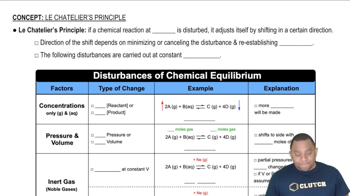
Le Chatelier's Principle

Le Chatelier's Principle states that if a dynamic equilibrium is disturbed by changing the conditions, the position of equilibrium shifts to counteract the change. In the context of the given reaction, removing SOโ‚ƒ will decrease its concentration, prompting the equilibrium to shift to the right to produce more SOโ‚ƒ, thereby restoring balance.
์ถ”์ฒœ ์˜์ƒ:

Equilibrium Constant (K)

The equilibrium constant (K) quantifies the ratio of the concentrations of products to reactants at equilibrium for a given reaction at a specific temperature. For the reaction provided, K is determined by the concentrations of SOโ‚ƒ, SOโ‚‚, and Oโ‚‚. Changes in concentration, such as the removal of SOโ‚ƒ, can affect the system's ability to reach a new equilibrium state.
์ถ”์ฒœ ์˜์ƒ:

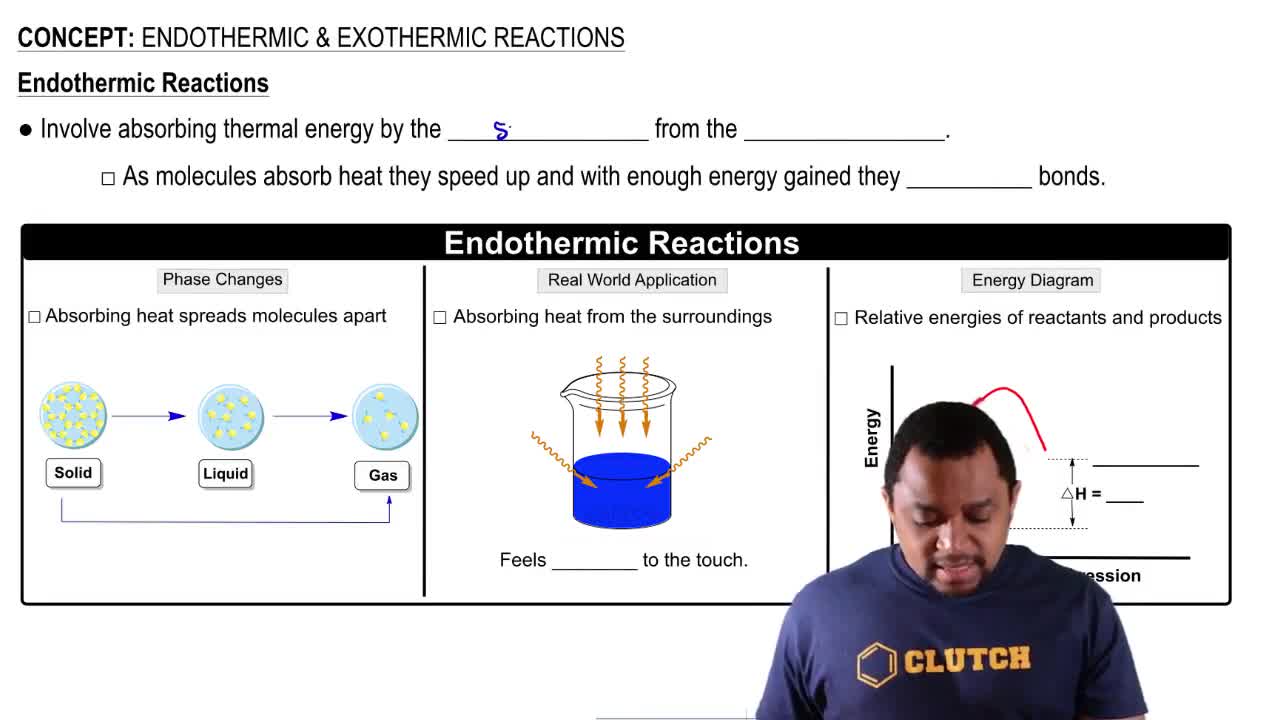
Endothermic vs. Exothermic Reactions

Reactions are classified as endothermic or exothermic based on the heat exchange with the surroundings. The given reaction is exothermic (ฮ”H < 0), meaning it releases heat. Understanding this helps predict how temperature changes might affect the equilibrium; for instance, removing a product like SOโ‚ƒ can shift the equilibrium to the right, potentially releasing heat and favoring the formation of more products.
์ถ”์ฒœ ์˜์ƒ:
๊ฐ€์ด๋“œ ์ฝ”์Šค
02:30
Endothermic & Exothermic Reactions
๊ด€๋ จ ์‹ค์ฒœ
๊ต๊ณผ์„œ ์งˆ๋ฌธ

Consider the reaction 4 NH3(๐‘”) + 5 O2(๐‘”) โ‡Œ 4 NO(๐‘”) + 6 H2O(๐‘”), ฮ”๐ป = โˆ’904.4 kJ Does each of the following increase, decrease, or leave unchanged the yield of NO at equilibrium? (e) add a catalyst

304
views

๊ต๊ณผ์„œ ์งˆ๋ฌธ

Consider the reaction 4 NH3(๐‘”) + 5 O2(๐‘”) โ‡Œ 4 NO(๐‘”) + 6 H2O(๐‘”), ฮ”๐ป = โˆ’904.4 kJ Does each of the following increase, decrease, or leave unchanged the yield of NO at equilibrium? (d) decrease the volume of the container in which the reaction occurs

487
views
๊ต๊ณผ์„œ ์งˆ๋ฌธ

Consider the reaction 4 NH3(๐‘”) + 5 O2(๐‘”) โ‡Œ 4 NO(๐‘”) + 6 H2O(๐‘”), ฮ”๐ป = โˆ’904.4 kJ Does each of the following increase, decrease, or leave unchanged the yield of NO at equilibrium? (a) increase [NH3] (b) increase [H2O] (c) decrease [O2]

296
views
๊ต๊ณผ์„œ ์งˆ๋ฌธ

At 25ยฐC, the reaction CaCrO4(๐‘ ) โ‡Œ Ca2+(๐‘Ž๐‘ž) + CrO42โˆ’(๐‘Ž๐‘ž) has an equilibrium constant ๐พ๐‘ = 7.1ร—10โˆ’4. What are the equilibrium concentrations of Ca2+ and CrO42โˆ’ in a saturated solution of CaCrO4?

398
views
๊ต๊ณผ์„œ ์งˆ๋ฌธ

Consider the following equilibrium, for which ฮ”๐ป<0

2 SO2(๐‘”) + O2(๐‘”) โ‡Œ 2 SO3(๐‘”)

(e) the total pressure of the system is increased by adding a noble gas