At 1000 K, ๐พ๐ = 1.85 for the reaction SO2(๐) + 12 O2(๐) โ SO3(๐) (c) What is the value of ๐พ๐ for the reaction in part (b)?
Ch.15 - Chemical Equilibrium
Brown14th EditionChemistry: The Central ScienceISBN: 9780134414232๋น์ ์ด ์ฌ์ฉํ๋ ๊ฒ ์๋๋ผ์?๊ต๊ณผ์ ๋ณ๊ฒฝ
15์ฅ, ๋ฌธ์ 26a
Consider the following equilibrium, for which ๐พ๐ = 0.0752 at 480ยฐC: 2 Cl2(๐) + 2 H2O(๐) โ 4 HCl(๐) + O2(๐) (a) What is the value of ๐พ๐ for the reaction 4 HCl(๐) + O2(๐) โ 2 Cl2(๐) + 2 H2O(๐)?
๊ฒ์ฆ๋ ๋จ๊ณ๋ณ ์๋ด1
Identify that the given reaction is the reverse of the original reaction.
Recall that the equilibrium constant for the reverse reaction is the reciprocal of the equilibrium constant for the forward reaction.
Write the expression for the equilibrium constant of the reverse reaction: \( K'_{p} = \frac{1}{K_{p}} \).
Substitute the given value of \( K_{p} = 0.0752 \) into the expression for the reverse reaction.
Calculate the reciprocal to find \( K'_{p} \), which is the equilibrium constant for the reverse reaction.

๋น์ทํ ๋ฌธ์ ์ ๋ํ ๊ฒ์ฆ๋ ์์ ๋ต๋ณ:
์ด ์์ ํด๋ฒ์ ์ ๋ฌธ์ ์ ๋์์ด ๋๋ค๊ณ ํํฐ๋ค์ด ์ถ์ฒํ ๊ฒ์
๋๋ค.
์์ ๊ธธ์ด:
1m์ฃผ์ ๊ฐ๋
์ง๋ฌธ์ ์ฌ๋ฐ๋ฅด๊ฒ ๋ตํ๊ธฐ ์ํด ๋ฐ๋์ ์ดํดํด์ผ ํ๋ ํต์ฌ ๊ฐ๋
๋ค์ ๋ค์๊ณผ ๊ฐ์ต๋๋ค.
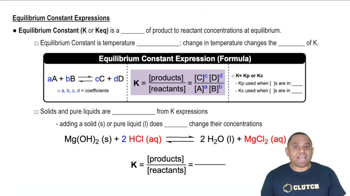
Equilibrium Constant (Kp)
The equilibrium constant, Kp, is a numerical value that expresses the ratio of the concentrations of products to reactants at equilibrium for a given reaction at a specific temperature. It is calculated using the partial pressures of gases involved in the reaction. A Kp value less than 1 indicates that at equilibrium, reactants are favored, while a value greater than 1 indicates that products are favored.
์ถ์ฒ ์์:
๊ฐ์ด๋ ์ฝ์ค
Equilibrium Constant Expressions
Le Chatelier's Principle
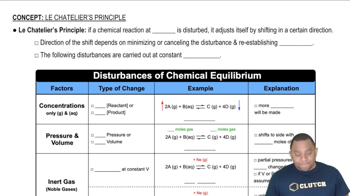
Le Chatelier's Principle states that if a dynamic equilibrium is disturbed by changing the conditions, the system will adjust itself to counteract the change and restore a new equilibrium. This principle helps predict how changes in concentration, pressure, or temperature will affect the position of equilibrium in a chemical reaction.
์ถ์ฒ ์์:
๊ฐ์ด๋ ์ฝ์ค
Le Chatelier's Principle
Reaction Quotient (Q)
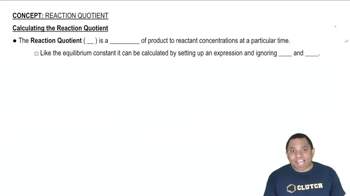
The reaction quotient, Q, is a measure of the relative amounts of products and reactants present in a reaction at any point in time, not just at equilibrium. It is calculated in the same way as Kp but uses the current concentrations or partial pressures. Comparing Q to Kp allows us to determine the direction in which the reaction will proceed to reach equilibrium.
์ถ์ฒ ์์:
๊ฐ์ด๋ ์ฝ์ค
Reaction Quotient Q
๊ด๋ จ ์ค์ฒ
๊ต๊ณผ์ ์ง๋ฌธ
1089
views
๊ต๊ณผ์ ์ง๋ฌธ
Consider the following equilibrium, for which Kp = 0.0752 at 480ยฐC: 2 Cl2(g) + 2 H2O(g) โ 4 HCl(g) + O2(g) (b) What is the value of Kp for the reaction Cl2(g) + H2O(g) โ 2 HCl(g) + 1/2 O2(g)?
๊ต๊ณผ์ ์ง๋ฌธ
Consider the equilibrium N2(๐) + O2(๐) + Br2(๐) โ 2 NOBr(๐) Calculate the equilibrium constant ๐พ๐ for this reaction, given the following information at 298 K:
2 NO(๐) + Br2(๐) โ 2 NOBr(๐) ๐พ๐ = 2.02
NO(๐) โ N2(๐) + O2(๐) ๐พ๐ = 2.1ร1030
990
views
๊ต๊ณผ์ ์ง๋ฌธ
The following equilibria were attained at 823 K:
CoO(s) + H2(g) โ Co(s) + H2O(g) Kc = 67
CoO(s) + CO(g) โ Co(s) + CO2(g) Kc = 490
Based on these equilibria, calculate the equilibrium constant for H2(g) + CO2(g) โ CO(g) + H2O(g) at 823 K.
127
views