Ch.2 - Atoms, Molecules, and Ions
Brown - Chemistry: The Central Science 14th Edition
Brown14th EditionChemistry: The Central ScienceISBN: 9780134414232당신이 사용하는 게 아니라요?교과서 변경
2장, 문제 106

Name each of the following chlorides. Assuming that the compounds are ionic, what charge is associated with the metallic element in each case? (a) AgCl (b) TiCl₄ (c) IrCl₃ (d) LiCl.

검증된 단계별 안내
1
Step 1: Identify the metal and non-metal in each compound. In ionic compounds, the metal is typically listed first, followed by the non-metal. For example, in AgCl, Ag is silver (the metal) and Cl is chlorine (the non-metal).
Step 2: Determine the charge of the non-metal, chlorine, in each compound. Chlorine typically forms a -1 charge as an anion (Cl⁻).
Step 3: Calculate the charge of the metal in each compound by considering the total charge balance. The sum of the charges in an ionic compound must equal zero. For example, in AgCl, since Cl has a -1 charge, Ag must have a +1 charge to balance it.
Step 4: Name each compound using the metal's name followed by the non-metal with an 'ide' suffix. For example, AgCl is named silver chloride.
Step 5: For metals that can have multiple oxidation states, indicate the charge of the metal using Roman numerals in parentheses. For example, TiCl₄ is named titanium(IV) chloride because titanium has a +4 charge to balance the four -1 charges from chlorine.

주요 개념

질문에 올바르게 답하기 위해 반드시 이해해야 하는 핵심 개념들은 다음과 같습니다.

Ionic Compounds

Ionic compounds are formed when metals transfer electrons to nonmetals, resulting in the formation of positively charged cations and negatively charged anions. The electrostatic attraction between these oppositely charged ions holds the compound together. Understanding the nature of ionic bonding is essential for determining the charges of the metallic elements in the given chlorides.
추천 영상:
가이드 코스
02:11
Ionic Compounds Naming

Oxidation States

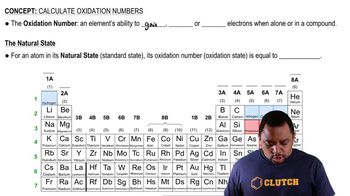
The oxidation state of an element in a compound indicates the degree of oxidation (loss of electrons) of that element. In ionic compounds, the oxidation state of the metal corresponds to the charge of the cation it forms. Knowing how to assign oxidation states helps in identifying the charge associated with the metallic elements in the chlorides listed.
추천 영상:
가이드 코스
02:42
Oxidation Numbers

Common Charges of Transition Metals

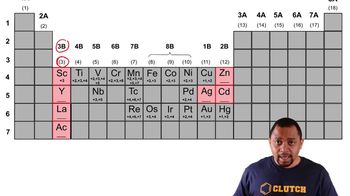
Transition metals can exhibit multiple oxidation states, which means they can form cations with different charges. For example, silver (Ag) typically has a +1 charge, while titanium (Ti) can have a +4 charge, and iridium (Ir) can have a +3 charge. Familiarity with the common charges of these metals is crucial for accurately naming the chlorides and determining the associated charges.
추천 영상:
가이드 코스
02:25
Transition Metal Element Charges