
Ch.21 - Nuclear Chemistry
Brown - Chemistry: The Central Science 14th Edition
Brown14th EditionChemistry: The Central ScienceISBN: 9780134414232당신이 사용하는 게 아니라요?교과서 변경
21장, 문제 27

Which statement best explains why nuclear transmutations involving neutrons are generally easier to accomplish than those involving protons or alpha particles? (a) Neutrons are not a magic number particle. (b) Neutrons do not have an electrical charge. (c) Neutrons are smaller than protons or alpha particles. (d) Neutrons are attracted to the nucleus even at long distances, whereas protons and alpha particles are repelled.

검증된 단계별 안내
1
Step 1: Understand the concept of nuclear transmutation, which involves changing one element into another by altering the number of protons in the nucleus.
Step 2: Recognize that neutrons, protons, and alpha particles are all subatomic particles that can be used to induce nuclear transmutations.
Step 3: Consider the role of electrical charge in nuclear reactions. Neutrons are neutral, protons are positively charged, and alpha particles (which consist of 2 protons and 2 neutrons) are also positively charged.
Step 4: Analyze how the lack of electrical charge in neutrons affects their interaction with the nucleus. Neutrons can penetrate the nucleus without being repelled by the positive charge of the protons in the nucleus.
Step 5: Compare this with protons and alpha particles, which experience electrostatic repulsion from the positively charged nucleus, making it more difficult for them to initiate nuclear transmutations.

주요 개념

질문에 올바르게 답하기 위해 반드시 이해해야 하는 핵심 개념들은 다음과 같습니다.

Charge of Particles

Neutrons are electrically neutral particles, meaning they do not carry a charge. This lack of charge allows them to approach atomic nuclei without experiencing electrostatic repulsion, which is a significant barrier for charged particles like protons and alpha particles. In contrast, protons, which are positively charged, are repelled by the positively charged nucleus, making their interaction less favorable.
추천 영상:
가이드 코스
05:19
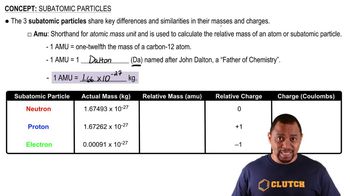
Subatomic Particles

Nuclear Forces

Nuclear forces are the strong interactions that hold protons and neutrons together within an atomic nucleus. Neutrons can effectively penetrate the nucleus due to their neutral charge, allowing them to be influenced by these strong nuclear forces without the hindrance of repulsion. This makes nuclear transmutations involving neutrons more feasible compared to those involving charged particles.
추천 영상:
가이드 코스
01:51
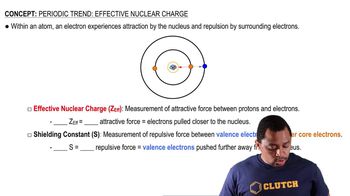
Effective Nuclear Charge

Distance and Interaction

The interaction between particles and the nucleus is influenced by distance. Neutrons can be attracted to the nucleus even from a distance due to the strong nuclear force, which operates over short ranges. In contrast, protons and alpha particles experience repulsion at greater distances due to their positive charge, making it more challenging for them to approach and interact with the nucleus effectively.
추천 영상:
가이드 코스
03:01
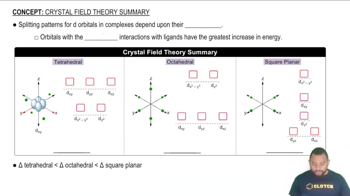
The greatest ligand-orbital interactions result in the greatest increase in energy.