
Ch.14 - Chemical Kinetics
McMurry - Chemistry 8th Edition
McMurry8th EditionChemistryISBN: 9781292336145당신이 사용하는 게 아니라요?교과서 변경
14장, 문제 116

Comment on the following statement: 'A catalyst increases the rate of a reaction, but it is not consumed because it does not participate in the reaction.'

검증된 단계별 안내
1
Understand the role of a catalyst: A catalyst is a substance that increases the rate of a chemical reaction without being consumed in the process.
Clarify the misconception: While a catalyst is not consumed, it does participate in the reaction by providing an alternative pathway with a lower activation energy.
Explain the mechanism: Catalysts work by forming temporary intermediate compounds with reactants, which then decompose to yield the products and regenerate the catalyst.
Highlight the energy aspect: By lowering the activation energy, catalysts allow more reactant molecules to have enough energy to react, thus increasing the reaction rate.
Conclude with the catalyst's role: Although a catalyst participates in the reaction mechanism, it is regenerated at the end of the reaction cycle, allowing it to be used repeatedly.

비슷한 문제에 대한 검증된 영상 답변:

이 영상 해법은 위 문제에 도움이 된다고 튜터들이 추천한 것입니다.
영상 길이:
1m
도움이 되었나요?

주요 개념

질문에 올바르게 답하기 위해 반드시 이해해야 하는 핵심 개념들은 다음과 같습니다.

Catalysis

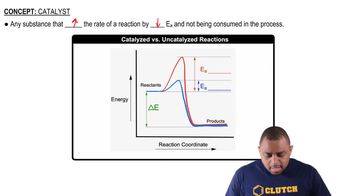
Catalysis is a process in which the rate of a chemical reaction is increased by a substance known as a catalyst. Catalysts work by providing an alternative reaction pathway with a lower activation energy, allowing more reactant molecules to collide with sufficient energy to react. Importantly, catalysts are not consumed in the reaction, meaning they can be used repeatedly without undergoing permanent changes.
추천 영상:
가이드 코스
01:59
Catalyzed vs. Uncatalyzed Reactions

Activation Energy

Activation energy is the minimum energy required for a chemical reaction to occur. It represents the energy barrier that reactants must overcome for the reaction to proceed. Catalysts lower the activation energy, which increases the number of effective collisions between reactant molecules, thereby speeding up the reaction without altering the overall energy change of the reaction.
추천 영상:
가이드 코스
02:02
Activity Series Chart

Reaction Mechanism

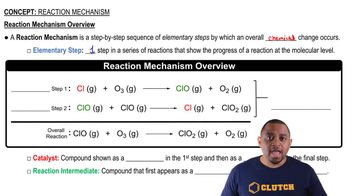
A reaction mechanism is a detailed description of the step-by-step process by which reactants are converted into products in a chemical reaction. It outlines the individual steps, including the formation of intermediates and the role of catalysts. Understanding the mechanism is crucial for comprehending how catalysts influence reaction rates and why they remain unchanged after the reaction.
추천 영상:
가이드 코스
03:06
Reaction Mechanism Overview