Ch.21 - Transition Elements and Coordination Chemistry
McMurry - Chemistry 8th Edition
McMurry8th EditionChemistryISBN: 9781292336145당신이 사용하는 게 아니라요?교과서 변경
21장, 문제 42

Briefly account for each of the following observations:
(a) Atomic radii decrease in the order Sc > Ti > V.
(b) Densities increase in the order Ti > V > Cr.

검증된 단계별 안내
1
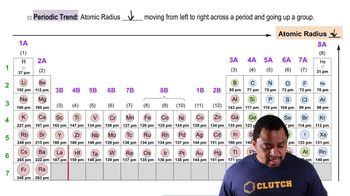
Understand the periodic trends and how they affect atomic radii and density. Atomic radii generally decrease across a period from left to right due to the increase in nuclear charge which pulls the electrons closer to the nucleus.
Examine the position of Scandium (Sc), Titanium (Ti), and Vanadium (V) in the periodic table. They are located in the same period with increasing atomic number. This increase in atomic number from Sc to V means an increase in the effective nuclear charge, explaining the decrease in atomic radii.
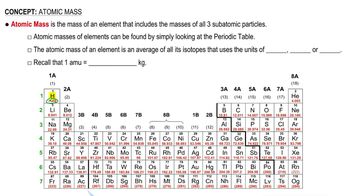
Consider the factors affecting density, which include atomic mass and volume. As atomic number increases, generally so does the mass. However, the volume can decrease if the atomic radius decreases.
Analyze the positions of Titanium (Ti), Vanadium (V), and Chromium (Cr) in the periodic table. They are consecutive elements in a period, and as you move from Ti to Cr, the atomic mass increases while the atomic radius decreases, leading to an increase in density.
Relate the increase in nuclear charge with the decrease in atomic radius and the increase in density. The stronger nuclear pull (higher nuclear charge) as you move from Sc to V and from Ti to Cr not only decreases the atomic radius but also increases the density due to a smaller volume occupied by the atoms.

비슷한 문제에 대한 검증된 영상 답변:

이 영상 해법은 위 문제에 도움이 된다고 튜터들이 추천한 것입니다.
도움이 되었나요?

주요 개념

질문에 올바르게 답하기 위해 반드시 이해해야 하는 핵심 개념들은 다음과 같습니다.

Atomic Radius Trends

Atomic radius refers to the size of an atom, typically measured from the nucleus to the outermost electron shell. As you move across a period in the periodic table from left to right, atomic radii generally decrease due to increased nuclear charge, which pulls electrons closer to the nucleus. In the case of Sc, Ti, and V, the decrease in atomic radius can be attributed to the increasing positive charge in the nucleus as you move from Sc to V.
추천 영상:
가이드 코스
01:42
Atomic Radius Trends

Density and Atomic Mass

Density is defined as mass per unit volume and is influenced by both the mass of the atoms and how closely they are packed in a given volume. As you move from Ti to V to Cr, the densities increase due to the increase in atomic mass and the arrangement of atoms in the crystal lattice. The transition metals exhibit varying densities based on their atomic structure and bonding characteristics.
추천 영상:

Transition Metals and Electron Configuration

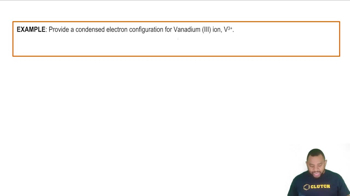
Transition metals, such as Sc, Ti, V, and Cr, have unique electron configurations that affect their physical properties, including atomic radius and density. The presence of d-electrons contributes to the complexity of their bonding and packing in solid form. Understanding how these electrons influence the size and mass of the atoms helps explain the observed trends in atomic radii and densities among these elements.
추천 영상:
가이드 코스
00:53
Electron Configurations Of Transition Metals Example