Ch.21 - Transition Elements and Coordination Chemistry
McMurry - Chemistry 8th Edition
McMurry8th EditionChemistryISBN: 9781292336145당신이 사용하는 게 아니라요?교과서 변경
21장, 문제 40

Titanium, used to make jet aircraft engines, is much harder than potassium or calcium. Explain.

검증된 단계별 안내
1
Step 1: Understand that the hardness of a metal is determined by the strength of the bonds between its atoms. The stronger the bonds, the harder the metal.
Step 2: Recognize that titanium, potassium, and calcium are all metals, but they belong to different groups on the periodic table. Titanium is a transition metal, while potassium and calcium are alkali and alkaline earth metals, respectively.
Step 3: Recall that transition metals like titanium typically form stronger metallic bonds than alkali and alkaline earth metals. This is because transition metals have more delocalized electrons available for bonding, leading to a stronger 'sea of electrons' that holds the metal atoms together.
Step 4: Understand that the 'sea of electrons' model explains why metals are malleable and ductile. In this model, the metal atoms are surrounded by a 'sea' of delocalized electrons, which allows the atoms to slide past each other without breaking the metallic bonds.
Step 5: Conclude that because titanium forms stronger metallic bonds than potassium or calcium, it is harder than these metals.

비슷한 문제에 대한 검증된 영상 답변:

이 영상 해법은 위 문제에 도움이 된다고 튜터들이 추천한 것입니다.
도움이 되었나요?

주요 개념

질문에 올바르게 답하기 위해 반드시 이해해야 하는 핵심 개념들은 다음과 같습니다.

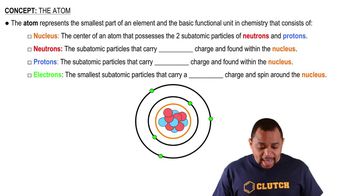
Atomic Structure and Bonding

The hardness of a material is largely determined by its atomic structure and the type of bonding present. Titanium has a strong metallic bond due to its closely packed crystal structure, which allows for effective sharing of electrons. In contrast, potassium and calcium have weaker metallic bonds and larger atomic radii, leading to less hardness.
추천 영상:

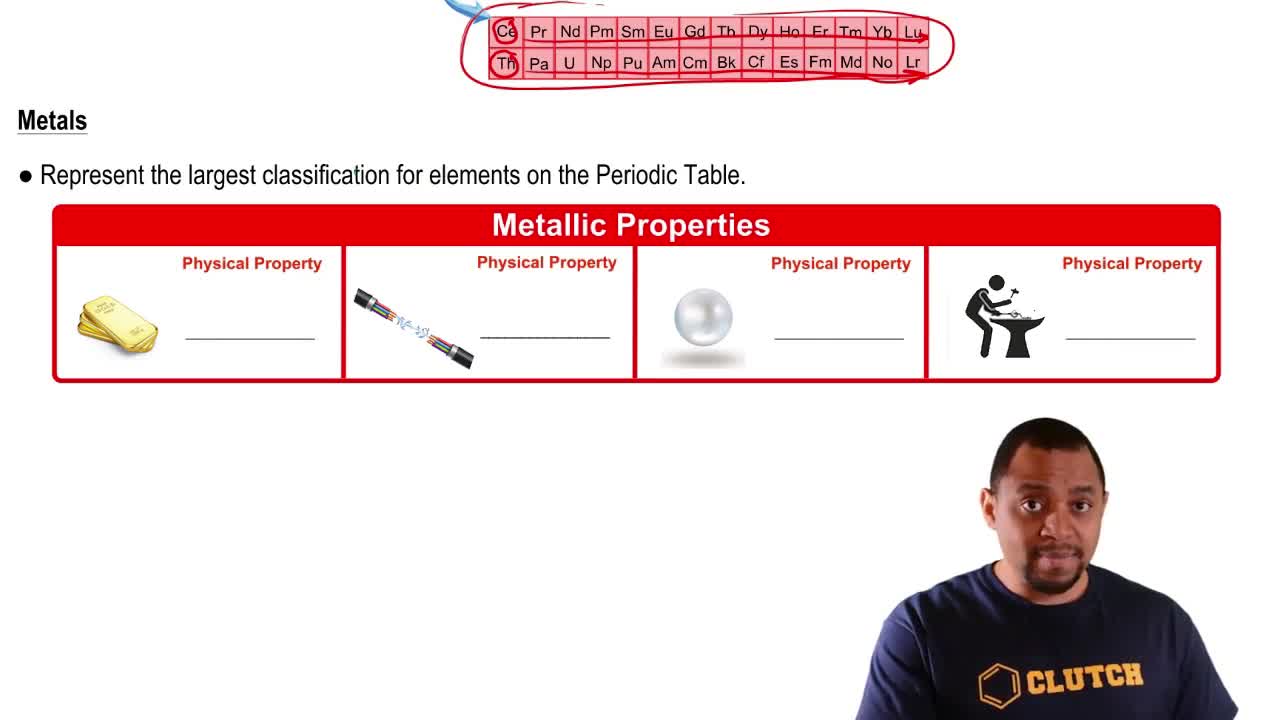
Metallic Properties

Metals exhibit a range of properties, including hardness, ductility, and conductivity, which are influenced by their atomic arrangement and bonding. Titanium, being a transition metal, has a higher density of valence electrons that contribute to its strength and hardness compared to alkali metals like potassium and alkaline earth metals like calcium, which are softer due to their single valence electron.
추천 영상:
가이드 코스
02:05
Metal Properties

Crystal Lattice Structure

The arrangement of atoms in a crystal lattice significantly affects a material's hardness. Titanium forms a hexagonal close-packed structure, which is more efficient in packing atoms tightly together, enhancing its hardness. In contrast, potassium and calcium have body-centered cubic structures that do not provide the same level of atomic packing and strength.
추천 영상: