Ch.6 - Ionic Compounds: Periodic Trends and Bonding Theory
McMurry - Chemistry 8th Edition
McMurry8th EditionChemistryISBN: 9781292336145당신이 사용하는 게 아니라요?교과서 변경
6장, 문제 5

Which of the following processes requires the largest input of energy? (LO 6.5) (a) (b) (c) (d)

검증된 단계별 안내
1
Identify the type of processes listed in options (a), (b), (c), and (d). Determine if they involve breaking bonds, forming bonds, phase changes, or other energy transformations.
Recall that breaking chemical bonds generally requires an input of energy, while forming bonds releases energy. Similarly, phase changes from solid to liquid or liquid to gas typically require energy input.
Compare the energy changes associated with each process. Processes that involve breaking stronger bonds or phase changes that require overcoming significant intermolecular forces typically need more energy.
Consider any additional information provided in the problem or your knowledge of specific substances involved in the processes to assess which might have the highest energy requirement.
Select the option that involves the process with the highest energy barrier, such as breaking the strongest bonds or the phase change requiring the most energy to overcome intermolecular forces.

비슷한 문제에 대한 검증된 영상 답변:

이 영상 해법은 위 문제에 도움이 된다고 튜터들이 추천한 것입니다.
영상 길이:
1m

주요 개념

질문에 올바르게 답하기 위해 반드시 이해해야 하는 핵심 개념들은 다음과 같습니다.

Energy in Chemical Processes

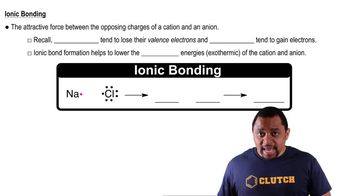
In chemistry, energy is a crucial factor in determining the feasibility and rate of chemical reactions. Different processes, such as phase changes, bond breaking, and formation, require varying amounts of energy. Understanding the energy requirements helps predict which processes are more or less favorable under specific conditions.
추천 영상:

Endothermic vs. Exothermic Reactions

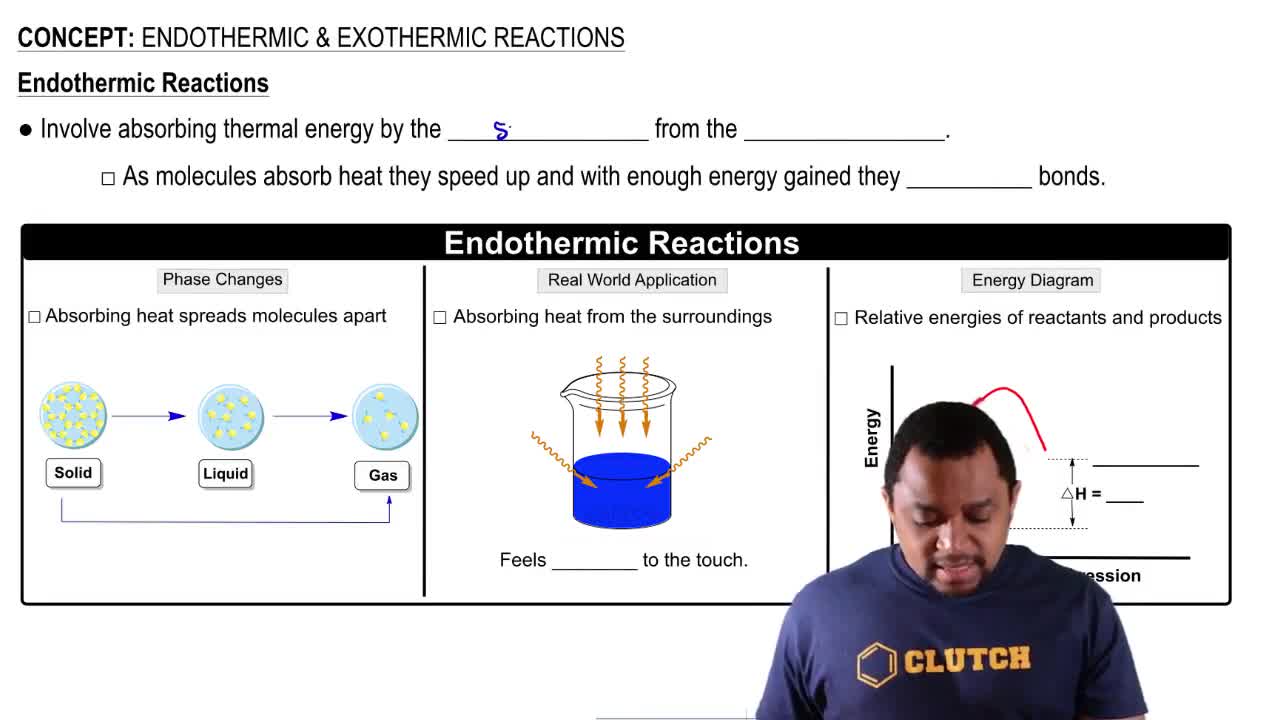
Reactions can be classified as endothermic or exothermic based on their energy exchange with the surroundings. Endothermic reactions absorb energy, often requiring a significant input to proceed, while exothermic reactions release energy. Recognizing these types is essential for evaluating which processes demand the most energy.
추천 영상:
가이드 코스
02:30
Endothermic & Exothermic Reactions

Activation Energy

Activation energy is the minimum energy required for a chemical reaction to occur. It represents the energy barrier that must be overcome for reactants to transform into products. Processes with higher activation energies typically require larger energy inputs, making this concept vital for understanding which reactions are more energy-intensive.
추천 영상:
가이드 코스
02:02
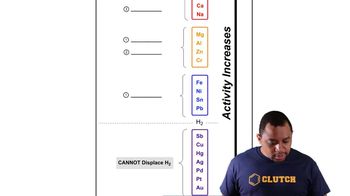
Activity Series Chart