Ch.6 - Ionic Compounds: Periodic Trends and Bonding Theory
McMurry - Chemistry 8th Edition
McMurry8th EditionChemistryISBN: 9781292336145당신이 사용하는 게 아니라요?교과서 변경
6장, 문제 8

Which of the following processes will release the most energy? (LO 6.9) (a) (b) (c) (d)

검증된 단계별 안내
1
Identify the type of processes listed in options (a), (b), (c), and (d). These could be chemical reactions, phase changes, or other energy-related transformations.
Determine the nature of each process, whether it is exothermic or endothermic. Exothermic processes release energy, while endothermic processes absorb energy.
For each exothermic process, consider the amount of energy typically released. This can often be found in tables of standard enthalpy changes or can be estimated based on the types of bonds formed or broken.
Compare the energy changes associated with each process. The process that releases the most energy will typically have the largest negative enthalpy change (ΔH).
Conclude by selecting the option that corresponds to the process with the highest energy release, based on the calculated or estimated enthalpy changes.

비슷한 문제에 대한 검증된 영상 답변:

이 영상 해법은 위 문제에 도움이 된다고 튜터들이 추천한 것입니다.
영상 길이:
2m

주요 개념

질문에 올바르게 답하기 위해 반드시 이해해야 하는 핵심 개념들은 다음과 같습니다.

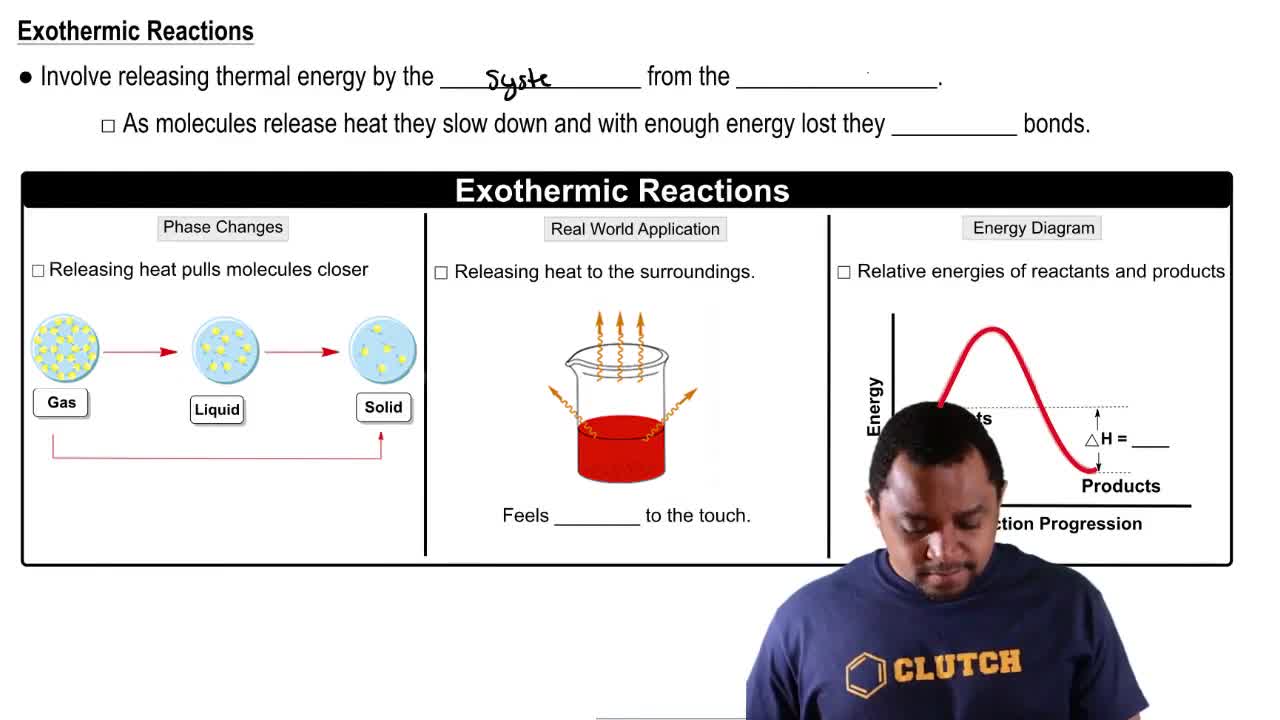
Exothermic Reactions

Exothermic reactions are chemical processes that release energy, usually in the form of heat, to the surroundings. This occurs when the total energy of the products is lower than that of the reactants, resulting in a net release of energy. Common examples include combustion reactions, where fuels react with oxygen to produce carbon dioxide and water, releasing significant energy.
추천 영상:
가이드 코스
02:38
Endothermic & Exothermic Reactions

Enthalpy Change (ΔH)

Enthalpy change, denoted as ΔH, is a measure of the total heat content of a system. In chemical reactions, a negative ΔH indicates that energy is released (exothermic), while a positive ΔH indicates energy is absorbed (endothermic). Understanding ΔH is crucial for predicting the energy changes associated with different processes and determining which will release the most energy.
추천 영상:
가이드 코스
02:34
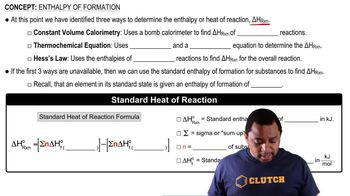
Enthalpy of Formation

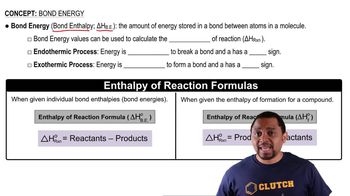
Bond Energy

Bond energy refers to the amount of energy required to break a bond between two atoms. When chemical bonds are formed during a reaction, energy is released, and the total energy released is related to the bond energies of the reactants and products. A process that involves the formation of strong bonds and the breaking of weaker bonds will typically release more energy, making bond energy a key factor in evaluating energy release in reactions.
추천 영상: