Ch.18 - Free Energy and Thermodynamics
Tro - Chemistry: A Molecular Approach 4th Edition
Tro4th EditionChemistry: A Molecular ApproachISBN: 9780134112831당신이 사용하는 게 아니라요?교과서 변경
18장, 문제 29

Two systems, each composed of two particles represented by circles, have 20 J of total energy. Which system, A or B, has the greater entropy? Why?

검증된 단계별 안내
1
Step 1: Understand the concept of entropy. Entropy is a measure of the number of possible configurations or microstates that a system can have. A system with more possible configurations has higher entropy.
Step 2: Consider the distribution of energy among the particles in each system. If one system has more ways to distribute the energy among its particles, it will have higher entropy.
Step 3: Analyze the possible energy distributions for each system. For example, if System A can distribute the energy in more ways than System B, then System A has higher entropy.
Step 4: Consider the number of particles and their possible energy states. More particles or more energy states typically lead to more possible configurations, increasing entropy.
Step 5: Compare the systems based on the above analysis. Determine which system has more possible configurations for distributing the 20 J of energy, and thus, which has greater entropy.

비슷한 문제에 대한 검증된 영상 답변:

이 영상 해법은 위 문제에 도움이 된다고 튜터들이 추천한 것입니다.
영상 길이:
2m

주요 개념

질문에 올바르게 답하기 위해 반드시 이해해야 하는 핵심 개념들은 다음과 같습니다.

Entropy

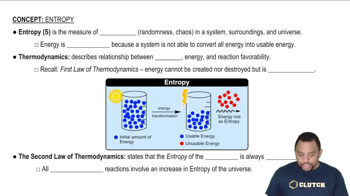
Entropy is a measure of the disorder or randomness in a system. In thermodynamics, it quantifies the number of ways a system can be arranged while maintaining the same energy level. Higher entropy indicates a greater number of possible microstates, leading to increased disorder. In the context of two systems with the same energy, the system with more possible arrangements of particles will have higher entropy.
추천 영상:
가이드 코스
02:46
Entropy in Thermodynamics

Microstates and Macrostates

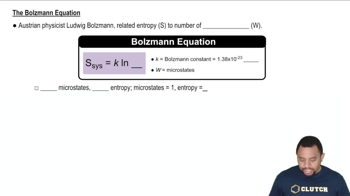
A macrostate is defined by macroscopic properties such as energy and temperature, while microstates refer to the specific arrangements of particles that correspond to a macrostate. The relationship between microstates and macrostates is crucial for understanding entropy; a macrostate with more microstates has higher entropy. Thus, when comparing two systems with the same total energy, the one with more microstates will exhibit greater entropy.
추천 영상:
가이드 코스
01:23
The Boltzmann Equation

Energy Distribution

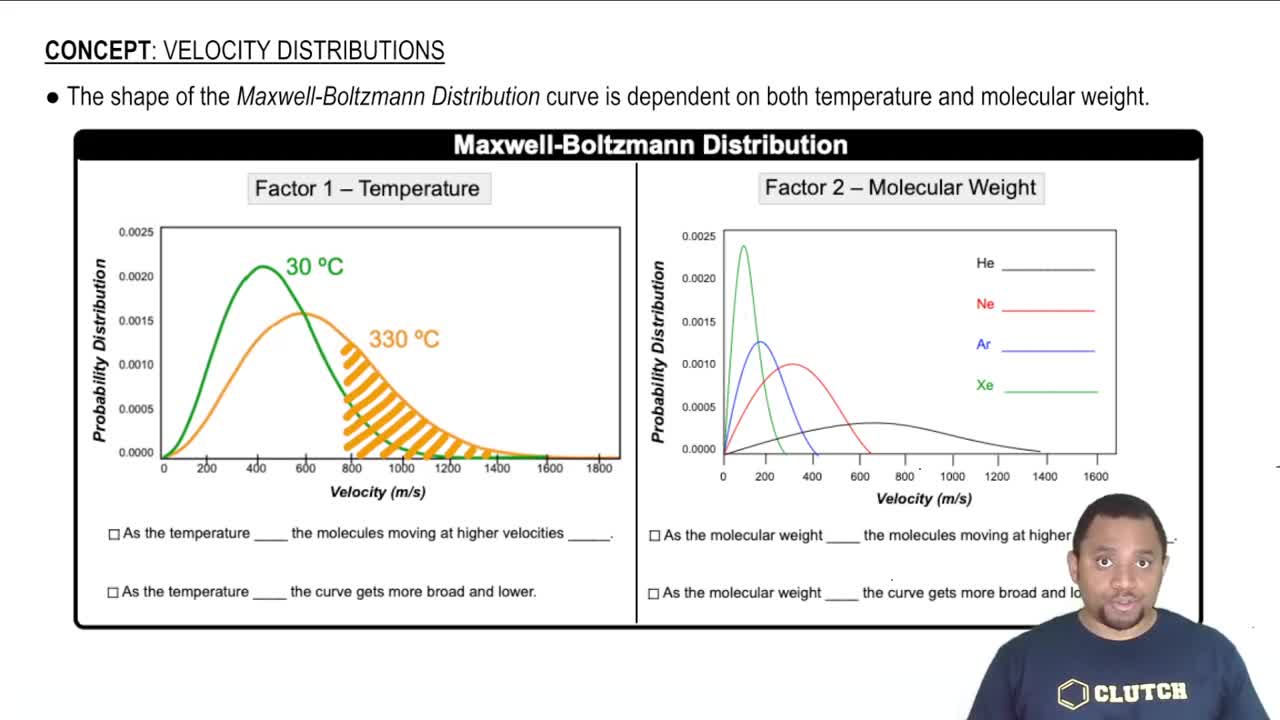
Energy distribution among particles affects the entropy of a system. When energy is distributed more evenly among particles, it allows for a greater number of microstates, thus increasing entropy. In the context of the question, if one system allows for more ways to distribute the total energy of 20 J among its particles, it will have higher entropy compared to the other system.
추천 영상:
가이드 코스
02:47
Velocity Distributions