Ch. 10 - DNA Replication
Klug - Essentials of Genetics 10th Edition
Klug10th EditionEssentials of GeneticsISBN: 9780135588789당신이 사용하는 게 아니라요?교과서 변경
10장, 문제 2

Write a short essay that distinguishes between the terms replication and synthesis, as applied to DNA. Which of the two is most closely allied with the field of biochemistry?

검증된 단계별 안내
1
Begin by defining DNA replication: it is the biological process by which a cell makes an exact copy of its entire DNA molecule, ensuring genetic information is passed on during cell division.
Next, define DNA synthesis: this refers more broadly to the chemical or enzymatic creation of DNA strands, which can occur naturally during replication or artificially in laboratory settings (e.g., DNA synthesis in vitro).
Explain the key difference: replication is a specific biological process involving the duplication of the whole genome, while synthesis can refer to the formation of DNA strands in various contexts, including experimental or biochemical methods.
Discuss which term aligns more closely with biochemistry: DNA synthesis is more directly related to biochemistry because it involves the chemical reactions and enzymatic activities that build DNA molecules, whether in cells or in the lab.
Conclude by summarizing that replication is a biological process ensuring genetic continuity, whereas synthesis focuses on the chemical formation of DNA, making synthesis the term most allied with biochemistry.

비슷한 문제에 대한 검증된 영상 답변:

이 영상 해법은 위 문제에 도움이 된다고 튜터들이 추천한 것입니다.
영상 길이:
2m
도움이 되었나요?

주요 개념

질문에 올바르게 답하기 위해 반드시 이해해야 하는 핵심 개념들은 다음과 같습니다.

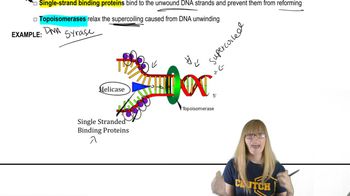
DNA Replication

DNA replication is the biological process by which a cell makes an exact copy of its DNA. It occurs before cell division to ensure each daughter cell receives a complete set of genetic information. This process involves unwinding the double helix and synthesizing complementary strands using enzymes like DNA polymerase.
추천 영상:
가이드 코스
11:59
Steps to DNA Replication

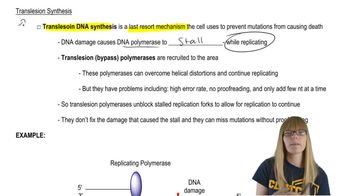
DNA Synthesis

DNA synthesis refers to the formation of new DNA strands by assembling nucleotides in a sequence-specific manner. It is a broader term that includes replication but can also describe artificial or experimental creation of DNA strands. DNA synthesis is fundamental to both natural cellular processes and laboratory techniques.
추천 영상:
가이드 코스
02:43
Translesion Synthesis

Biochemistry and DNA Processes

Biochemistry studies the chemical processes within living organisms, including the molecular mechanisms of DNA replication and synthesis. Among the two, DNA synthesis is more closely allied with biochemistry because it focuses on the enzymatic and chemical reactions that build DNA molecules, highlighting the molecular interactions and pathways involved.
추천 영상:
가이드 코스
08:39
mRNA Processing
관련 실천
교과서 질문

Compare conservative, semiconservative, and dispersive modes of DNA replication.

1299
views

교과서 질문

In the discussion, we focused on how DNA is replicated and synthesized. We also discussed recombination at the DNA level. Along the way, we encountered many opportunities to consider how this information was acquired. On the basis of these discussions, what answers would you propose to the following fundamental questions?

How do we know that in vivo DNA synthesis occurs in the 5' to 3' direction?

660
views
교과서 질문

In the discussion, we focused on how DNA is replicated and synthesized. We also discussed recombination at the DNA level. Along the way, we encountered many opportunities to consider how this information was acquired. On the basis of these discussions, what answers would you propose to the following fundamental questions?

What observations reveal that a 'telomere problem' exists during eukaryotic DNA replication, and how did we learn of the solution to this problem?

558
views
교과서 질문

Describe the role of ¹⁵N in the Meselson–Stahl experiment.

918
views
교과서 질문

Predict the results of the experiment by Taylor, Woods, and Hughes if replication were

(a) conservative and

(b) dispersive.

1078
views
교과서 질문

In the discussion, we focused on how DNA is replicated and synthesized. We also discussed recombination at the DNA level. Along the way, we encountered many opportunities to consider how this information was acquired. On the basis of these discussions, what answers would you propose to the following fundamental questions?

How do we know that DNA synthesis is discontinuous on one of the two template strands?

528
views