Ch. 13 - The Genetic Code and Transcription
Klug - Concepts of Genetics 12th Edition
Klug12th EditionConcepts of GeneticsISBN: 9780135564776당신이 사용하는 게 아니라요?교과서 변경
13장, 문제 16

Most proteins have more leucine than histidine residues, but more histidine than tryptophan residues. Correlate the number of codons for these three amino acids with this information.

검증된 단계별 안내
1
Step 1: Identify the number of codons that code for each amino acid: leucine, histidine, and tryptophan. This involves looking up the genetic code table to find how many codons correspond to each amino acid.
Step 2: Note that leucine is coded by 6 different codons, histidine by 2 codons, and tryptophan by only 1 codon. This difference in codon number can influence the frequency of these amino acids in proteins.
Step 3: Understand that a higher number of codons for an amino acid generally increases the likelihood of that amino acid being incorporated into proteins, due to codon usage bias and availability of tRNAs.
Step 4: Correlate the codon numbers with the observed protein composition: since leucine has the most codons, it tends to be more abundant than histidine; histidine, with more codons than tryptophan, tends to be more abundant than tryptophan.
Step 5: Conclude that the relative abundance of these amino acids in proteins reflects the number of codons that encode them, supporting the observed pattern: leucine > histidine > tryptophan.

비슷한 문제에 대한 검증된 영상 답변:

이 영상 해법은 위 문제에 도움이 된다고 튜터들이 추천한 것입니다.
영상 길이:
56s
도움이 되었나요?

주요 개념

질문에 올바르게 답하기 위해 반드시 이해해야 하는 핵심 개념들은 다음과 같습니다.

Genetic Code Degeneracy

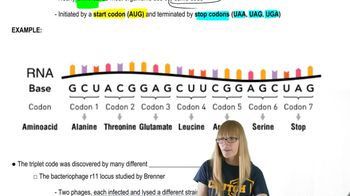
The genetic code is degenerate, meaning multiple codons can encode the same amino acid. This redundancy affects how frequently amino acids appear in proteins, as amino acids with more codons have a higher chance of being incorporated during translation.
추천 영상:
가이드 코스
11:43
The Genetic Code

Codon Number and Amino Acid Frequency

Amino acids encoded by more codons tend to be more abundant in proteins because there are more possible codons that can specify them. For example, leucine has six codons, histidine has two, and tryptophan has only one, influencing their relative frequencies in proteins.
추천 영상:
가이드 코스
03:03
New Alleles and Migration

Relationship Between Codon Usage and Protein Composition

The number of codons for an amino acid correlates with its prevalence in proteins. Since leucine has the most codons, it is generally more frequent than histidine, which in turn is more frequent than tryptophan, reflecting the codon distribution and usage bias in the genetic code.
추천 영상: