
교과서 질문
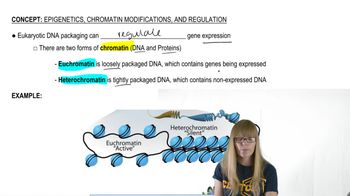
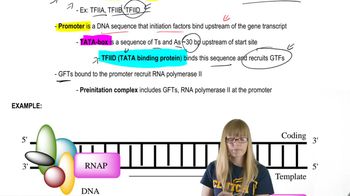
Describe the organization of the interphase nucleus. Include in your presentation a description of chromosome territories, interchromatin compartments, and transcription factories.
707
views

 검증된 단계별 안내
 04:35
04:35
 09:16
09:16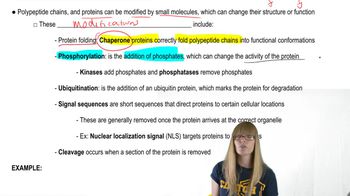 04:30
04:30Describe the organization of the interphase nucleus. Include in your presentation a description of chromosome territories, interchromatin compartments, and transcription factories.
Write a short essay describing how cis-acting regulatory elements, activators, and chromatin modifiers are all coordinately involved in regulating transcription initiation.
How do we know that there is an association between disease susceptibility in humans and regulatory DNA sequences?
Provide a definition of chromatin remodeling, and give two examples of this phenomenon.
How do we know that eukaryotic transcription factors bind to DNA sequences at or near promoter regions?
A number of experiments have demonstrated that areas of the genome that are transcriptionally inactive are also resistant to DNase I digestion. However, transcriptionally active areas are DNase I sensitive. Describe how DNase I resistance or sensitivity might indicate transcriptional activity.