Ch. 19 - Epigenetics
Klug - Concepts of Genetics  12th Edition
Klug12th EditionConcepts of Genetics ISBN: 9780135564776당신이 사용하는 게 아니라요?교과서 변경
19장, 문제 12

What is the histone code?

검증된 단계별 안내
1
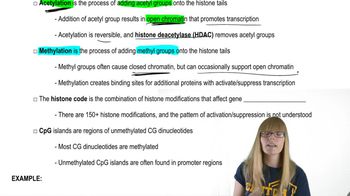
The histone code refers to the hypothesis that the transcription of genetic information encoded in DNA is, in part, regulated by chemical modifications to histone proteins, primarily on their N-terminal tails.
Histones are proteins that help package DNA into structural units called nucleosomes, which are the fundamental subunits of chromatin.
These modifications include methylation, acetylation, phosphorylation, ubiquitination, and sumoylation, among others, and they occur on specific amino acid residues of histone proteins.
Each type of modification can influence chromatin structure and function, thereby affecting gene expression by either promoting or repressing transcription.
The 'code' is thought to be a complex language of these modifications that can be read by other proteins to bring about changes in chromatin structure and gene activity.

비슷한 문제에 대한 검증된 영상 답변:

이 영상 해법은 위 문제에 도움이 된다고 튜터들이 추천한 것입니다.
영상 길이:
1m
도움이 되었나요?

주요 개념

질문에 올바르게 답하기 위해 반드시 이해해야 하는 핵심 개념들은 다음과 같습니다.

Histones

Histones are proteins that play a crucial role in the packaging of DNA into a compact, organized structure known as chromatin. They help regulate gene expression by controlling the accessibility of DNA to transcription machinery. Each histone protein can undergo various post-translational modifications, which influence chromatin structure and function.
추천 영상:
가이드 코스
07:55
Histone Protein Modifications

Post-Translational Modifications

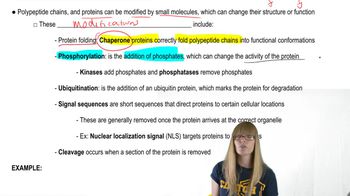
Post-translational modifications (PTMs) refer to the chemical modifications that occur on proteins after their synthesis. In the context of histones, these modifications include methylation, acetylation, phosphorylation, and ubiquitination. Each type of modification can alter the interaction between histones and DNA, thereby influencing gene expression and chromatin dynamics.
추천 영상:
가이드 코스
04:30
Post Translational Modifications

Gene Regulation

Gene regulation is the process by which cells control the expression of genes, determining when and how much of a gene product is made. The histone code contributes to gene regulation by providing a complex layer of information through the specific patterns of histone modifications. These patterns can signal whether a gene is active or silenced, thus playing a vital role in cellular function and differentiation.
추천 영상:
가이드 코스
09:22
Review of Regulation