Ch. 20 - Recombinant DNA Technology
Klug - Concepts of Genetics  12th Edition
Klug12th EditionConcepts of Genetics ISBN: 9780135564776당신이 사용하는 게 아니라요?교과서 변경
20장, 문제 1a

In a recombinant DNA cloning experiment, how can we determine whether DNA fragments of interest have been incorporated into plasmids and, once host cells are transformed, which cells contain recombinant DNA?

검증된 단계별 안내
1
Understand that recombinant DNA cloning involves inserting DNA fragments of interest into plasmid vectors, which are then introduced into host cells (usually bacteria) through transformation.
To determine if DNA fragments have been incorporated into plasmids, use a screening method such as blue-white screening. This involves plasmids containing a reporter gene (like lacZ) that is disrupted when the DNA fragment is inserted, resulting in white colonies instead of blue on X-gal containing media.
Another method is to perform restriction enzyme digestion on isolated plasmids from transformed cells. By cutting the plasmid with specific enzymes and running the fragments on an agarose gel, you can compare the pattern to expected sizes to confirm the presence of the insert.
Once host cells are transformed, select for cells containing plasmids by growing them on antibiotic-containing media, since plasmids usually carry an antibiotic resistance gene. Only cells with plasmids will survive.
Finally, to identify which surviving cells contain recombinant DNA (plasmids with the insert), use colony PCR or plasmid isolation followed by sequencing or restriction analysis to verify the presence of the DNA fragment of interest.

비슷한 문제에 대한 검증된 영상 답변:

이 영상 해법은 위 문제에 도움이 된다고 튜터들이 추천한 것입니다.
영상 길이:
2m
도움이 되었나요?

주요 개념

질문에 올바르게 답하기 위해 반드시 이해해야 하는 핵심 개념들은 다음과 같습니다.

Recombinant DNA Cloning

Recombinant DNA cloning involves inserting a DNA fragment of interest into a plasmid vector to create a recombinant molecule. This plasmid is then introduced into host cells, typically bacteria, to replicate and produce multiple copies of the inserted DNA. Understanding this process is essential to grasp how foreign DNA is propagated and analyzed.
추천 영상:
가이드 코스
07:
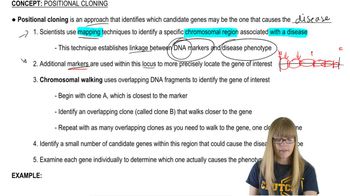
Positional Cloning

Selection and Screening Techniques

Selection uses antibiotic resistance genes in plasmids to identify host cells that have taken up plasmids, while screening distinguishes cells containing recombinant plasmids from those with non-recombinant plasmids. Common methods include blue-white screening, where disruption of a reporter gene indicates successful insertion, and colony PCR or restriction digestion for confirmation.
추천 영상:
가이드 코스
05:54
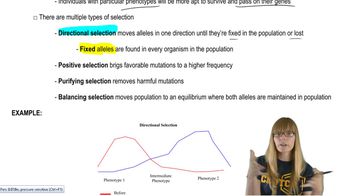
Natural Selection

Molecular Confirmation of Recombinant DNA

After transformation, molecular techniques such as restriction enzyme analysis, PCR amplification, or DNA sequencing are used to verify the presence and correct orientation of the inserted DNA fragment within plasmids. These methods ensure that the recombinant DNA is accurately constructed before further experiments.
추천 영상:
가이드 코스
03:51
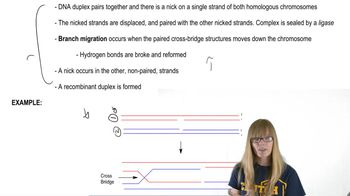
Recombination after Single Strand Breaks