Ch. 20 - Recombinant DNA Technology
Klug - Concepts of Genetics  12th Edition
Klug12th EditionConcepts of Genetics ISBN: 9780135564776당신이 사용하는 게 아니라요?교과서 변경
20장, 문제 1c

How has DNA-sequencing technology evolved in response to the emerging needs of genome scientists?

검증된 단계별 안내
1
Step 1: Understand the initial state of DNA sequencing technology, starting with Sanger sequencing, which was the first widely used method and provided relatively low-throughput, accurate sequencing of short DNA fragments.
Step 2: Recognize the limitations of early sequencing methods, such as low speed, high cost, and limited scalability, which created a need for faster and more cost-effective technologies as genome projects expanded.
Step 3: Explore the development of next-generation sequencing (NGS) technologies, which increased throughput dramatically by allowing millions of DNA fragments to be sequenced simultaneously, reducing cost and time per genome.
Step 4: Consider the emergence of third-generation sequencing technologies, which focus on sequencing single molecules of DNA in real-time, providing longer read lengths and the ability to detect epigenetic modifications, thus addressing challenges in genome assembly and structural variation detection.
Step 5: Reflect on how these technological advancements have been driven by the needs of genome scientists for higher accuracy, speed, cost efficiency, and the ability to analyze complex genomic features, enabling large-scale projects like the Human Genome Project and personalized medicine.

비슷한 문제에 대한 검증된 영상 답변:

이 영상 해법은 위 문제에 도움이 된다고 튜터들이 추천한 것입니다.
영상 길이:
1m
도움이 되었나요?

주요 개념

질문에 올바르게 답하기 위해 반드시 이해해야 하는 핵심 개념들은 다음과 같습니다.

Advancements in DNA Sequencing Technologies

DNA sequencing has evolved from first-generation methods like Sanger sequencing to high-throughput next-generation sequencing (NGS) and third-generation single-molecule sequencing. These advancements have increased speed, accuracy, and reduced costs, enabling large-scale genome projects and detailed genetic analysis.
추천 영상:
가이드 코스
08:55
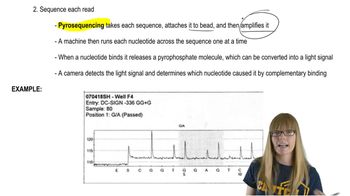
Sequencing Overview

Demand for High-Throughput and Cost-Effective Sequencing

As genome scientists sought to sequence entire genomes quickly and affordably, sequencing technologies adapted to process millions of DNA fragments simultaneously. This shift addressed the need for large data volumes, facilitating studies in population genetics, personalized medicine, and evolutionary biology.
추천 영상:
가이드 코스
03:38
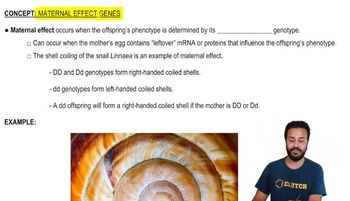
Maternal Effect

Integration of Bioinformatics and Data Analysis

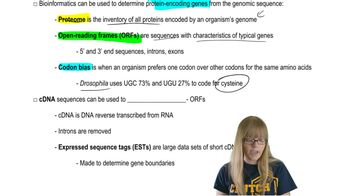
The explosion of sequencing data required advanced computational tools to store, analyze, and interpret genetic information. Bioinformatics has become essential for managing sequencing outputs, enabling genome assembly, variant detection, and functional annotation critical to modern genomics research.
추천 영상: