Ch. 21 - Genomic Analysis
Klug - Concepts of Genetics  12th Edition
Klug12th EditionConcepts of Genetics ISBN: 9780135564776당신이 사용하는 게 아니라요?교과서 변경
21장, 문제 6

Annotation involves identifying genes and gene-regulatory sequences in a genome. List and describe characteristics of a genome that are hallmarks for identifying genes in an unknown sequence. What characteristics would you look for in a bacterial genome? A eukaryotic genome?

검증된 단계별 안내
1
Understand that gene annotation involves recognizing specific features in DNA sequences that indicate the presence of genes or regulatory elements. These features differ between bacterial and eukaryotic genomes due to their structural and functional differences.
For a bacterial genome, look for characteristics such as: a) Open Reading Frames (ORFs) that are long stretches without stop codons, b) Promoter sequences like the -10 (Pribnow box) and -35 regions upstream of genes, c) Ribosome Binding Sites (Shine-Dalgarno sequences) near the start codon, d) Operon structures where multiple genes are transcribed together, and e) Relatively compact genomes with little non-coding DNA.
For a eukaryotic genome, identify features such as: a) Exons and introns within genes, requiring detection of splice sites (donor and acceptor sites), b) Promoter regions including TATA boxes and other regulatory elements upstream of transcription start sites, c) Polyadenylation signals downstream of coding regions, d) Larger intergenic regions and repetitive sequences, and e) Presence of untranslated regions (UTRs) at the 5' and 3' ends of transcripts.
Use computational tools to scan the sequence for these hallmarks: for example, algorithms that detect ORFs, promoter motifs, splice sites, and conserved regulatory sequences. Comparative genomics can also help by identifying conserved sequences across related species.
Summarize that bacterial genomes are generally simpler with continuous coding sequences and clear promoter and ribosome binding sites, while eukaryotic genomes require more complex analysis due to introns, extensive regulatory regions, and larger non-coding DNA.

비슷한 문제에 대한 검증된 영상 답변:

이 영상 해법은 위 문제에 도움이 된다고 튜터들이 추천한 것입니다.
영상 길이:
56s
도움이 되었나요?

주요 개념

질문에 올바르게 답하기 위해 반드시 이해해야 하는 핵심 개념들은 다음과 같습니다.

Gene Structure and Regulatory Elements

Genes consist of coding regions (exons) and non-coding regions (introns in eukaryotes), along with regulatory sequences like promoters and enhancers. Identifying these features helps locate genes within a genome. In bacteria, genes are often organized in operons with promoters and terminators, while eukaryotic genes have more complex regulatory elements and splicing signals.
추천 영상:
가이드 코스
05:30
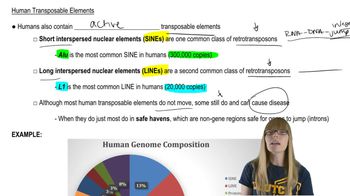
Human Transposable Elements

Differences Between Prokaryotic and Eukaryotic Genomes

Bacterial genomes are typically compact, with densely packed genes, few introns, and operon structures. Eukaryotic genomes are larger, contain introns, repetitive sequences, and complex regulatory regions. Recognizing these differences is essential for accurate gene annotation in each genome type.
추천 영상:
가이드 코스
10:14
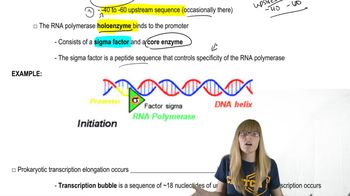
Prokaryotic Transcription

Sequence Features Indicative of Genes

Key sequence features include open reading frames (ORFs), start and stop codons, ribosome binding sites in bacteria, splice sites in eukaryotes, and conserved motifs. Detecting these features in unknown sequences aids in predicting gene locations and functions.
추천 영상:
가이드 코스
08:41
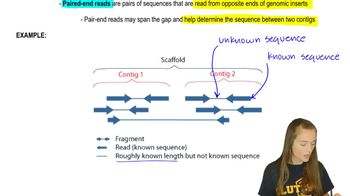
Sequencing Difficulties