Ch. 21 - Genomic Analysis
Klug - Concepts of Genetics  12th Edition
Klug12th EditionConcepts of Genetics ISBN: 9780135564776당신이 사용하는 게 아니라요?교과서 변경
21장, 문제 3

What is functional genomics? How does it differ from comparative genomics?

검증된 단계별 안내
1
Step 1: Define functional genomics by explaining that it is the branch of genomics focused on understanding the dynamic aspects of gene function and interaction, including how genes and proteins work together to influence biological processes.
Step 2: Describe the main goal of functional genomics, which is to determine the roles and functions of genes and non-coding regions in the genome, often using techniques like transcriptomics, proteomics, and gene knockout studies.
Step 3: Define comparative genomics as the study of comparing the genomes of different species to identify similarities and differences in gene content, structure, and organization.
Step 4: Explain that comparative genomics aims to understand evolutionary relationships, identify conserved genes, and infer gene function based on conservation across species.
Step 5: Summarize the key difference by stating that functional genomics focuses on the activity and function of genes within an organism, while comparative genomics focuses on comparing genomes across species to understand evolutionary and functional relationships.

비슷한 문제에 대한 검증된 영상 답변:

이 영상 해법은 위 문제에 도움이 된다고 튜터들이 추천한 것입니다.
영상 길이:
1m
도움이 되었나요?

주요 개념

질문에 올바르게 답하기 위해 반드시 이해해야 하는 핵심 개념들은 다음과 같습니다.

Functional Genomics

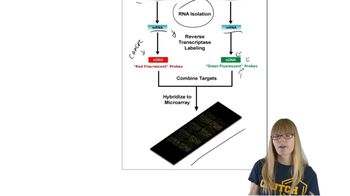
Functional genomics studies the roles and interactions of genes and proteins within a genome, focusing on understanding gene expression, regulation, and function. It uses techniques like transcriptomics and proteomics to link genetic information to biological activity.
추천 영상:
가이드 코스
08:26
Functional Genomics

Comparative Genomics

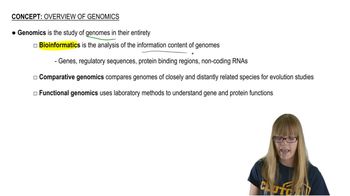
Comparative genomics involves comparing the genomes of different species to identify similarities and differences. This approach helps reveal evolutionary relationships, conserved genes, and species-specific adaptations by analyzing genome structure and sequence.
추천 영상:
가이드 코스
02:48
Genomics Overview

Differences Between Functional and Comparative Genomics

While functional genomics focuses on understanding gene functions within a single organism, comparative genomics compares genomes across species to study evolutionary patterns. Functional genomics is experimental and dynamic, whereas comparative genomics is analytical and evolutionary.
추천 영상:
가이드 코스
08:26
Functional Genomics
관련 실천
교과서 질문

Compare and contrast WGS to a map-based cloning approach.

633
views
교과서 질문

Annotation involves identifying genes and gene-regulatory sequences in a genome. List and describe characteristics of a genome that are hallmarks for identifying genes in an unknown sequence. What characteristics would you look for in a bacterial genome? A eukaryotic genome?

847
views
교과서 질문

How has the concept of a reference genome evolved to encompass a broader understanding of genomic variation in humans?

393
views
교과서 질문

Write a short essay that explains how recombinant DNA techniques were used to identify and study genes compared to how modern genomic techniques have revolutionized the cloning and analysis of genes.

503
views
교과서 질문

What is bioinformatics, and why is this discipline essential for studying genomes? Provide two examples of bioinformatics applications.

641
views
교과서 질문

In the discussion we focused on the analysis of genomes, transcriptomes, and proteomes and considered important applications and findings from these endeavors. At the same time, we found many opportunities to consider the methods and reasoning by which much of this information was acquired. From the explanations given in the chapter, what answers would you propose to the following fundamental questions?

How have microarrays demonstrated that, although all cells of an organism have the same genome, some genes are expressed in almost all cells, whereas other genes show cell- and tissue-specific expression?

455
views