Ch. 22 - Applications of Genetic Engineering and Biotechnology
Klug - Concepts of Genetics 12th Edition
Klug12th EditionConcepts of GeneticsISBN: 9780135564776당신이 사용하는 게 아니라요?교과서 변경
22장, 문제 3

Why are most recombinant human proteins produced in animal or plant hosts instead of bacterial host cells?

검증된 단계별 안내
1
Understand the concept of recombinant protein production: Recombinant proteins are produced by inserting a gene encoding the desired protein into a host organism, which then expresses the protein. The choice of host organism depends on factors like protein complexity, post-translational modifications, and yield.
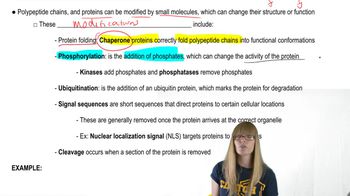
Recognize the limitations of bacterial host cells: Bacteria, such as Escherichia coli, are commonly used for recombinant protein production. However, they lack the cellular machinery to perform post-translational modifications (e.g., glycosylation, phosphorylation) that are essential for the proper function of many human proteins.
Consider the advantages of animal hosts: Animal cells, such as mammalian cell lines, have the necessary machinery to perform complex post-translational modifications. This makes them suitable for producing human proteins that require these modifications for biological activity.
Evaluate the role of plant hosts: Plant cells can also perform some post-translational modifications and are used for producing recombinant proteins. They offer advantages such as scalability, lower production costs, and reduced risk of contamination with human pathogens.
Conclude why bacterial hosts are less suitable: Since bacterial cells cannot replicate the complexity of human protein modifications, animal or plant hosts are preferred for producing recombinant human proteins to ensure proper folding, functionality, and therapeutic efficacy.

비슷한 문제에 대한 검증된 영상 답변:

이 영상 해법은 위 문제에 도움이 된다고 튜터들이 추천한 것입니다.
영상 길이:
1m
도움이 되었나요?

주요 개념

질문에 올바르게 답하기 위해 반드시 이해해야 하는 핵심 개념들은 다음과 같습니다.

Post-Translational Modifications

Recombinant proteins often require specific post-translational modifications, such as glycosylation, phosphorylation, or proper folding, to function correctly. Animal and plant cells have the necessary cellular machinery to perform these modifications, while bacterial cells typically lack the ability to modify proteins in the same way, leading to functional discrepancies.
추천 영상:
가이드 코스
04:30
Post Translational Modifications

Protein Folding and Assembly

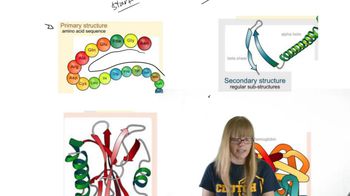
The correct folding and assembly of proteins are crucial for their biological activity. Eukaryotic cells, such as those from animals and plants, provide a more complex environment that supports proper protein folding and assembly, whereas bacterial systems may lead to misfolded proteins or inclusion bodies, which are inactive aggregates.
추천 영상:

Protein Yield and Secretion

Eukaryotic systems often allow for higher yields of properly folded and functional proteins compared to bacterial systems. Additionally, animal and plant cells can secrete proteins into the culture medium, simplifying purification processes, while bacterial cells may require more complex extraction methods to isolate the desired proteins.
추천 영상:
관련 실천
교과서 질문

One of the major causes of sickness, death, and economic loss in the cattle industry is Mannheimia haemolytica, which causes bovine pasteurellosis, or shipping fever. Noninvasive delivery of a vaccine using transgenic plants expressing immunogens would reduce labor costs and trauma to livestock. An early step toward developing an edible vaccine is to determine whether an injected version of an antigen (usually a derivative of the pathogen) is capable of stimulating the development of antibodies in a test organism. The following table assesses the ability of a transgenic portion of a toxin (Lkt) of M. haemolytica to stimulate development of specific antibodies in rabbits.

What general conclusion can you draw from the data?

516
views
교과서 질문

Write a short essay that summarizes the impacts that genomic applications are having on society and discuss which of the ethical issues presented by these applications is the most daunting to society.

468
views
교과서 질문

One of the major causes of sickness, death, and economic loss in the cattle industry is Mannheimia haemolytica, which causes bovine pasteurellosis, or shipping fever. Noninvasive delivery of a vaccine using transgenic plants expressing immunogens would reduce labor costs and trauma to livestock. An early step toward developing an edible vaccine is to determine whether an injected version of an antigen (usually a derivative of the pathogen) is capable of stimulating the development of antibodies in a test organism. The following table assesses the ability of a transgenic portion of a toxin (Lkt) of M. haemolytica to stimulate development of specific antibodies in rabbits.

With regards to development of a usable edible vaccine, what work remains to be done?

480
views
교과서 질문

How can we correlate the genome with RNA expression data in a tissue or a single cell?

495
views
교과서 질문

From GWAS, how do we know which genes are associated with a particular genetic disorder?

430
views
1
rank
교과서 질문

Sequencing the human genome, the development of microarray technology, and personal genomics promise to improve our understanding of normal and abnormal cell behavior. How are these approaches dramatically changing our understanding and treatment of complex diseases such as cancer?

725
views