Ch. 24 - Cancer Genetics
Klug - Concepts of Genetics  12th Edition
Klug12th EditionConcepts of Genetics ISBN: 9780135564776당신이 사용하는 게 아니라요?교과서 변경
24장, 문제 18

How do normal cells protect themselves from accumulating mutations in genes that could lead to cancer? How do cancer cells differ from normal cells in these processes?

검증된 단계별 안내
1
Understand that normal cells have multiple mechanisms to protect their genome integrity and prevent the accumulation of mutations. These include DNA repair systems, cell cycle checkpoints, and programmed cell death (apoptosis).
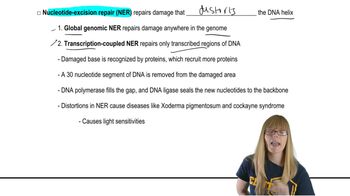
Recognize that DNA repair mechanisms detect and correct errors that occur during DNA replication or due to environmental damage. Examples include mismatch repair, nucleotide excision repair, and double-strand break repair.
Learn that cell cycle checkpoints act as surveillance points where the cell assesses DNA integrity before proceeding with division. If damage is detected, the cell can pause the cycle to allow repair or trigger apoptosis if the damage is irreparable.
Know that apoptosis is a controlled process by which cells with severe DNA damage self-destruct, preventing the propagation of mutations that could lead to cancer.
Contrast this with cancer cells, which often have defects in these protective mechanisms—such as mutations in tumor suppressor genes like TP53—leading to impaired DNA repair, faulty checkpoints, and resistance to apoptosis, allowing them to accumulate mutations and proliferate uncontrollably.

비슷한 문제에 대한 검증된 영상 답변:

이 영상 해법은 위 문제에 도움이 된다고 튜터들이 추천한 것입니다.
영상 길이:
42s
도움이 되었나요?

주요 개념

질문에 올바르게 답하기 위해 반드시 이해해야 하는 핵심 개념들은 다음과 같습니다.

DNA Repair Mechanisms

Normal cells have multiple DNA repair systems that detect and fix mutations caused by environmental damage or replication errors. These mechanisms, such as nucleotide excision repair and mismatch repair, maintain genetic stability and prevent mutation accumulation that could lead to cancer.
추천 영상:
가이드 코스
05:44
Repair Pathways

Cell Cycle Checkpoints

Cell cycle checkpoints are control points where cells assess DNA integrity before progressing through division. In normal cells, these checkpoints halt the cycle to allow repair or trigger apoptosis if damage is irreparable, preventing propagation of mutations.
추천 영상:
가이드 코스
04:29
Bacteriophage Life Cycle

Differences in Cancer Cells

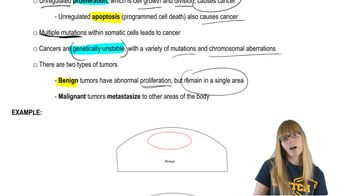
Cancer cells often have defective DNA repair and checkpoint pathways, allowing mutations to accumulate unchecked. They may evade apoptosis and continue dividing despite genetic damage, leading to uncontrolled growth and tumor development.
추천 영상:
가이드 코스
09:46
Cancer Characteristics