
A 'wrongful birth' case was recently brought before a court in which a child with Smith–Lemli–Opitz syndrome was born to apparently healthy parents. This syndrome is characterized by a cluster of birth defects including cleft palate, and an array of problems with the reproductive and urinary organs. Originally considered by their physician as having a nongenetic basis, the parents decided to have another child, who was also born with Smith–Lemli–Opitz syndrome. In the role of a genetic counselor, instruct the court about what occurred, including the probability of the parents having two affected offspring, knowing that the disorder is inherited as a recessive trait. What is the probability that one of them is a carrier and the other is not? [Hint: The p values in (b), (c), and (d) should equal 1.]

- Ch. 1 - Introduction to Genetics17
- Ch. 2 - Mitosis and Meiosis36
- Ch. 3 - Mendelian Genetics51
- Ch. 4 - Extensions of Mendelian Genetics74
- Ch. 5 - Chromosome Mapping in Eukaryotes51
- Ch. 6 - Genetic Analysis and Mapping in Bacteria and Bacteriophages46
- Ch. 7 - Sex Determination and Sex Chromosomes33
- Ch. 8 - Chromosome Mutations: Variation in Number and Arrangement40
- Ch. 9 - Extranuclear Inheritance31
- Ch. 10 - DNA Structure and Analysis43
- Ch. 11 - DNA Replication and Recombination44
- Ch. 12 - DNA Organization in Chromosomes30
- Ch. 13 - The Genetic Code and Transcription54
- Ch. 14 - Translation and Proteins47
- Ch. 15 - Gene Mutation, DNA Repair, and Transposition41
- Ch. 16 - Regulation of Gene Expression in Bacteria29
- Ch. 17 - Transcriptional Regulation in Eukaryotes41
- Ch. 18 - Post-transcriptional Regulation in Eukaryotes33
- Ch. 19 - Epigenetics33
- Ch. 20 - Recombinant DNA Technology44
- Ch. 21 - Genomic Analysis36
- Ch. 22 - Applications of Genetic Engineering and Biotechnology36
- Ch. 23 - Developmental Genetics37
- Ch. 24 - Cancer Genetics34
- Ch. 25 - Quantitative Genetics and Multifactorial Traits54
- Ch. 26 - Population and Evolutionary Genetics45
A 'wrongful birth' case was recently brought before a court in which a child with Smith–Lemli–Opitz syndrome was born to apparently healthy parents. This syndrome is characterized by a cluster of birth defects, including cleft palate, and an array of problems with the reproductive and urinary organs. Originally considered by their physician as having a nongenetic basis, the parents decided to have another child, who was also born with Smith–Lemli–Opitz syndrome. In the role of a genetic counselor, instruct the court about what occurred, including the probability of the parents having two affected offspring, knowing that the disorder is inherited as a recessive trait. What is the probability that neither of them is a carrier?
 검증된 단계별 안내
비슷한 문제에 대한 검증된 영상 답변:

주요 개념
Recessive Inheritance
 05:13
05:13
Carrier Probability
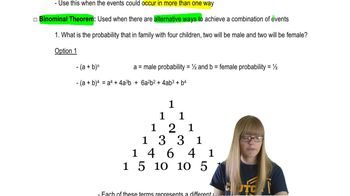 07:41
07:41Punnett Square
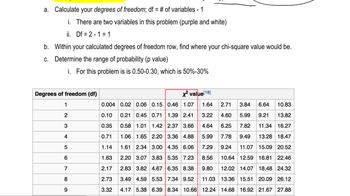 18:27
18:27Datura stramonium (the Jimsonweed) expresses flower colors of purple and white and pod textures of smooth and spiny. The results of two crosses in which the parents were not necessarily true breeding are shown below. Based on these results, put forward a hypothesis for the inheritance of the purple/white and smooth/spiny traits.
A 'wrongful birth' case was recently brought before a court in which a child with Smith–Lemli–Opitz syndrome was born to apparently healthy parents. This syndrome is characterized by a cluster of birth defects including cleft palate, and an array of problems with the reproductive and urinary organs. Originally considered by their physician as having a nongenetic basis, the parents decided to have another child, who was also born with Smith–Lemli–Opitz syndrome. In the role of a genetic counselor, instruct the court about what occurred, including the probability of the parents having two affected offspring, knowing that the disorder is inherited as a recessive trait. Calculate the probability that both the male and female are carriers for TSD.
Datura stramonium (the Jimsonweed) expresses flower colors of purple and white and pod textures of smooth and spiny. The results of two crosses in which the parents were not necessarily true breeding are shown below. Assuming that true-breeding strains of all combinations of traits are available, what single cross could you execute and carry to an F₂ generation that will prove or disprove your hypothesis? Assuming your hypothesis is correct, what results of this cross will support it?
A 'wrongful birth' case was recently brought before a court in which a child with Smith–Lemli–Opitz syndrome was born to apparently healthy parents. This syndrome is characterized by a cluster of birth defects including cleft palate, and an array of problems with the reproductive and urinary organs. Originally considered by their physician as having a nongenetic basis, the parents decided to have another child, who was also born with Smith–Lemli–Opitz syndrome. In the role of a genetic counselor, instruct the court about what occurred, including the probability of the parents having two affected offspring, knowing that the disorder is inherited as a recessive trait.
A 'wrongful birth' case was recently brought before a court in which a child with Smith–Lemli–Opitz syndrome was born to apparently healthy parents. This syndrome is characterized by a cluster of birth defects including cleft palate, and an array of problems with the reproductive and urinary organs. Originally considered by their physician as having a nongenetic basis, the parents decided to have another child, who was also born with Smith–Lemli–Opitz syndrome. In the role of a genetic counselor, instruct the court about what occurred, including the probability of the parents having two affected offspring, knowing that the disorder is inherited as a recessive trait. Draw a pedigree of the families of this couple, showing the relevant individuals.