Ch. 1 - The Molecular Basis of Heredity, Variation, and Evolution
Sanders - Genetic Analysis: An Integrated Approach 3rd Edition
Sanders3rd EditionGenetic Analysis: An Integrated ApproachISBN: 9780135564172당신이 사용하는 게 아니라요?교과서 변경
1장, 문제 10a

Define each of the following terms:
Transcription

검증된 단계별 안내
1
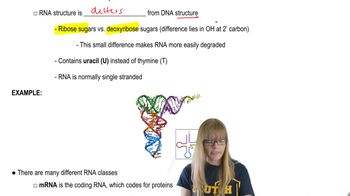
Transcription is the process by which the genetic information encoded in a DNA sequence is copied into a complementary RNA sequence.
This process occurs in the nucleus of eukaryotic cells and involves the synthesis of messenger RNA (mRNA) from a DNA template.
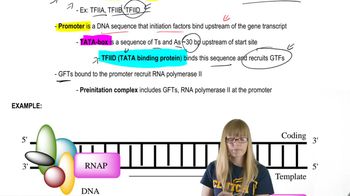
The enzyme RNA polymerase binds to a specific region of the DNA called the promoter and unwinds the DNA strands to initiate transcription.
RNA polymerase reads the template strand of DNA in the 3' to 5' direction and synthesizes the RNA strand in the 5' to 3' direction by adding complementary RNA nucleotides (A, U, G, C).
Once the RNA strand is fully synthesized, transcription ends at a termination signal, and the RNA molecule is released for further processing or use in protein synthesis.

비슷한 문제에 대한 검증된 영상 답변:

이 영상 해법은 위 문제에 도움이 된다고 튜터들이 추천한 것입니다.
영상 길이:
1m
도움이 되었나요?

주요 개념

질문에 올바르게 답하기 위해 반드시 이해해야 하는 핵심 개념들은 다음과 같습니다.

Transcription

Transcription is the process by which the genetic information encoded in DNA is copied into messenger RNA (mRNA). This occurs in the nucleus of eukaryotic cells, where RNA polymerase binds to a specific region of the DNA and synthesizes a complementary RNA strand. The resulting mRNA carries the genetic instructions from the DNA to the ribosome, where protein synthesis occurs.
추천 영상:
가이드 코스
09:16
Eukaryotic Transcription

RNA Polymerase

RNA polymerase is the enzyme responsible for synthesizing RNA from a DNA template during transcription. It unwinds the DNA double helix and catalyzes the formation of RNA nucleotides into a growing RNA strand. There are different types of RNA polymerases in eukaryotic cells, each responsible for transcribing different types of genes, such as mRNA, rRNA, and tRNA.
추천 영상:

Promoter Region

The promoter region is a specific sequence of DNA located upstream of a gene that signals the start of transcription. It contains binding sites for RNA polymerase and transcription factors, which are essential for initiating the transcription process. The strength and accessibility of the promoter can influence the rate of gene expression, making it a critical element in gene regulation.
추천 영상:
가이드 코스
00:30
Regions of X Chromosomes