Ch. 1 - The Molecular Basis of Heredity, Variation, and Evolution
Sanders - Genetic Analysis: An Integrated Approach 3rd Edition
Sanders3rd EditionGenetic Analysis: An Integrated ApproachISBN: 9780135564172당신이 사용하는 게 아니라요?교과서 변경
1장, 문제 18

What is the central dogma of biology? Identify and describe the molecular processes that accomplish the flow of genetic information described in the central dogma.

검증된 단계별 안내
1
The central dogma of biology describes the flow of genetic information within a biological system, typically summarized as DNA -> RNA -> Protein.
The first process in the central dogma is transcription, where the DNA sequence of a gene is copied into messenger RNA (mRNA). This occurs in the nucleus of eukaryotic cells.
During transcription, RNA polymerase binds to the promoter region of the gene and synthesizes a single-stranded mRNA molecule complementary to the DNA template strand.
The second process is translation, where the mRNA is used as a template to synthesize a protein. This occurs in the cytoplasm at the ribosome.
During translation, transfer RNA (tRNA) molecules bring amino acids to the ribosome, where the mRNA sequence is read in sets of three nucleotides (codons) to assemble the corresponding polypeptide chain.

비슷한 문제에 대한 검증된 영상 답변:

이 영상 해법은 위 문제에 도움이 된다고 튜터들이 추천한 것입니다.
영상 길이:
1m
도움이 되었나요?

주요 개념

질문에 올바르게 답하기 위해 반드시 이해해야 하는 핵심 개념들은 다음과 같습니다.

Central Dogma of Molecular Biology

The central dogma of molecular biology describes the flow of genetic information within a biological system. It outlines the process by which DNA is transcribed into RNA, which is then translated into proteins. This framework is fundamental for understanding how genetic information is expressed and regulated in living organisms.
추천 영상:
가이드 코스
07:11
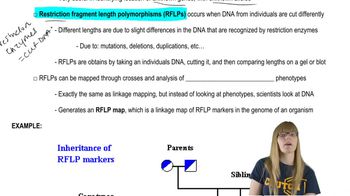
Mapping with Markers

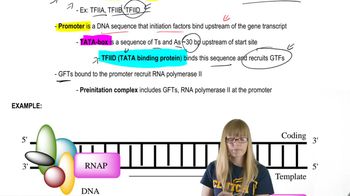
Transcription

Transcription is the first step in the central dogma, where the DNA sequence of a gene is copied into messenger RNA (mRNA). This process occurs in the nucleus of eukaryotic cells and involves the enzyme RNA polymerase, which synthesizes the mRNA strand complementary to the DNA template. Transcription is crucial for converting genetic information into a format that can be translated into proteins.
추천 영상:
가이드 코스
09:16
Eukaryotic Transcription

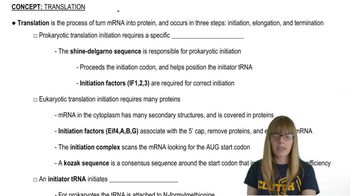
Translation

Translation is the second step in the central dogma, where the mRNA produced during transcription is decoded to synthesize proteins. This process takes place in the ribosome, where transfer RNA (tRNA) molecules bring amino acids to the growing polypeptide chain based on the sequence of codons in the mRNA. Translation is essential for the expression of genes and the functioning of cells.
추천 영상:
가이드 코스
07:58
Translation initiation