Ch. 10 - Eukaryotic Chromosome Abnormalities and Molecular Organization
Sanders - Genetic Analysis: An Integrated Approach 3rd Edition
Sanders3rd EditionGenetic Analysis: An Integrated ApproachISBN: 9780135564172당신이 사용하는 게 아니라요?교과서 변경
10장, 문제 14a

Dr. Ara B. Dopsis has an idea he thinks will be a boon to agriculture. He wants to create the 'pomato,' a hybrid between a tomato (Lycopersicon esculentum) that has 12 chromosomes and a potato (Solanum tuberosum) that has 48 chromosomes. Dr. Dopsis is hoping his new pomato will have tuber growth like a potato and the fruit production of a tomato. He joins a haploid gamete from each species to form a hybrid and then induces doubling of chromosome number. How many chromosomes will the hybrid have before chromosome doubling?

검증된 단계별 안내
1
Determine the chromosome number of the haploid gamete for each species. A haploid gamete contains half the number of chromosomes of the diploid organism. For the tomato (Lycopersicon esculentum), the diploid chromosome number is 12, so the haploid gamete will have 12 ÷ 2 = 6 chromosomes. For the potato (Solanum tuberosum), the diploid chromosome number is 48, so the haploid gamete will have 48 ÷ 2 = 24 chromosomes.
Add the chromosome numbers of the haploid gametes from both species to find the total chromosome number in the hybrid before chromosome doubling. This is the sum of the haploid chromosome numbers from the tomato and the potato.
The hybrid will have the combined chromosome number of the haploid gametes from the tomato and potato. This total represents the chromosome number before any doubling occurs.
Understand that chromosome doubling, if induced, would double the total chromosome number in the hybrid. However, this step is not relevant to the question, as it asks for the chromosome number before doubling.
Conclude that the hybrid's chromosome number before doubling is the sum of the haploid gametes from the tomato and potato, which is the key to solving this problem.

비슷한 문제에 대한 검증된 영상 답변:

이 영상 해법은 위 문제에 도움이 된다고 튜터들이 추천한 것입니다.
영상 길이:
2m
도움이 되었나요?

주요 개념

질문에 올바르게 답하기 위해 반드시 이해해야 하는 핵심 개념들은 다음과 같습니다.

Chromosome Number

Chromosome number refers to the total count of chromosomes in a cell. In this case, the tomato has 12 chromosomes, and the potato has 48. When creating a hybrid, the chromosome number is typically the sum of the two parent species' chromosomes, which is crucial for understanding the genetic makeup of the resulting hybrid.
추천 영상:
가이드 코스
07:10
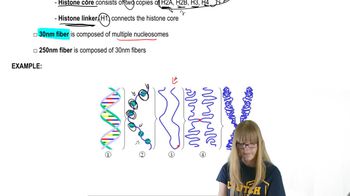
Chromosome Structure

Hybridization

Hybridization is the process of combining different varieties or species to create a new organism with traits from both parents. In this scenario, Dr. Dopsis is hybridizing a tomato and a potato to produce the 'pomato.' This process often involves the fusion of gametes, which are the reproductive cells that carry half the genetic information from each parent.
추천 영상:
가이드 코스
03:08
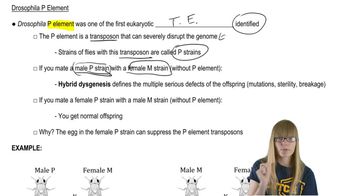
Drosophila P Element

Chromosome Doubling

Chromosome doubling, or polyploidy, is a technique used in genetics to increase the chromosome number of an organism. After forming the hybrid, Dr. Dopsis plans to induce chromosome doubling to stabilize the hybrid's genetic traits. This step is essential for ensuring that the hybrid can reproduce and maintain the desired characteristics of both parent species.
추천 영상:
가이드 코스
07:10
Chromosome Structure
관련 실천
교과서 질문

An animal heterozygous for a reciprocal balanced translocation has the following chromosomes:

      MN • OPQRST

      MN • OPQRjkl

      cdef • ghijkl

      cdef • ghiST

Identify the gametes produced by adjacent-2 segregation. Which if any of these gametes are viable?

538
views
교과서 질문

An animal heterozygous for a reciprocal balanced translocation has the following chromosomes:

MN • OPQRST           

MN • OPQRjkl           

cdef • ghijkl           

cdef • ghiST

Among the three segregation patterns, which is least likely to occur? Why?

416
views
교과서 질문

An animal heterozygous for a reciprocal balanced translocation has the following chromosomes:

      MN • OPQRST

      MN • OPQRjkl

      cdef • ghijkl

      cdef • ghiST

Identify the gametes produced by adjacent-1 segregation. Which, if any, of these gametes are viable?

497
views
교과서 질문

Dr. Ara B. Dopsis has an idea he thinks will be a boon to agriculture. He wants to create the 'pomato,' a hybrid between a tomato (Lycopersicon esculentum) that has 12 chromosomes and a potato (Solanum tuberosum) that has 48 chromosomes. Dr. Dopsis is hoping his new pomato will have tuber growth like a potato and the fruit production of a tomato. He joins a haploid gamete from each species to form a hybrid and then induces doubling of chromosome number.

How many chromosomes will the polyploid have after chromosome doubling?

471
views
교과서 질문

Dr. Ara B. Dopsis has an idea he thinks will be a boon to agriculture. He wants to create the 'pomato,' a hybrid between a tomato (Lycopersicon esculentum) that has 12 chromosomes and a potato (Solanum tuberosum) that has 48 chromosomes. Dr. Dopsis is hoping his new pomato will have tuber growth like a potato and the fruit production of a tomato. He joins a haploid gamete from each species to form a hybrid and then induces doubling of chromosome number.

Can Dr. Dopsis be sure the polyploid will have the characteristics he wants? Why or why not?

456
views
교과서 질문

Dr. Ara B. Dopsis has an idea he thinks will be a boon to agriculture. He wants to create the 'pomato,' a hybrid between a tomato (Lycopersicon esculentum) that has 12 chromosomes and a potato (Solanum tuberosum) that has 48 chromosomes. Dr. Dopsis is hoping his new pomato will have tuber growth like a potato and the fruit production of a tomato. He joins a haploid gamete from each species to form a hybrid and then induces doubling of chromosome number. Will this hybrid be infertile?

379
views