Ch. 14 - Analysis of Gene Function via Forward Genetics and Reverse Genetics
Sanders - Genetic Analysis: An Integrated Approach 3rd Edition
Sanders3rd EditionGenetic Analysis: An Integrated ApproachISBN: 9780135564172당신이 사용하는 게 아니라요?교과서 변경
14장, 문제 C.1b

Identify the normal functions of the following genes whose mutations are associated with the development of cancer.
c-MYC(Burkitt lymphoma)

검증된 단계별 안내
1
Understand that c-MYC is a proto-oncogene, which means its normal function is to regulate cell growth and division by encoding a transcription factor that controls the expression of genes involved in cell cycle progression.
Recognize that in normal cells, c-MYC helps promote controlled cell proliferation and apoptosis, maintaining a balance necessary for healthy tissue function.
Note that mutations or translocations involving c-MYC, such as those seen in Burkitt lymphoma, lead to its overexpression, causing uncontrolled cell division and contributing to cancer development.
Summarize that the normal function of c-MYC is to act as a regulator of gene expression that promotes cell growth, differentiation, and apoptosis under tight control.
Conclude that understanding the normal role of c-MYC helps explain how its dysregulation through mutation or translocation can lead to oncogenesis.

비슷한 문제에 대한 검증된 영상 답변:

이 영상 해법은 위 문제에 도움이 된다고 튜터들이 추천한 것입니다.
영상 길이:
2m
도움이 되었나요?

주요 개념

질문에 올바르게 답하기 위해 반드시 이해해야 하는 핵심 개념들은 다음과 같습니다.

Oncogenes and Proto-oncogenes

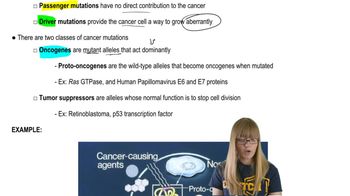
Proto-oncogenes are normal genes that regulate cell growth and division. When mutated or abnormally expressed, they become oncogenes that can promote uncontrolled cell proliferation, leading to cancer. Understanding the role of proto-oncogenes like c-MYC is essential to grasp how their mutations contribute to tumor development.
추천 영상:
가이드 코스
04:46
Cancer Mutations

Function of c-MYC Gene

The c-MYC gene encodes a transcription factor that regulates the expression of genes involved in cell cycle progression, metabolism, and apoptosis. Normally, c-MYC controls cell growth and proliferation, but its overexpression or mutation can drive oncogenesis, as seen in Burkitt lymphoma.
추천 영상:
가이드 코스
08:26
Functional Genomics

Molecular Basis of Burkitt Lymphoma

Burkitt lymphoma is characterized by a chromosomal translocation involving c-MYC, leading to its deregulated expression. This translocation places c-MYC under the control of immunoglobulin gene enhancers, causing excessive cell proliferation in B lymphocytes and contributing to cancer development.
추천 영상:
가이드 코스
07:11
Mapping with Markers