Ch. 18 - Developmental Genetics
Sanders - Genetic Analysis: An Integrated Approach 3rd Edition
Sanders3rd EditionGenetic Analysis: An Integrated ApproachISBN: 9780135564172당신이 사용하는 게 아니라요?교과서 변경
18장, 문제 26

Basidiomycota is a monophyletic group of fungi that includes most of the common mushrooms. You are interested in the development of the body plan of mushrooms. How would you identify the genes required for patterning during mushroom development?

검증된 단계별 안내
1
Understand the biological context: Basidiomycota fungi develop complex structures like mushrooms, and 'patterning' refers to the spatial and temporal organization of cells during development.
Design an experimental approach to identify genes involved in mushroom patterning, such as comparing gene expression profiles at different developmental stages using RNA sequencing (RNA-seq).
Analyze the RNA-seq data to find genes that are differentially expressed during key stages of mushroom development, focusing on those with expression patterns correlating with morphological changes.
Use functional genomics techniques, such as gene knockout or RNA interference (RNAi), to disrupt candidate genes and observe the effects on mushroom body plan development to confirm their roles.
Complement genetic data with bioinformatics by comparing candidate genes to known developmental genes in other fungi or model organisms to predict their function in patterning.

비슷한 문제에 대한 검증된 영상 답변:

이 영상 해법은 위 문제에 도움이 된다고 튜터들이 추천한 것입니다.
영상 길이:
2m
도움이 되었나요?

주요 개념

질문에 올바르게 답하기 위해 반드시 이해해야 하는 핵심 개념들은 다음과 같습니다.

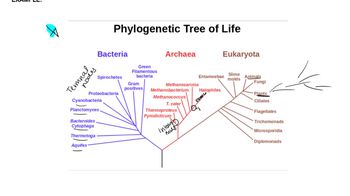
Monophyly and Phylogenetic Context

Monophyly refers to a group of organisms that includes an ancestor and all its descendants, indicating shared evolutionary history. Understanding that Basidiomycota is monophyletic helps focus on conserved genetic elements involved in mushroom development, as these genes are likely inherited from a common ancestor.
추천 영상:
가이드 코스
08:16
Phylogenetic Trees

Gene Identification Techniques in Developmental Biology

Identifying genes involved in development often involves methods like gene expression profiling, mutagenesis, and comparative genomics. Techniques such as RNA sequencing during different developmental stages or gene knockout studies can reveal genes essential for patterning in mushroom formation.
추천 영상:
가이드 코스
11:19
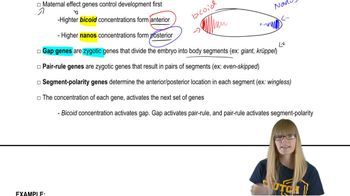
Segmentation Genes

Body Plan Patterning in Fungi

Body plan patterning refers to the spatial and temporal regulation of cell differentiation and tissue organization during development. In mushrooms, this involves genes controlling the formation of structures like the cap, gills, and stalk, which can be studied to understand how complex fungal morphologies arise.
추천 영상:
가이드 코스
11:19
Segmentation Genes
관련 실천
교과서 질문

In Drosophila, recessive mutations in the fruitless gene (fru) result in males courting other males, and recessive mutations in the Antennapedia gene (Ant⁻) lead to defects in the body plan, specifically in the thoracic region of the body, where mutants fail to develop legs. The two genes map 15 cM apart on chromosome 3. You have isolated a new dominant Antdᵈ mutant allele that you induced by treating your flies with X-rays. Your new mutant has legs developing instead of antennae on the head of the fly. You cross your newly induced dominant Antᵈ mutant (a pure-breeding line) with a homozygous recessive fru mutant (which is homozygous wild type at the Ant⁺ locus), as diagrammed below:

What phenotypes, and in what proportions, do you expect in the F₂ obtained by interbreeding F₁ animals?

468
views
교과서 질문

Homeotic genes are thought to regulate each other. Are similar interactions observed between Hox genes?

495
views
교과서 질문

Dipterans (two-winged insects) are thought to have evolved from a four-winged ancestor that had wings on both T2 and T3 thoracic segments, as in extant butterflies and dragonflies. Describe an evolutionary scenario for the evolution of dipterans from four-winged ancestors. What types of mutations could lead to a butterfly developing with only two wings?

480
views
교과서 질문

Zea mays (maize, or corn) was originally domesticated in central Mexico at least 7000 years ago from an endemic grass called teosinte. Teosinte is generally unbranched, has male and female flowers on the same branch, and has few kernels per 'cob,' each encased in a hard, leaf-like organ called a glume. In contrast, maize is highly branched, with a male inflorescence (tassel) on its central branch and female inflorescences (cobs) on axillary branches. In addition, maize cobs have many rows of kernels and soft glumes. George Beadle crossed cultivated maize and wild teosinte, which resulted in fully fertile F₁ plants. When the F₁ plants were self-fertilized, about 1 plant in every 1000 of the F₂ progeny resembled either a modern maize plant or a wild teosinte plant. What did Beadle conclude about whether the different architectures of maize and teosinte were caused by changes with a small effect in many genes or changes with a large effect in just a few genes?

534
views
교과서 질문

Homeotic genes are thought to regulate each other. What aspect of the phenotype of apetala2 agamous double mutants indicates that these two genes act antagonistically?

611
views
교과서 질문

In C. elegans there are two sexes: hermaphrodite and male. Sex is determined by the ratio of X chromosomes to haploid sets of autosomes (X/A). An X/A ratio of 1.0 produces a hermaphrodite (XX), and an X/A ratio of 0.5 results in a male (XO). In the 1970s, Jonathan Hodgkin and Sydney Brenner carried out genetic screens to identify mutations in three genes that result in either XX males (tra-1, tra-2) or XO hermaphrodites (her-1). Double-mutant strains were constructed to assess for epistatic interactions between the genes (see table). Propose a genetic model of how the her and tra genes control sex determination.

686
views