Ch. 19 - Genetic Analysis of Quantitative Traits
Sanders - Genetic Analysis: An Integrated Approach 3rd Edition
Sanders3rd EditionGenetic Analysis: An Integrated ApproachISBN: 9780135564172당신이 사용하는 게 아니라요?교과서 변경
19장, 문제 7e

Provide a definition and an example for each of the following terms:
Quantitative trait locus

검증된 단계별 안내
1
A quantitative trait locus (QTL) is a region of the genome that is associated with a quantitative trait, which is a trait that varies continuously and is influenced by multiple genes and environmental factors. Examples of quantitative traits include height, weight, and crop yield.
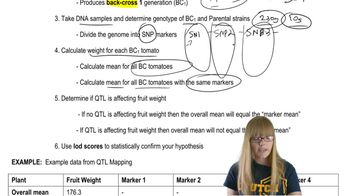
To identify a QTL, researchers typically use statistical methods to link variations in DNA markers (such as SNPs or microsatellites) with variations in the quantitative trait of interest.
An example of a QTL study could involve mapping regions of the genome associated with plant height in a population of hybrid plants. By analyzing the genetic markers and their correlation with height measurements, researchers can identify specific genomic regions that contribute to height variation.
QTLs are often identified using techniques such as linkage mapping or genome-wide association studies (GWAS), which involve analyzing the inheritance patterns of traits in a population.
Understanding QTLs is important for applications such as selective breeding in agriculture, where identifying genomic regions associated with desirable traits can help improve crop or livestock characteristics.

비슷한 문제에 대한 검증된 영상 답변:

이 영상 해법은 위 문제에 도움이 된다고 튜터들이 추천한 것입니다.
영상 길이:
2m
도움이 되었나요?

주요 개념

질문에 올바르게 답하기 위해 반드시 이해해야 하는 핵심 개념들은 다음과 같습니다.

Quantitative Trait Locus (QTL)

A Quantitative Trait Locus (QTL) is a specific region of DNA that is associated with a particular quantitative trait, which is a measurable phenotype that varies continuously, such as height or weight. QTLs are identified through statistical analysis of phenotypic data and genetic markers, allowing researchers to understand the genetic basis of complex traits.
추천 영상:

Phenotype

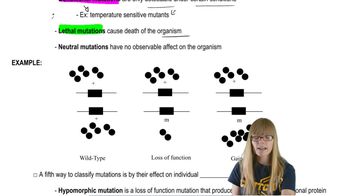
Phenotype refers to the observable characteristics or traits of an organism, which result from the interaction of its genotype (genetic makeup) with the environment. Examples of phenotypes include physical attributes like color, size, and shape, as well as behavioral traits. Understanding phenotypes is crucial for studying QTLs, as they are the traits that QTLs influence.
추천 영상:
가이드 코스
10:48
Mutations and Phenotypes

Genetic Markers

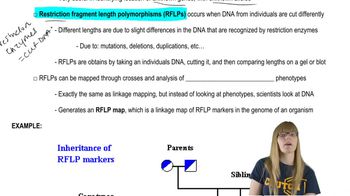
Genetic markers are specific sequences in the genome that can be used to identify individuals or species and track inheritance patterns. They serve as reference points in genetic mapping studies, including QTL mapping, where they help researchers correlate specific regions of the genome with phenotypic traits. Common types of genetic markers include single nucleotide polymorphisms (SNPs) and microsatellites.
추천 영상:
가이드 코스
07:11
Mapping with Markers