Ch. 2 - Transmission Genetics
Sanders - Genetic Analysis: An Integrated Approach 3rd Edition
Sanders3rd EditionGenetic Analysis: An Integrated ApproachISBN: 9780135564172당신이 사용하는 게 아니라요?교과서 변경
2장, 문제 10d

The dorsal pigment pattern of frogs can be either 'leopard' (white pigment between dark spots) or 'mottled' (pigment between spots appears mottled). The trait is controlled by an autosomal gene. Males and females are selected from pure-breeding populations, and a pair of reciprocal crosses is performed. The cross results are shown below.
    Cross 1:  P₁: Male leopard x male mottled
             F₁: All mottled
             F₂: 70 mottled, 22 leopard
    Cross 2:  P₁: Male mottled x female leopard
             F₁: All mottled
             F₂: 50 mottled, 18 leopard
Propose two different genetic crosses that would allow you to determine the genotype of one mottled frog from the F₂ generation.

검증된 단계별 안내
1
Step 1: Understand the inheritance pattern. The problem states that the dorsal pigment pattern is controlled by an autosomal gene. The F₁ generation is all mottled, suggesting that mottled is dominant over leopard. The F₂ generation shows a ratio of mottled to leopard, which indicates Mendelian inheritance.
Step 2: Define the genotypes. Assign symbols to the alleles: 'M' for the dominant mottled allele and 'm' for the recessive leopard allele. A mottled frog could have the genotype MM (homozygous dominant) or Mm (heterozygous). A leopard frog would have the genotype mm (homozygous recessive).
Step 3: Design the first genetic cross. To determine the genotype of a mottled frog from the F₂ generation, cross the mottled frog with a homozygous recessive leopard frog (mm). If the mottled frog is heterozygous (Mm), the offspring will show a 1:1 ratio of mottled to leopard. If the mottled frog is homozygous dominant (MM), all offspring will be mottled.
Step 4: Design the second genetic cross. Alternatively, cross the mottled frog with another mottled frog from the F₂ generation. If both frogs are heterozygous (Mm), the offspring will show a 3:1 ratio of mottled to leopard. If one frog is homozygous dominant (MM) and the other is heterozygous (Mm), the offspring will show a 1:0 ratio of mottled to leopard.
Step 5: Analyze the offspring ratios. Based on the phenotypic ratios observed in the offspring from either cross, you can determine whether the mottled frog from the F₂ generation is homozygous dominant (MM) or heterozygous (Mm).

비슷한 문제에 대한 검증된 영상 답변:

이 영상 해법은 위 문제에 도움이 된다고 튜터들이 추천한 것입니다.
영상 길이:
2m
도움이 되었나요?

주요 개념

질문에 올바르게 답하기 위해 반드시 이해해야 하는 핵심 개념들은 다음과 같습니다.

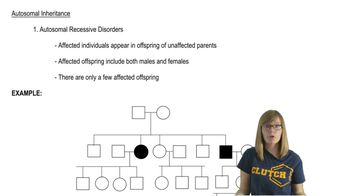
Autosomal Inheritance

Autosomal inheritance refers to the transmission of genes located on the autosomes, which are the non-sex chromosomes. In this case, the dorsal pigment pattern of frogs is controlled by an autosomal gene, meaning that both males and females have two copies of the gene that can influence the trait. Understanding this concept is crucial for predicting the inheritance patterns and phenotypic ratios observed in the offspring.
추천 영상:
가이드 코스
09:08
Autosomal Pedigrees

Reciprocal Crosses

Reciprocal crosses involve mating individuals of different phenotypes in both possible combinations to determine the influence of parental genotypes on offspring traits. In the given scenario, the reciprocal crosses between leopard and mottled frogs help to establish whether the mottled phenotype is dominant over the leopard phenotype. Analyzing the results from these crosses aids in understanding the genetic basis of the observed traits.
추천 영상:
가이드 코스
26:08
Trihybrid Cross

Phenotypic Ratios

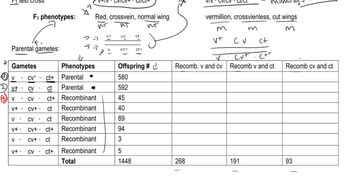
Phenotypic ratios represent the relative frequencies of different phenotypes in the offspring resulting from a genetic cross. In the F₂ generation of the crosses described, the observed ratios of mottled to leopard frogs provide insights into the underlying genotypes of the parents. By analyzing these ratios, one can infer the possible genotypes of the mottled frogs and design further crosses to confirm their genetic makeup.
추천 영상:
가이드 코스
10:48
Mutations and Phenotypes
관련 실천
교과서 질문

Black skin color is dominant to pink skin color in pigs. Two heterozygous black pigs are crossed.

What is the probability that their offspring will have pink skin?

472
views
교과서 질문

Black skin color is dominant to pink skin color in pigs. Two heterozygous black pigs are crossed.

If these pigs produce a total of three piglets, what is the probability that two will be pink and one will be black?

596
views
교과서 질문

The dorsal pigment pattern of frogs can be either 'leopard' (white pigment between dark spots) or 'mottled' (pigment between spots appears mottled). The trait is controlled by an autosomal gene. Males and females are selected from pure-breeding populations, and a pair of reciprocal crosses is performed. The cross results are shown below.

    Cross 1:  P₁: Male leopard x male mottled

             F₁: All mottled

             F₂: 70 mottled, 22 leopard

    Cross 2:  P₁: Male mottled x female leopard

             F₁: All mottled

             F₂: 50 mottled, 18 leopard

Which of the phenotypes is dominant? Explain your answer.

497
views
교과서 질문

The dorsal pigment pattern of frogs can be either 'leopard' (white pigment between dark spots) or 'mottled' (pigment between spots appears mottled). The trait is controlled by an autosomal gene. Males and females are selected from pure-breeding populations, and a pair of reciprocal crosses is performed. The cross results are shown below.

    Cross 1:  P₁: Male leopard x male mottled

             F₁: All mottled

             F₂: 70 mottled, 22 leopard

    Cross 2:  P₁: Male mottled x female leopard

             F₁: All mottled

             F₂: 50 mottled, 18 leopard

Compare and contrast the results of the reciprocal crosses in the context of autosomal gene inheritance.

509
views
교과서 질문

Black skin color is dominant to pink skin color in pigs. Two heterozygous black pigs are crossed.

What is the probability that the first and second offspring will have black skin?

583
views
교과서 질문

The dorsal pigment pattern of frogs can be either 'leopard' (white pigment between dark spots) or 'mottled' (pigment between spots appears mottled). The trait is controlled by an autosomal gene. Males and females are selected from pure-breeding populations, and a pair of reciprocal crosses is performed. The cross results are shown below.

    Cross 1:  P₁: Male leopard x male mottled

             F₁: All mottled

             F₂: 70 mottled, 22 leopard

    Cross 2:  P₁: Male mottled x female leopard

             F₁: All mottled

             F₂: 50 mottled, 18 leopard

In the F₂ progeny from both crosses, what proportion is expected to be homozygous? What proportion is expected to be heterozygous?

500
views