Ch. 4 - Gene Interaction
Sanders - Genetic Analysis: An Integrated Approach 3rd Edition
Sanders3rd EditionGenetic Analysis: An Integrated ApproachISBN: 9780135564172당신이 사용하는 게 아니라요?교과서 변경
4장, 문제 11d

In the rats identified in Problem 10, a third independently assorting gene involved in the determination of coat color is the C gene. At this locus, the genotype C– permits expression of pigment from genes B and D. The cc genotype, however, prevents expression of coat color and results in albino rats. For each of the following crosses, determine the expected phenotype ratio of progeny.
BbDdCC×BbDdCC

검증된 단계별 안내
1
Step 1: Understand the genetic cross. The problem involves three independently assorting genes: B, D, and C. The B and D genes determine coat color, while the C gene determines whether pigment is expressed. The genotype C– (C_ or CC) allows pigment expression, while cc results in albino rats regardless of the B and D genotypes.
Step 2: Analyze the parental genotypes. Both parents are BbDdCC. This means they are heterozygous for the B and D genes and homozygous dominant for the C gene. Since both parents are CC, all offspring will inherit at least one C allele, ensuring pigment expression.
Step 3: Focus on the B and D genes. Since the C gene ensures pigment expression, the phenotype of the progeny will depend on the combinations of the B and D alleles. Perform a dihybrid cross for Bb × Bb and Dd × Dd to determine the phenotypic ratios for these two genes.
Step 4: Set up Punnett squares for the B and D genes. For Bb × Bb, the genotypic ratio is 1 BB : 2 Bb : 1 bb. For Dd × Dd, the genotypic ratio is 1 DD : 2 Dd : 1 dd. Combine these ratios to determine the phenotypic outcomes for coat color based on the interactions of the B and D genes.
Step 5: Determine the phenotype ratios. The B and D genes interact to produce specific coat colors (e.g., black, brown, or another color depending on the dominance relationships). Multiply the probabilities from the Punnett squares to calculate the expected phenotype ratio of progeny. Since all offspring are CC, no albino rats will be produced.

비슷한 문제에 대한 검증된 영상 답변:

이 영상 해법은 위 문제에 도움이 된다고 튜터들이 추천한 것입니다.
영상 길이:
5m
도움이 되었나요?

주요 개념

질문에 올바르게 답하기 위해 반드시 이해해야 하는 핵심 개념들은 다음과 같습니다.

Independent Assortment

Independent assortment is a fundamental principle of genetics stating that alleles for different genes segregate independently of one another during gamete formation. This means that the inheritance of one trait (e.g., coat color) does not influence the inheritance of another trait (e.g., another color gene), allowing for a variety of combinations in offspring.
추천 영상:
가이드 코스
04:58
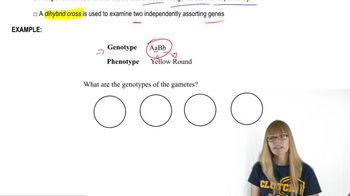
Gamete Genetics and Independent Assortment

Genotype and Phenotype

The genotype refers to the genetic makeup of an organism, while the phenotype is the observable physical or biochemical characteristics resulting from the genotype and environmental influences. In this context, the presence of the C gene and its alleles (C and c) directly affects the coat color phenotype of the rats, determining whether they express pigment or are albino.
추천 영상:
가이드 코스
07:52
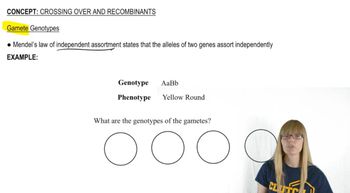
Gamete Genotypes

Punnett Square

A Punnett square is a diagram used to predict the genotypes and phenotypes of offspring from a genetic cross. By organizing the possible gametes from each parent, it allows for the calculation of expected ratios of different phenotypes in the progeny, which is essential for solving the given genetic cross involving multiple traits.
추천 영상:
가이드 코스
18:27
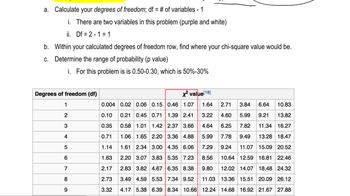
Chi Square Analysis
관련 실천
교과서 질문

In the rats identified in Problem 10, a third independently assorting gene involved in the determination of coat color is the C gene. At this locus, the genotype C– permits expression of pigment from genes B and D. The cc genotype, however, prevents expression of coat color and results in albino rats. For each of the following crosses, determine the expected phenotype ratio of progeny.

bbDDCc×BBddCc

387
views
교과서 질문

Using the information provided in Problems 10 and 11, determine the genotype and phenotype of parents that produce the following progeny:

3/8 black : 3/8 cream : 2/8 albino

703
views
교과서 질문

In the rats identified in Problem 10, a third independently assorting gene involved in the determination of coat color is the C gene. At this locus, the genotype C– permits expression of pigment from genes B and D. The cc genotype, however, prevents expression of coat color and results in albino rats. For each of the following crosses, determine the expected phenotype ratio of progeny.

BBDdcc×BbddCc

392
views
교과서 질문

In the rats identified in Problem 10, a third independently assorting gene involved in the determination of coat color is the C gene. At this locus, the genotype C– permits expression of pigment from genes B and D. The cc genotype, however, prevents expression of coat color and results in albino rats. For each of the following crosses, determine the expected phenotype ratio of progeny.

BbDDCc×BbDdCc

385
views
교과서 질문

Using the information provided in Problems 10 and 11, determine the genotype and phenotype of parents that produce the following progeny:

9/16 brown : 3/16 black : 4/16 albino

575
views
교과서 질문

Using the information provided in Problems 10 and 11, determine the genotype and phenotype of parents that produce the following progeny:

27/64 brown : 16/64 albino : 9/64 yellow : 9/64 black : 3/64 cream

493
views