Ch. 6 - Genetic Analysis and Mapping in Bacteria and Bacteriophages
Sanders - Genetic Analysis: An Integrated Approach 3rd Edition
Sanders3rd EditionGenetic Analysis: An Integrated ApproachISBN: 9780135564172당신이 사용하는 게 아니라요?교과서 변경
6장, 문제 5c

Explain the importance of the following features in conjugating donor bacteria:
homologous recombination

검증된 단계별 안내
1
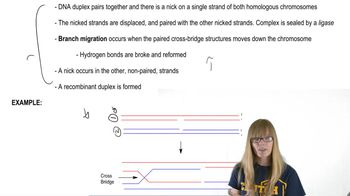
Homologous recombination is a process where genetic material is exchanged between two similar or identical DNA sequences. In the context of conjugating donor bacteria, this mechanism is crucial for integrating transferred genetic material into the recipient's genome.
During bacterial conjugation, the donor bacterium transfers a plasmid or a segment of DNA to the recipient bacterium. For this transferred DNA to be stably maintained and expressed, homologous recombination allows it to integrate into the recipient's chromosome at regions of sequence similarity.
Homologous recombination ensures genetic diversity by allowing the recipient bacterium to acquire new traits, such as antibiotic resistance or metabolic capabilities, which may enhance its survival in specific environments.
The process involves enzymes such as RecA, which facilitates the pairing and exchange of homologous DNA strands. This ensures that the integration is precise and does not disrupt essential genes in the recipient's genome.
In summary, homologous recombination is essential for the stable incorporation of genetic material during bacterial conjugation, promoting genetic variation and adaptation in bacterial populations.

비슷한 문제에 대한 검증된 영상 답변:

이 영상 해법은 위 문제에 도움이 된다고 튜터들이 추천한 것입니다.
영상 길이:
2m
도움이 되었나요?

주요 개념

질문에 올바르게 답하기 위해 반드시 이해해야 하는 핵심 개념들은 다음과 같습니다.

Homologous Recombination

Homologous recombination is a genetic process where two DNA molecules exchange genetic information, typically involving sequences that are similar or identical. This mechanism is crucial for the integration of donor DNA into the recipient's genome during bacterial conjugation, allowing for genetic diversity and adaptation. It ensures that the transferred genes can be stably maintained and expressed in the new host.
추천 영상:
가이드 코스
03:51
Recombination after Single Strand Breaks

Conjugation in Bacteria

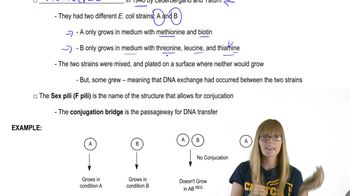
Conjugation is a form of horizontal gene transfer in bacteria, where genetic material is transferred from a donor to a recipient cell through direct contact. This process often involves a pilus, a specialized structure that facilitates the transfer of plasmids or chromosomal DNA. Understanding conjugation is essential for grasping how bacteria can acquire new traits, such as antibiotic resistance.
추천 영상:
가이드 코스
04:06
Conjugation Overview

Genetic Diversity

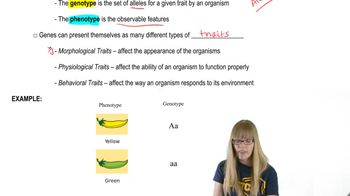
Genetic diversity refers to the variety of genetic characteristics within a population, which is vital for the adaptability and survival of species. In the context of bacterial conjugation, the introduction of new genetic material through homologous recombination enhances genetic diversity, enabling bacteria to evolve rapidly in response to environmental pressures, such as the presence of antibiotics.
추천 영상:
가이드 코스
03:45
Descriptive Genetics