Ch. 7 - DNA Structure and Replication
Sanders - Genetic Analysis: An Integrated Approach 3rd Edition
Sanders3rd EditionGenetic Analysis: An Integrated ApproachISBN: 9780135564172당신이 사용하는 게 아니라요?교과서 변경
7장, 문제 32

DNA replication in early Drosophila embryos occurs about every 5 minutes. The Drosophila genome contains approximately 1.8×10⁸ base pairs. Eukaryotic DNA polymerases synthesize DNA at a rate of approximately 40 nucleotides per second. Approximately how many origins of replication are required for this rate of replication?

검증된 단계별 안내
1
Calculate the total time available for DNA replication in seconds. Since DNA replication occurs every 5 minutes, convert this to seconds: 5 minutes × 60 seconds/minute = 300 seconds.
Determine the total number of nucleotides that need to be replicated. The Drosophila genome contains 1.8×10⁸ base pairs, and since each base pair corresponds to two nucleotides (one on each strand), the total number of nucleotides is 1.8×10⁸ × 2 = 3.6×10⁸ nucleotides.
Calculate the total number of nucleotides that can be synthesized by a single DNA polymerase in the given time. DNA polymerases synthesize DNA at a rate of 40 nucleotides per second, so in 300 seconds, a single polymerase can synthesize 40 × 300 = 12,000 nucleotides.
Determine the number of DNA polymerases required to replicate the entire genome within the given time. Divide the total number of nucleotides to be replicated (3.6×10⁸) by the number of nucleotides synthesized by one polymerase (12,000): (3.6×10⁸) ÷ 12,000.
Since each origin of replication typically recruits two DNA polymerases (one for each replication fork), divide the number of polymerases required by 2 to calculate the approximate number of origins of replication needed.

비슷한 문제에 대한 검증된 영상 답변:

이 영상 해법은 위 문제에 도움이 된다고 튜터들이 추천한 것입니다.
영상 길이:
3m
도움이 되었나요?

주요 개념

질문에 올바르게 답하기 위해 반드시 이해해야 하는 핵심 개념들은 다음과 같습니다.

DNA Replication

DNA replication is the biological process by which a cell duplicates its DNA, allowing genetic information to be passed on during cell division. In eukaryotes, this process involves multiple origins of replication, where DNA polymerases initiate synthesis. Understanding the speed and timing of replication is crucial for calculating the number of origins needed to replicate a genome efficiently.
추천 영상:
가이드 코스
11:59
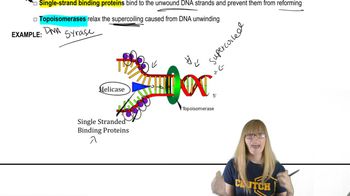
Steps to DNA Replication

Eukaryotic DNA Polymerases

Eukaryotic DNA polymerases are enzymes responsible for synthesizing new DNA strands during replication. They add nucleotides to a growing DNA chain at a rate of approximately 40 nucleotides per second. The efficiency and speed of these enzymes are critical for determining how many replication origins are necessary to complete the replication of a large genome within a specific timeframe.
추천 영상:
가이드 코스
09:16
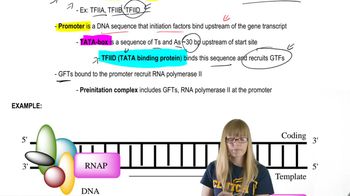
Eukaryotic Transcription

Origins of Replication

Origins of replication are specific sequences in the genome where DNA replication begins. In eukaryotic cells, multiple origins are required to ensure that the entire genome is replicated in a timely manner, especially in large genomes like that of Drosophila. The number of origins needed can be calculated based on the total length of the DNA, the replication rate, and the time available for replication.
추천 영상:
가이드 코스
14:31
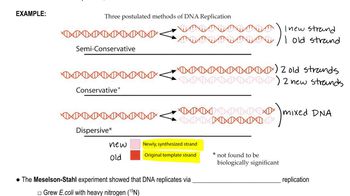
Semiconservative Replication