뒤로
뒤로
문제 37
In terms of the polycistronic composition of mRNAs and the presence or absence of Shine–Dalgarno sequences, compare and contrast bacterial, archaeal, and eukaryotic mRNAs.
문제 38a
Organisms of all three domains of life usually use the mRNA codon AUG as the start codon.
Do organisms of the three domains use the same amino acid as the initial amino acid in translation? Identify similarities and differences.
문제 38b
Organisms of all three domains of life usually use the mRNA codon AUG as the start codon.
Despite AUG being the most common start codon sequence, very few proteins have methionine as the first amino acid. Why is this the case?
문제 39a
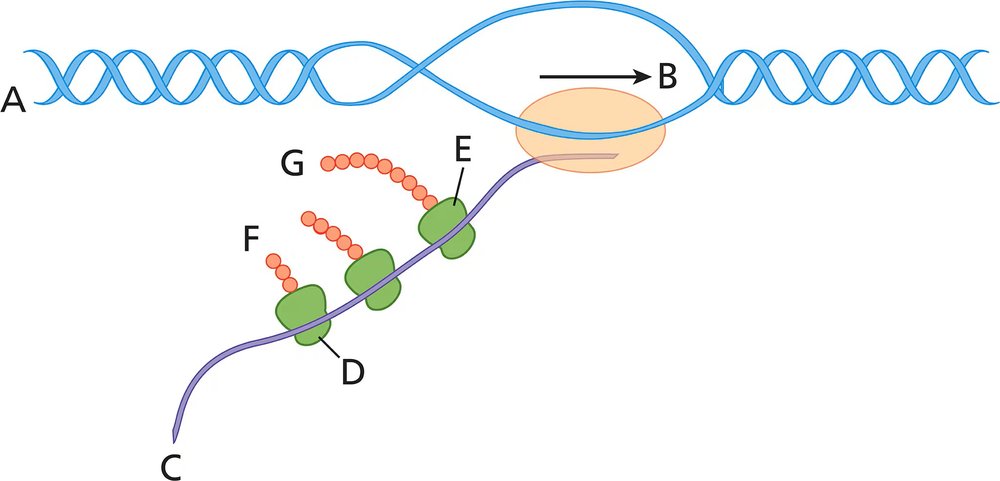
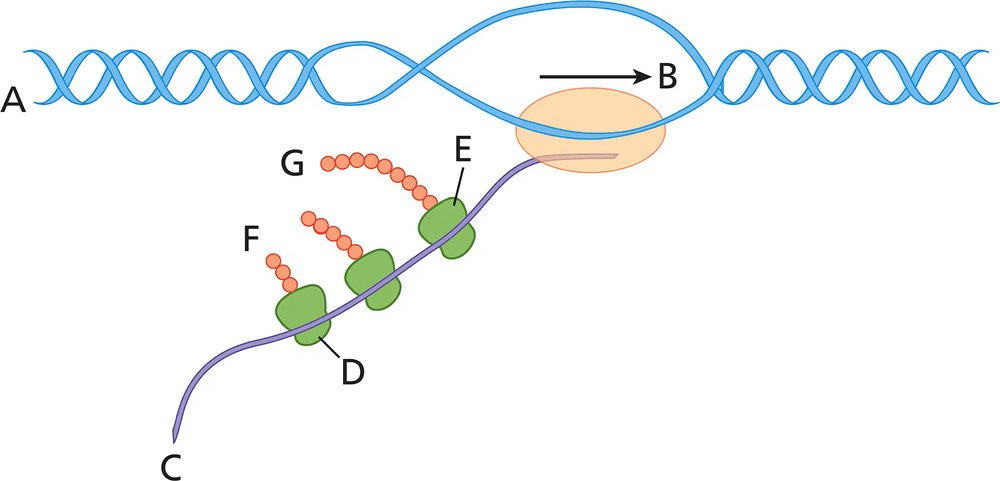
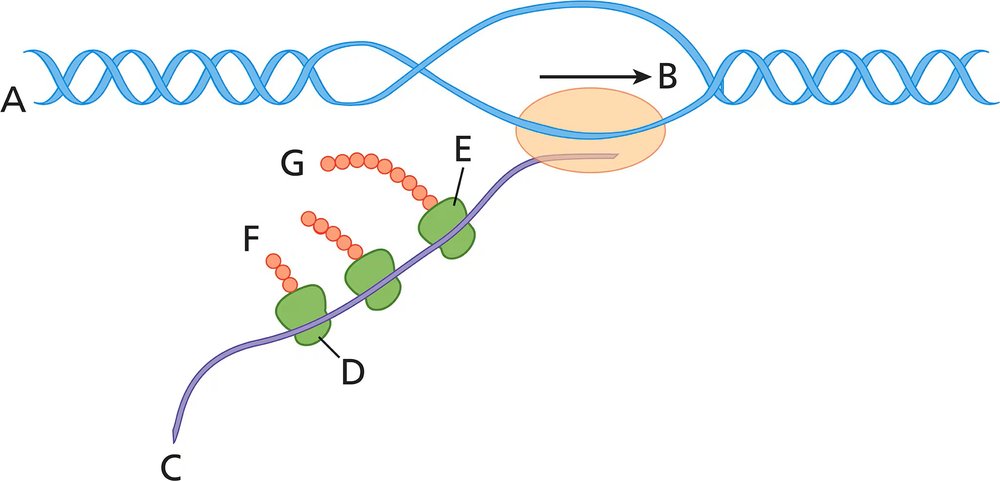
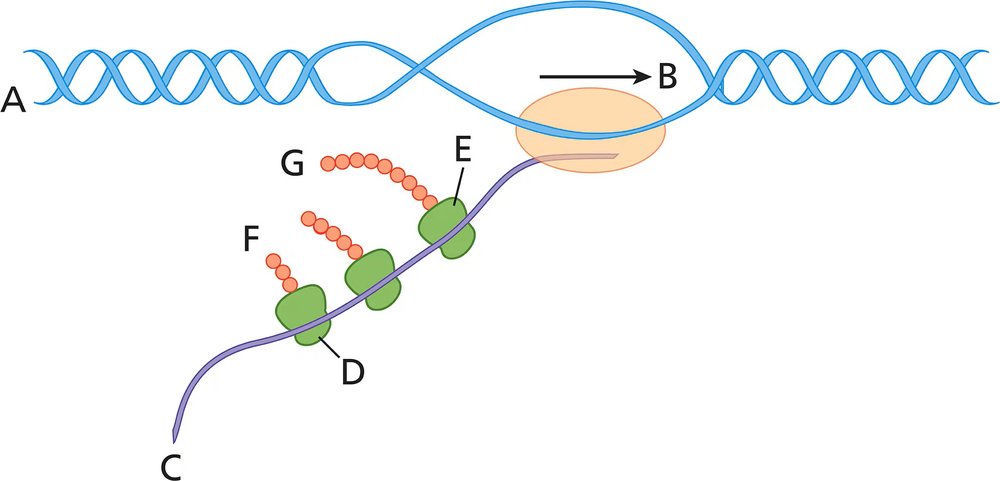
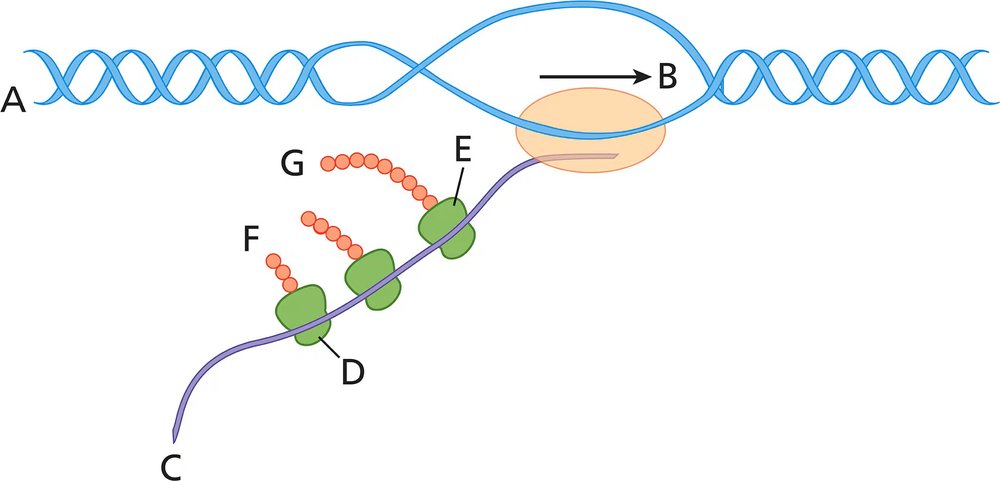
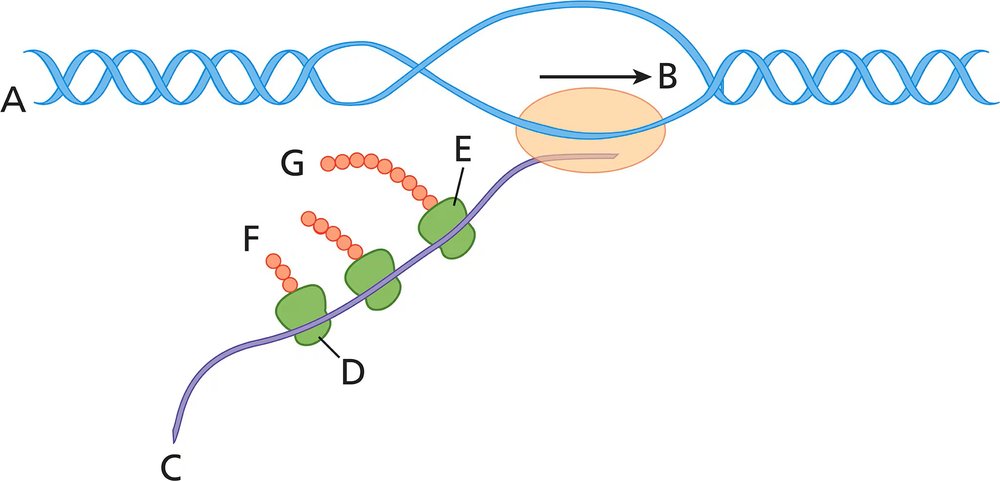
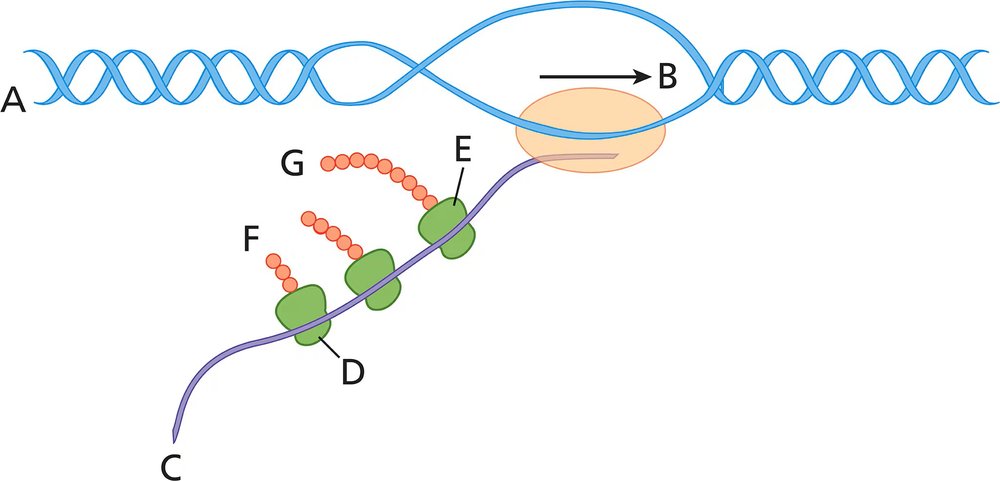
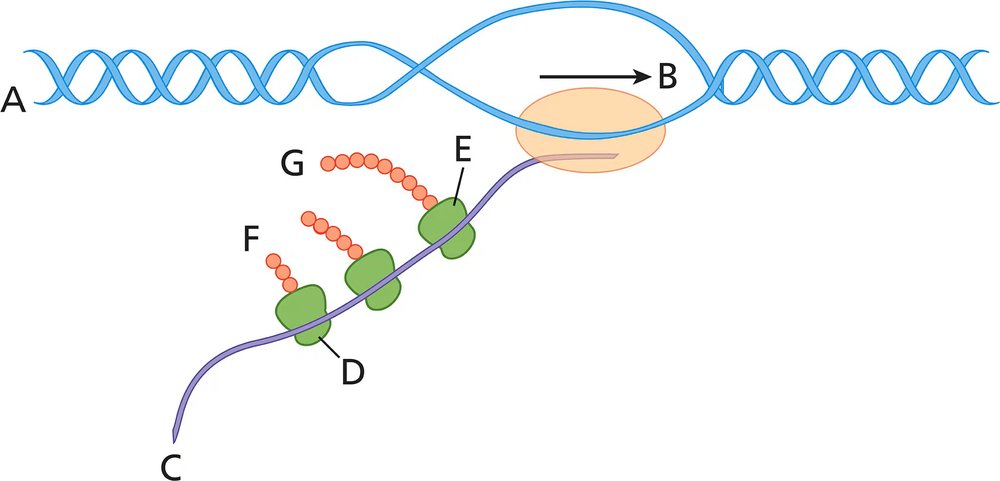
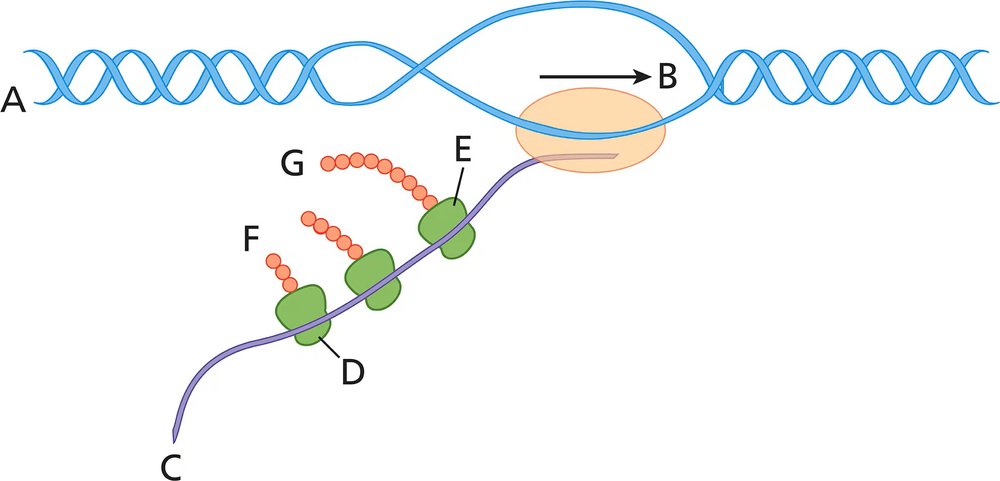
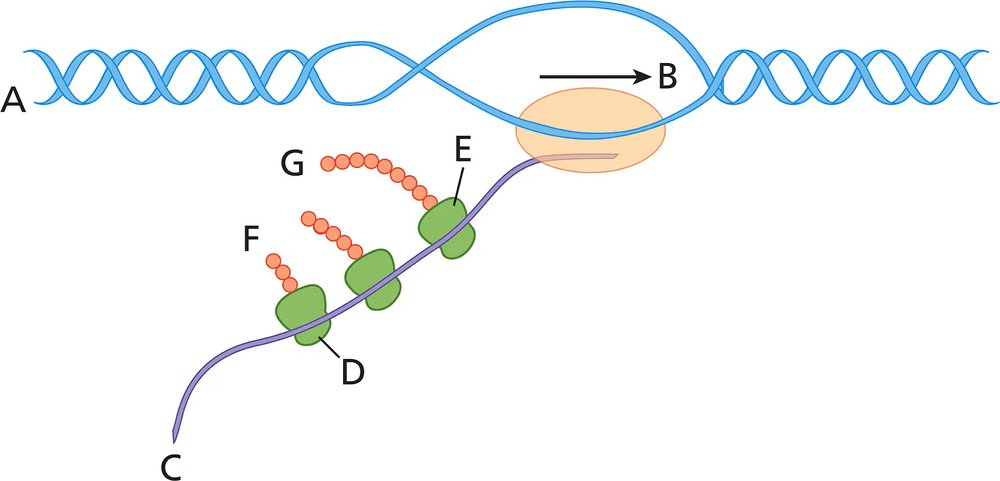
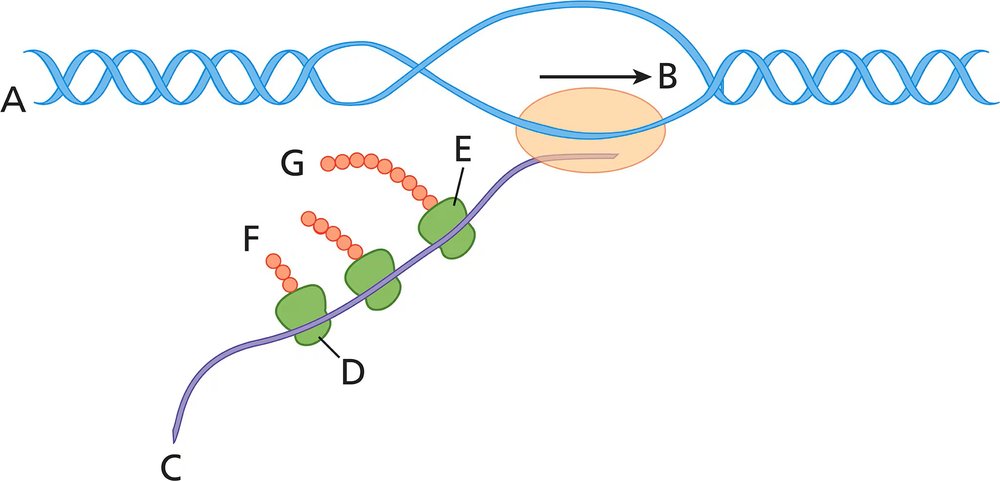
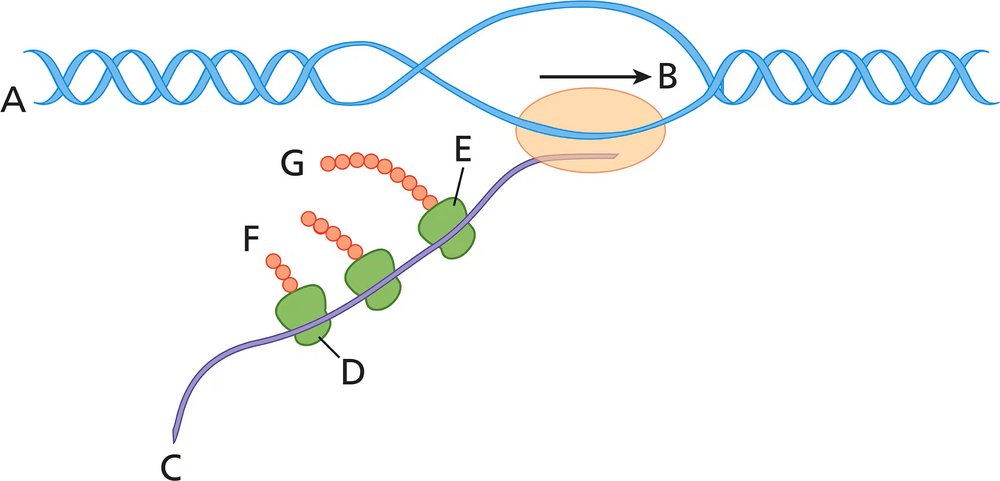
Answer the following questions about the accompanying diagram.
Is the DNA nearest A the template strand or the coding strand?
문제 39b
Answer the following questions about the accompanying diagram.
Which end of the DNA is closest to A?
문제 39c
Answer the following questions about the accompanying diagram.
What structure is closest to B?
문제 39d
Answer the following questions about the accompanying diagram.
What is the name of the molecule closest to C?
문제 39e
Answer the following questions about the accompanying diagram.
Which end of the molecule is closest to C?
문제 39f
Answer the following questions about the accompanying diagram.
What structure is closest to D? Be specific.
문제 39g
Answer the following questions about the accompanying diagram.
What structure is closest to E? Be specific.
문제 39h
Answer the following questions about the accompanying diagram.
What name is given to the object looking like a string of beads that is closest to F?
문제 39i
Answer the following questions about the accompanying diagram.
Indicate where fMet is located in the string to the right of G.
문제 39j
Answer the following questions about the accompanying diagram.
Which end of the polypeptide is closest to G?
문제 39k
Answer the following questions about the accompanying diagram.
What process(es) are illustrated in the diagram?
문제 39l
Answer the following questions about the accompanying diagram.
Does the diagram depict molecular activity in a bacterium or a eukaryote? Explain the reasoning for your answer.
문제 40a
For each of the following tRNA anticodon sequences, give the sequence of the corresponding codon sequence, the amino acid carried by the tRNA, and the corresponding DNA coding strand sequence and polarity.
3′-UAC-5′
문제 40b
For each of the following tRNA anticodon sequences, give the sequence of the corresponding codon sequence, the amino acid carried by the tRNA, and the corresponding DNA coding strand sequence and polarity.
3′-CCU-5′
문제 40c
For each of the following tRNA anticodon sequences, give the sequence of the corresponding codon sequence, the amino acid carried by the tRNA, and the corresponding DNA coding strand sequence and polarity.
3′-AUG-5′
문제 41
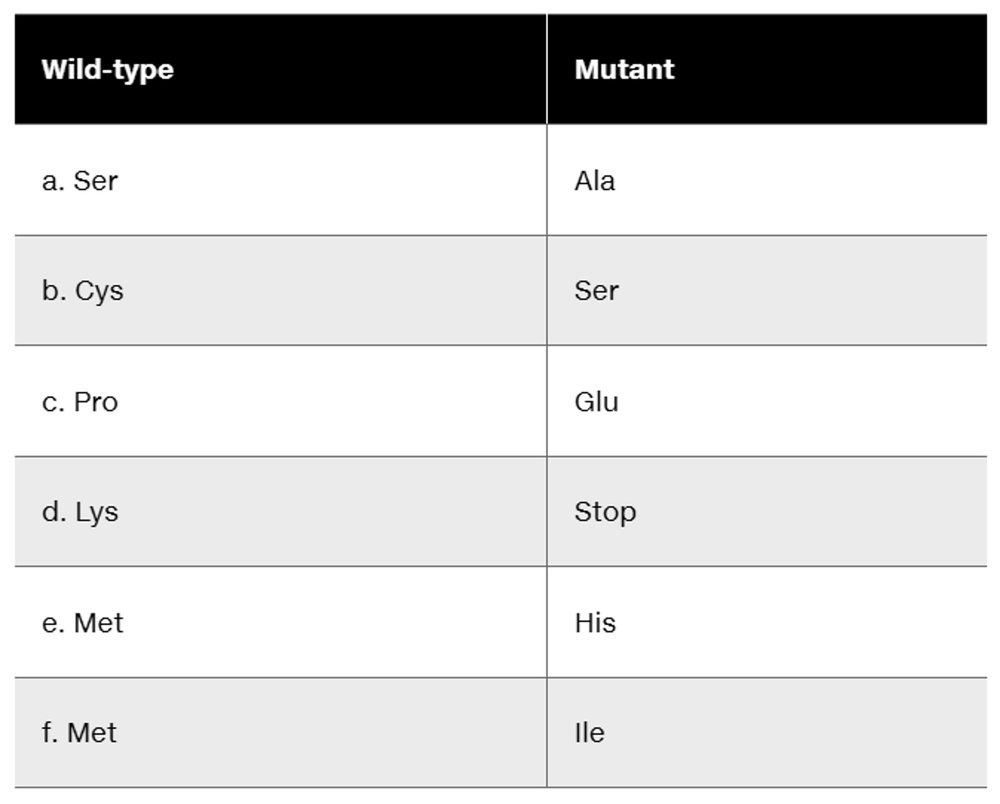
Base-substitution mutations often change the amino acid specified by a codon. For each of the amino acid changes listed, determine which ones can result from a one–base-pair substitution. For those that can result from a one–base-pair substitution, give the possible wild-type and mutant codons, listing multiple possibilities if there is more than one option.
문제 42
For the sequences given in the following list, indicate whether DNA replication, transcription, pre-mRNA processing, or translation will be most immediately affected by deletion of the sequence. As precisely as you can, specify what step of the process is directly affected by the deletion.
a. start codon
b. TATA box
c. 5' splice site
d. ori sequence
e. -10 consensus sequence
f. Shine–Dalgarno sequence
g. 5' cap
h. termination sequence