Ch.10 Proteins Workers of the Cell
Frost - General, Organic and Biological Chemistry 4th Edition
Frost4th EditionGeneral, Organic and Biological ChemistryISBN: 9780134988696당신이 사용하는 게 아니라요?교과서 변경
6장, 문제 4c

Draw the structure for each of the following amino acids and put an asterisk (*) next to any chiral carbon centers in your structure:
c. methionine

검증된 단계별 안내
1
Step 1: Understand the structure of methionine. Methionine is an amino acid with the molecular formula C5H11NO2S. It contains an amino group (-NH2), a carboxyl group (-COOH), a side chain with a sulfur atom (-CH2CH2SCH3), and a central alpha carbon.
Step 2: Draw the general structure of an amino acid. Start with the central alpha carbon (Cα) bonded to four groups: the amino group (-NH2), the carboxyl group (-COOH), a hydrogen atom (H), and the side chain specific to methionine (-CH2CH2SCH3).
Step 3: Identify the chiral center. A chiral carbon is a carbon atom bonded to four different groups. In methionine, the alpha carbon (Cα) is bonded to the amino group, carboxyl group, hydrogen atom, and the side chain (-CH2CH2SCH3), making it a chiral center.
Step 4: Place an asterisk (*) next to the alpha carbon in your structure to indicate it is a chiral center. Ensure the structure clearly shows the connectivity of all groups.
Step 5: Verify the structure. Double-check that the drawn structure includes all atoms and bonds correctly, and confirm that the alpha carbon is the only chiral center in methionine.

비슷한 문제에 대한 검증된 영상 답변:

이 영상 해법은 위 문제에 도움이 된다고 튜터들이 추천한 것입니다.
영상 길이:
2m

주요 개념

질문에 올바르게 답하기 위해 반드시 이해해야 하는 핵심 개념들은 다음과 같습니다.

Amino Acid Structure

Amino acids are organic compounds that serve as the building blocks of proteins. Each amino acid consists of a central carbon atom (the alpha carbon) bonded to an amino group (-NH2), a carboxyl group (-COOH), a hydrogen atom, and a variable side chain (R group) that determines the specific properties of the amino acid.
추천 영상:
가이드 코스
3:03
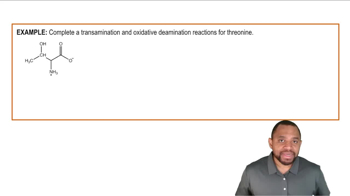
Amino Acid Catabolism: Amino Group Example 2

Chirality

Chirality refers to the geometric property of a molecule having a non-superimposable mirror image, much like left and right hands. In amino acids, chirality is often associated with the presence of a chiral carbon atom, which is a carbon atom bonded to four different groups. This property is crucial in biochemistry, as the chirality of amino acids can affect protein structure and function.
추천 영상:
가이드 코스
1:39
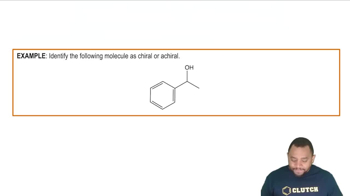
Chirality Example 1

Methionine

Methionine is one of the 20 standard amino acids and is characterized by its sulfur-containing side chain. It is classified as a non-polar, hydrophobic amino acid and is essential for protein synthesis. Methionine is also the first amino acid incorporated into a nascent polypeptide chain during translation, making it vital for the initiation of protein synthesis.
추천 영상:
가이드 코스
3:34
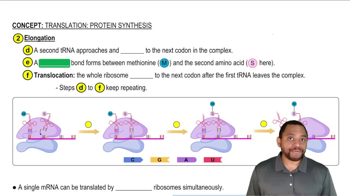
Translation: Protein Synthesis Concept 2