Ch.11 Nucleic Acids Big Molecules with a Big Role
Frost - General, Organic and Biological Chemistry 4th Edition
Frost4th EditionGeneral, Organic and Biological ChemistryISBN: 9780134988696당신이 사용하는 게 아니라요?교과서 변경
7장, 문제 76b

In sickle-cell anemia, a base substitution in the hemoglobin gene replaces glutamate (a polar amino acid) with valine. Why does the replacement of one amino acid cause such a drastic change in biological function?

검증된 단계별 안내
1
Understand the concept of amino acids and their properties: Amino acids are the building blocks of proteins, and their side chains (R groups) determine their chemical properties, such as polarity, charge, and hydrophobicity. Glutamate is polar and negatively charged, while valine is nonpolar and hydrophobic.
Recognize the importance of protein structure: Proteins have specific three-dimensional structures that are determined by the sequence and properties of amino acids. The substitution of glutamate with valine alters the chemical environment and interactions within the hemoglobin protein.
Explain the impact of polarity and hydrophobicity: Glutamate's polar nature allows it to interact with water and other polar molecules, maintaining the solubility and proper folding of hemoglobin. Valine, being nonpolar, disrupts these interactions, leading to aggregation of hemoglobin molecules.
Describe the biological consequences: The aggregation of hemoglobin molecules causes the red blood cells to deform into a sickle shape, reducing their ability to transport oxygen efficiently and leading to blockages in blood vessels.
Connect the molecular change to the disease: The single amino acid substitution drastically alters the hemoglobin's function and structure, demonstrating how even small genetic mutations can have significant effects on biological systems and health.

비슷한 문제에 대한 검증된 영상 답변:

이 영상 해법은 위 문제에 도움이 된다고 튜터들이 추천한 것입니다.
영상 길이:
5m

주요 개념

질문에 올바르게 답하기 위해 반드시 이해해야 하는 핵심 개념들은 다음과 같습니다.

Amino Acids and Their Properties

Amino acids are the building blocks of proteins, each with unique properties based on their side chains. Glutamate is a polar amino acid, which means it can interact well with water, while valine is non-polar and hydrophobic. This difference in polarity affects how proteins fold and function, as the environment around them influences their structure.
추천 영상:
가이드 코스
3:03
Amino Acid Catabolism: Amino Group Example 2

Protein Structure and Function

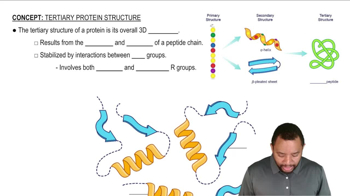
Proteins have four levels of structure: primary, secondary, tertiary, and quaternary. The primary structure is the sequence of amino acids, which determines the protein's overall shape and function. A single amino acid substitution, like glutamate to valine, can disrupt the protein's folding and stability, leading to altered biological functions, as seen in sickle-cell anemia.
추천 영상:
가이드 코스
2:07
Tertiary Protein Structure Concept 1

Sickle-Cell Anemia Pathophysiology

Sickle-cell anemia is a genetic disorder caused by a mutation in the hemoglobin gene, leading to the production of abnormal hemoglobin (HbS). This altered hemoglobin causes red blood cells to deform into a sickle shape under low oxygen conditions, resulting in blockages in blood vessels, pain, and reduced oxygen delivery. The drastic change in function stems from the altered properties of the hemoglobin molecule due to the amino acid substitution.
추천 영상:
가이드 코스
0:50
Cell Membranes Concept 1