Ch.11 Nucleic Acids Big Molecules with a Big Role
Frost - General, Organic and Biological Chemistry 4th Edition
Frost4th EditionGeneral, Organic and Biological ChemistryISBN: 9780134988696당신이 사용하는 게 아니라요?교과서 변경
7장, 문제 51

Describe how restriction enzymes are used in recombinant DNA technology.

검증된 단계별 안내
1
Restriction enzymes, also known as restriction endonucleases, are proteins that cut DNA at specific sequences called recognition sites. These sites are typically palindromic, meaning the sequence reads the same forward and backward.
In recombinant DNA technology, restriction enzymes are used to cut both the DNA of interest (e.g., a gene) and the vector DNA (e.g., a plasmid) at matching recognition sites, creating complementary sticky ends or blunt ends.
Sticky ends are single-stranded overhangs that can pair with complementary sequences, facilitating the insertion of the DNA fragment into the vector. Blunt ends, while less efficient, can also be joined using ligases.
After the DNA fragment is inserted into the vector, DNA ligase is used to seal the nicks in the sugar-phosphate backbone, creating a stable recombinant DNA molecule.
The recombinant DNA molecule can then be introduced into host cells (e.g., bacteria) through a process called transformation, where it is replicated and expressed, allowing for the production of the desired protein or study of the gene.

비슷한 문제에 대한 검증된 영상 답변:

이 영상 해법은 위 문제에 도움이 된다고 튜터들이 추천한 것입니다.
영상 길이:
1m
도움이 되었나요?

주요 개념

질문에 올바르게 답하기 위해 반드시 이해해야 하는 핵심 개념들은 다음과 같습니다.

Restriction Enzymes

Restriction enzymes, also known as restriction endonucleases, are proteins that cut DNA at specific sequences. They are essential tools in molecular biology, allowing scientists to manipulate DNA by cutting it into manageable fragments. Each enzyme recognizes a particular sequence of nucleotides, enabling precise editing of genetic material.
추천 영상:
가이드 코스
2:14
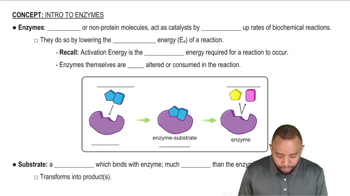
Intro to Enzymes Concept 1

Recombinant DNA Technology

Recombinant DNA technology involves combining DNA from different sources to create new genetic combinations. This process typically includes the use of restriction enzymes to cut DNA and ligases to join the fragments. The resulting recombinant DNA can be introduced into host cells, allowing for the expression of new traits or the production of proteins.
추천 영상:
가이드 코스
5:08
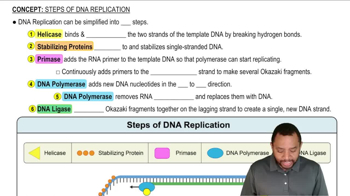
Steps of DNA Replication Concept 1

Cloning Vectors

Cloning vectors are DNA molecules used to transport foreign genetic material into a host cell. Common vectors include plasmids, which are small circular DNA molecules, and viral vectors. These vectors contain essential elements such as origin of replication and selectable markers, facilitating the replication and identification of recombinant DNA within the host organism.