Ch.12 Food as Fuel An Overview of Metabolism
Frost - General, Organic and Biological Chemistry 4th Edition
Frost4th EditionGeneral, Organic and Biological ChemistryISBN: 9780134988696당신이 사용하는 게 아니라요?교과서 변경
8장, 문제 91

In what organ does the urea cycle take place?

검증된 단계별 안내
1
Understand that the urea cycle is a series of biochemical reactions that produce urea ((NH2)2CO) from ammonia (NH3).
Recognize that the urea cycle is crucial for removing excess nitrogen from the body, which is primarily generated from the breakdown of amino acids.
Identify the organ responsible for detoxifying ammonia by converting it into urea, which is less toxic and can be excreted in urine.
Recall that the liver is the primary organ where the urea cycle takes place.
Conclude that the liver plays a central role in nitrogen metabolism and detoxification through the urea cycle.

비슷한 문제에 대한 검증된 영상 답변:

이 영상 해법은 위 문제에 도움이 된다고 튜터들이 추천한 것입니다.
영상 길이:
2m

주요 개념

질문에 올바르게 답하기 위해 반드시 이해해야 하는 핵심 개념들은 다음과 같습니다.

Urea Cycle

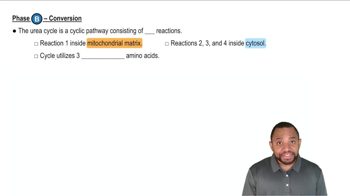
The urea cycle is a series of biochemical reactions that convert ammonia, a toxic byproduct of protein metabolism, into urea, which can be safely excreted in urine. This cycle is essential for detoxifying ammonia in the body and maintaining nitrogen balance.
추천 영상:
가이드 코스
0:51
The Urea Cycle Concept 3

Liver Function

The liver is the primary organ responsible for the urea cycle. It plays a crucial role in metabolizing proteins and detoxifying harmful substances, making it vital for overall metabolic health. The liver's ability to process ammonia into urea is essential for preventing toxicity.
추천 영상:
가이드 코스
02:16
Logarithmic Functions

Nitrogen Excretion

Nitrogen excretion is the process by which the body eliminates excess nitrogen, primarily derived from amino acids. The urea cycle is the main pathway for this excretion, allowing the body to convert harmful ammonia into urea, which is then excreted through the kidneys.
추천 영상:
가이드 코스
3:16
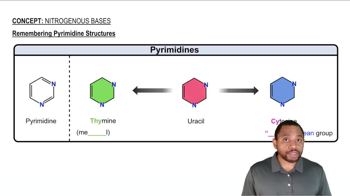
Nitrogenous Bases Concept 2