Ch.15 Lipids
Timberlake - Chemistry: An Introduction to General, Organic, and Biological Chemistry 13th Edition
Timberlake13th EditionChemistry: An Introduction to General, Organic, and Biological ChemistryISBN: 9780134421353당신이 사용하는 게 아니라요?교과서 변경
15장, 문제 48

Draw the structure for cholesterol.

검증된 단계별 안내
1
Understand that cholesterol is a complex organic molecule classified as a steroid. It contains a characteristic four-ring structure known as the steroid nucleus, along with additional functional groups.
Begin by drawing the steroid nucleus, which consists of three six-membered rings (labeled A, B, and C) fused together, and one five-membered ring (labeled D) fused to ring C.
Add the hydroxyl (-OH) group at the 3rd carbon of ring A. This is a key functional group in cholesterol.
Include the hydrocarbon side chain attached to the 17th carbon of ring D. This side chain consists of a branched alkyl group.
Ensure that all double bonds and stereochemistry are correctly represented. Cholesterol has a double bond between carbons 5 and 6 in ring B, and specific stereochemistry at various carbon atoms, which must be accurately depicted.

비슷한 문제에 대한 검증된 영상 답변:

이 영상 해법은 위 문제에 도움이 된다고 튜터들이 추천한 것입니다.
영상 길이:
1m
도움이 되었나요?

주요 개념

질문에 올바르게 답하기 위해 반드시 이해해야 하는 핵심 개념들은 다음과 같습니다.

Cholesterol Structure

Cholesterol is a sterol, a type of lipid molecule characterized by a four-ring carbon structure known as the steroid nucleus. This structure includes three six-membered carbon rings and one five-membered carbon ring, which is essential for its biological function. The presence of a hydroxyl group (-OH) at one end makes cholesterol amphipathic, allowing it to interact with both hydrophobic and hydrophilic environments.
추천 영상:
가이드 코스
1:01
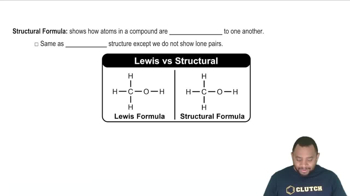
Structural Formula Concept 2

Hydrophobic and Hydrophilic Properties

Cholesterol's amphipathic nature means it has both hydrophobic (water-repelling) and hydrophilic (water-attracting) regions. The hydrophobic rings allow cholesterol to integrate into cell membranes, while the hydroxyl group interacts with the aqueous environment. This duality is crucial for maintaining membrane fluidity and stability, influencing how cells interact with their surroundings.
추천 영상:
가이드 코스
02:11
Chemical Properties Example 1

Biological Role of Cholesterol

Cholesterol plays a vital role in cellular function, serving as a precursor for steroid hormones, bile acids, and vitamin D. It is also essential for the formation of lipid rafts in cell membranes, which are involved in signaling and protein sorting. Understanding its structure helps elucidate its functions and implications in health and disease, particularly in cardiovascular health.
추천 영상:
가이드 코스
1:35
Steroids Example 1