Ch.16 Amino Acids, Proteins, and Enzymes
Timberlake - Chemistry: An Introduction to General, Organic, and Biological Chemistry 13th Edition
Timberlake13th EditionChemistry: An Introduction to General, Organic, and Biological ChemistryISBN: 9780134421353당신이 사용하는 게 아니라요?교과서 변경
16장, 문제 21c

What type of interaction would you expect between the R groups of the following amino acids in a tertiary structure?
c. serine and aspartate

검증된 단계별 안내
1
Identify the R groups of the amino acids: Serine has a hydroxyl (-OH) group in its side chain, making it polar, while aspartate has a carboxylate (-COO⁻) group, which is negatively charged and also polar.
Understand the nature of the interaction: Polar groups can interact through hydrogen bonding or ionic interactions. In this case, the hydroxyl group of serine can act as a hydrogen bond donor or acceptor, and the carboxylate group of aspartate can act as a hydrogen bond acceptor.
Determine the specific interaction: The hydroxyl group of serine can form a hydrogen bond with the negatively charged carboxylate group of aspartate. This is a hydrogen bonding interaction.
Consider the context of tertiary structure: In the folded protein, these interactions help stabilize the three-dimensional structure by bringing the side chains of serine and aspartate into close proximity.
Conclude the type of interaction: The interaction between the R groups of serine and aspartate in a tertiary structure is primarily a hydrogen bond, facilitated by the polar nature of their side chains.

비슷한 문제에 대한 검증된 영상 답변:

이 영상 해법은 위 문제에 도움이 된다고 튜터들이 추천한 것입니다.
영상 길이:
4m
도움이 되었나요?

주요 개념

질문에 올바르게 답하기 위해 반드시 이해해야 하는 핵심 개념들은 다음과 같습니다.

Amino Acid R Groups

Amino acids have unique side chains known as R groups, which determine their chemical properties and interactions. These R groups can be polar, nonpolar, acidic, or basic, influencing how amino acids interact with each other in a protein's tertiary structure. Understanding the nature of these R groups is essential for predicting interactions in protein folding.
추천 영상:
가이드 코스
2:21
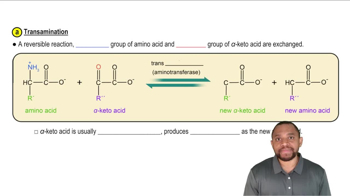
Amino Acid Catabolism: Amino Group Concept 2

Hydrogen Bonding

Hydrogen bonding is a type of weak interaction that occurs when a hydrogen atom covalently bonded to an electronegative atom, like oxygen or nitrogen, is attracted to another electronegative atom. In the context of serine and aspartate, the hydroxyl group of serine can form hydrogen bonds with the carboxyl group of aspartate, stabilizing the tertiary structure of proteins.
추천 영상:
가이드 코스
1:22
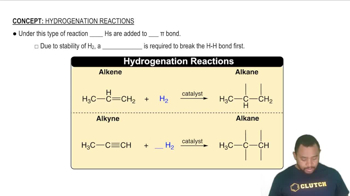
Hydrogenation Reactions Concept 1

Ionic Interactions

Ionic interactions occur between charged R groups of amino acids, such as the negatively charged aspartate and the positively charged groups of other amino acids. These interactions can significantly influence protein structure and stability, as they help to hold the tertiary structure together by attracting oppositely charged groups.
추천 영상:
가이드 코스
02:33
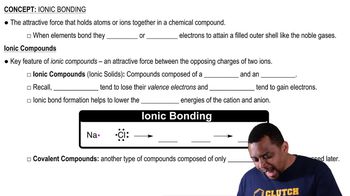
Ionic Bonding Concept 1