뒤로
뒤로
문제 31a
What is the reactant for each of the following enzymes?
a. galactase
문제 33c
What is the name of the class of enzymes that would catalyze each of the following reactions?
c. converting glucose (C6H12O6) to fructose (C6H12O6).
문제 34a
What is the name of the class of enzymes that would catalyze each of the following reactions?
a. addition of water to a double bond
문제 34c
What is the name of the class of enzymes that would catalyze each of the following reactions?
c. splitting peptide bonds in proteins
문제 35a
Match the terms (1) enzyme–substrate complex, (2) enzyme, and (3) substrate with each of the following:
a. has a tertiary structure that recognizes the substrate
문제 35b
Match the terms (1) enzyme–substrate complex, (2) enzyme, and (3) substrate with each of the following:
b. the combination of an enzyme with the substrate
문제 36a
Match the terms (1) active site, (2) lock-and-key model, and (3) induced-fit model with each of the following:
a. the portion of an enzyme where catalytic activity occurs
문제 37a
Write an equation that represents an enzyme-catalyzed reaction.
문제 37b
How is the active site different from the whole enzyme structure?
문제 38b
After the products have formed, what happens to the enzyme?
문제 39
What are isoenzymes?
문제 40
How is the LDH isoenzyme in the heart different from the LDH isoenzyme in the liver?
문제 41
A patient arrives in an emergency department complaining of chest pains. What enzymes would you test for in the blood serum?
문제 43a
Trypsin, a peptidase that hydrolyzes polypeptides, functions in the small intestine at an optimum pH of 7.7 to 8.0. How is the rate of a trypsin-catalyzed reaction affected by each of the following conditions?
a. changing the pH to 3.0
문제 43b
Trypsin, a peptidase that hydrolyzes polypeptides, functions in the small intestine at an optimum pH of 7.7 to 8.0. How is the rate of a trypsin-catalyzed reaction affected by each of the following conditions?
b. running the reaction at 75 °C
문제 44a
Pepsin, a peptidase that hydrolyzes proteins, functions in the stomach at an optimum pH of 1.5 to 2.0. How is the rate of a pepsin-catalyzed reaction affected by each of the following conditions?
a. changing the pH to 5.0
문제 45
The following graph shows the activity versus pH curves for pepsin, sucrase, and trypsin. Estimate the optimum pH for each.
<IMAGE>
문제 46a
Refer to the graph in problem 16.45 to determine if the reaction rate in each condition will be at the optimum rate or not.
<IMAGE>
a. trypsin, pH 5.0
문제 47a
Indicate whether each of the following describes a competitive or a noncompetitive enzyme inhibitor:
a. The inhibitor has a structure similar to the substrate.
문제 47d
Indicate whether each of the following describes a competitive or a noncompetitive enzyme inhibitor:
d. The structure of the inhibitor is not similar to the substrate.
문제 48a
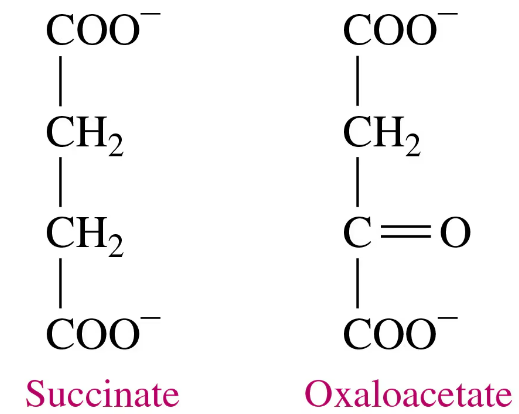
Oxaloacetate is an inhibitor of succinate dehydrogenase.
a. Would you expect oxaloacetate to be a competitive or a noncompetitive inhibitor? Why?
문제 49b
Methanol and ethanol are oxidized by alcohol dehydrogenase. In methanol poisoning, ethanol is given intravenously to prevent the formation of formaldehyde that has toxic effects.
b. Would ethanol compete for the active site or bind to a different site?
문제 50a
In humans, the antibiotic amoxicillin (a type of penicillin) is used to treat certain bacterial infections.
a. Does the antibiotic inhibit enzymes in humans?
문제 50c
In humans, the antibiotic amoxicillin (a type of penicillin) is used to treat certain bacterial infections.
c. Is amoxicillin a reversible or irreversible inhibitor?
문제 55a
Ethylene glycol (HO—CH2—CH2—OH) is a major component of antifreeze. If ingested, it is first converted to HOOC—CHO (oxoethanoic acid) and then to HOOC—COOH (oxalic acid), which is toxic.
<IMAGE>
a. What class of enzyme catalyzes the reactions described?
문제 55b
Ethylene glycol (HO—CH2—CH2—OH) is a major component of antifreeze. If ingested, it is first converted to HOOC—CHO (oxoethanoic acid) and then to HOOC—COOH (oxalic acid), which is toxic.
<IMAGE>
b. The treatment for the ingestion of ethylene glycol is an intravenous solution of ethanol. How might this help prevent toxic levels of oxalic acid in the body?
문제 56a
Adults who are lactose intolerant cannot break down the disaccharide in milk products. To help digest dairy food, a product known as Lactaid can be added to milk and the milk then refrigerated for 24 hours.
<IMAGE>
a. What enzyme is present in Lactaid, and what is the major class of this enzyme?
문제 56b
Adults who are lactose intolerant cannot break down the disaccharide in milk products. To help digest dairy food, a product known as Lactaid can be added to milk and the milk then refrigerated for 24 hours.
<IMAGE>
b. What might happen to the enzyme if the Lactaid were stored at 55 °C?
문제 58a
Fresh pineapple contains the enzyme bromelain that hydrolyzes peptide bonds in proteins.
<IMAGE>
a. The directions for a gelatin (protein) dessert say not to add fresh pineapple. However, canned pineapple where pineapple is heated to high temperatures can be added. Why?
문제 58b
Fresh pineapple contains the enzyme bromelain that hydrolyzes peptide bonds in proteins.
<IMAGE>
b. Fresh pineapple is used in a marinade to tenderize tough meat. Why?