Ch.18 Metabolic Pathways and ATP Production
Timberlake - Chemistry: An Introduction to General, Organic, and Biological Chemistry 13th Edition
Timberlake13th EditionChemistry: An Introduction to General, Organic, and Biological ChemistryISBN: 9780134421353당신이 사용하는 게 아니라요?교과서 변경
18장, 문제 17

What coenzyme picks up hydrogen when a carbon–carbon double bond is formed?

검증된 단계별 안내
1
Understand the context of the question: Coenzymes are molecules that assist enzymes in catalyzing reactions. In this case, the question refers to a reaction where a carbon–carbon double bond is formed, which typically involves the removal of hydrogen atoms (dehydrogenation).
Recall the role of coenzymes in redox reactions: Coenzymes like NAD⁺ (nicotinamide adenine dinucleotide) or FAD (flavin adenine dinucleotide) often act as electron carriers, picking up hydrogen atoms during oxidation reactions.
Identify the specific coenzyme involved: In reactions where a carbon–carbon double bond is formed, such as in the dehydrogenation of alkanes to alkenes, FAD is commonly the coenzyme that picks up hydrogen atoms.
Explain the mechanism: FAD accepts two hydrogen atoms (one proton and one hydride ion) to form FADH₂. This process helps stabilize the reaction and facilitates the formation of the double bond.
Summarize the answer: The coenzyme that picks up hydrogen when a carbon–carbon double bond is formed is FAD, which is reduced to FADH₂ in the process.

비슷한 문제에 대한 검증된 영상 답변:

이 영상 해법은 위 문제에 도움이 된다고 튜터들이 추천한 것입니다.
영상 길이:
3m
도움이 되었나요?

주요 개념

질문에 올바르게 답하기 위해 반드시 이해해야 하는 핵심 개념들은 다음과 같습니다.

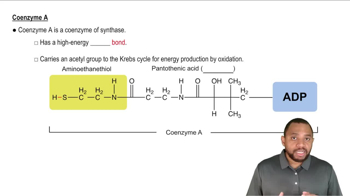
Coenzymes

Coenzymes are organic molecules that assist enzymes in catalyzing reactions. They often act as carriers for chemical groups or electrons during metabolic processes. In the context of biochemical reactions, coenzymes are crucial for facilitating the transfer of atoms or functional groups, thereby enhancing the efficiency of enzymatic activity.
추천 영상:
가이드 코스
1:02
Coenzyme A Concept 4

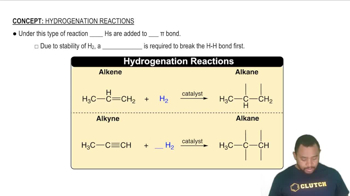
Hydrogenation

Hydrogenation is a chemical reaction that involves the addition of hydrogen (H2) to a carbon–carbon double bond, converting it into a single bond. This process is significant in organic chemistry and biochemistry, as it alters the saturation of organic compounds, impacting their reactivity and stability. Understanding hydrogenation is essential for grasping how certain coenzymes function in metabolic pathways.
추천 영상:
가이드 코스
1:22
Hydrogenation Reactions Concept 1

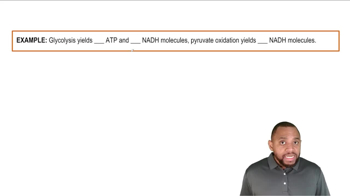
NADH

NADH (Nicotinamide adenine dinucleotide) is a key coenzyme in cellular metabolism that plays a vital role in redox reactions. It acts as an electron carrier, picking up hydrogen ions and electrons during metabolic processes, particularly in the conversion of substrates in glycolysis and the citric acid cycle. In the context of hydrogenation, NADH is often involved in the reduction of double bonds, making it essential for understanding the biochemical pathways that involve these reactions.
추천 영상:
가이드 코스
2:21
Total Energy From Glucose Example 1