Ch.15 Lipids
Timberlake - Chemistry: An Introduction to General, Organic, and Biological Chemistry 14th Edition
Timberlake14th EditionChemistry: An Introduction to General, Organic, and Biological ChemistryISBN: 9781292472249당신이 사용하는 게 아니라요?교과서 변경
15장, 문제 63

Where are proteins located in cell membranes?

검증된 단계별 안내
1
Proteins in cell membranes are located in specific regions based on their function and structure. They can be classified as integral (embedded within the membrane) or peripheral (attached to the surface).
Integral proteins span the lipid bilayer and are embedded within the hydrophobic core of the membrane. These proteins often have hydrophobic regions that interact with the fatty acid tails of the phospholipids.
Some integral proteins are transmembrane proteins, meaning they extend across the entire membrane, with portions exposed on both the extracellular and intracellular sides.
Peripheral proteins are located on the surface of the membrane, either on the extracellular or intracellular side. They are not embedded in the lipid bilayer but are instead attached to the membrane via interactions with integral proteins or the polar heads of phospholipids.
The specific location of proteins in the membrane is determined by their amino acid composition, hydrophobicity, and the functional role they play, such as transport, signaling, or structural support.

비슷한 문제에 대한 검증된 영상 답변:

이 영상 해법은 위 문제에 도움이 된다고 튜터들이 추천한 것입니다.
영상 길이:
3m
도움이 되었나요?

주요 개념

질문에 올바르게 답하기 위해 반드시 이해해야 하는 핵심 개념들은 다음과 같습니다.

Cell Membrane Structure

The cell membrane, also known as the plasma membrane, is primarily composed of a phospholipid bilayer with embedded proteins. This structure creates a semi-permeable barrier that regulates the movement of substances in and out of the cell. The arrangement of lipids and proteins allows for fluidity and flexibility, essential for various cellular functions.
추천 영상:
가이드 코스
1:00
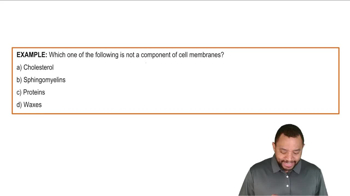
Cell Membranes Example 1

Integral and Peripheral Proteins

Proteins in the cell membrane can be classified as integral or peripheral. Integral proteins span the membrane and are involved in transport and communication, while peripheral proteins are attached to the membrane's surface and play roles in signaling and maintaining the cell's shape. Understanding these distinctions is crucial for grasping how proteins function within the membrane.
추천 영상:
가이드 코스
2:01
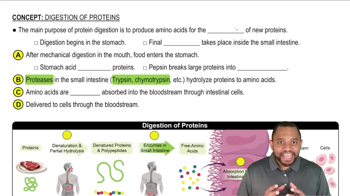
Digestion of Proteins Concept 1

Membrane Fluidity

Membrane fluidity refers to the viscosity of the lipid bilayer, which affects how proteins and lipids move within the membrane. Factors such as temperature, lipid composition, and the presence of cholesterol influence fluidity. This property is vital for the proper functioning of membrane proteins, as it allows them to interact with other molecules and facilitates cellular processes like signaling and transport.
추천 영상:
가이드 코스
1:00
Cell Membranes Example 1