Ch.16 Amino Acids, Proteins, and Enzymes
Timberlake - Chemistry: An Introduction to General, Organic, and Biological Chemistry 14th Edition
Timberlake14th EditionChemistry: An Introduction to General, Organic, and Biological ChemistryISBN: 9781292472249당신이 사용하는 게 아니라요?교과서 변경
16장, 문제 81b

Consider the amino acids lysine, valine, and aspartate in an enzyme. State which of these amino acids have R groups that would:
b. be found in hydrophilic regions

검증된 단계별 안내
1
Understand the nature of the R groups (side chains) of the given amino acids: lysine, valine, and aspartate. The R group determines whether an amino acid is hydrophilic (water-loving) or hydrophobic (water-fearing).
Recall that hydrophilic amino acids have polar or charged R groups, which can interact with water molecules through hydrogen bonding or ionic interactions.
Analyze the R group of lysine: Lysine has a positively charged amino group (-NH₃⁺) in its side chain, making it hydrophilic because it can form ionic interactions with water.
Analyze the R group of valine: Valine has a nonpolar, hydrophobic alkyl side chain (isopropyl group), which does not interact well with water. Therefore, valine is not hydrophilic.
Analyze the R group of aspartate: Aspartate has a negatively charged carboxylate group (-COO⁻) in its side chain, making it hydrophilic because it can form ionic interactions with water.

비슷한 문제에 대한 검증된 영상 답변:

이 영상 해법은 위 문제에 도움이 된다고 튜터들이 추천한 것입니다.
영상 길이:
6m

주요 개념

질문에 올바르게 답하기 위해 반드시 이해해야 하는 핵심 개념들은 다음과 같습니다.

Amino Acid Properties

Amino acids have distinct properties based on their side chains (R groups), which influence their behavior in proteins. Hydrophilic amino acids, such as aspartate, typically contain polar or charged R groups that interact favorably with water, while hydrophobic amino acids, like valine, have nonpolar R groups that repel water.
추천 영상:
가이드 코스
3:03
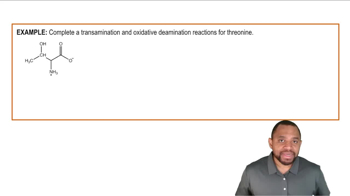
Amino Acid Catabolism: Amino Group Example 2

Hydrophilicity vs. Hydrophobicity

Hydrophilicity refers to the tendency of a molecule to interact with water, while hydrophobicity describes the tendency to avoid water. In proteins, hydrophilic amino acids are often found on the surface, interacting with the aqueous environment, whereas hydrophobic amino acids are usually buried within the protein structure, away from water.
추천 영상:
가이드 코스
3:33
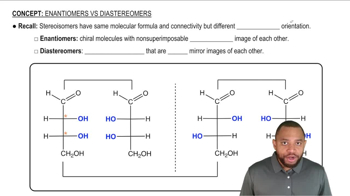
Enantiomers vs Diastereomers Concept 1

Enzyme Structure and Function

The structure of an enzyme is crucial for its function, as the arrangement of amino acids determines the enzyme's active site and overall stability. Understanding which amino acids are hydrophilic helps predict how the enzyme will interact with its environment and substrates, influencing its catalytic activity.
추천 영상:
가이드 코스
02:16
Logarithmic Functions