
교과서 질문
Match each of the following processes (1 to 5) with one of the items (a to e):
1. replication of DNA
a. DNA polymerase
b. mRNA is synthesized from nuclear DNA
c. viruses
d. restriction enzymes
e. tRNA molecules bond to codons
582
views
 검증된 단계별 안내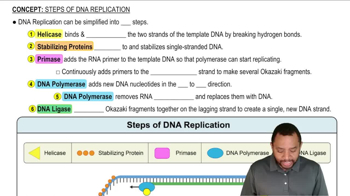
 5:08
5:08
 1:40
1:40Match each of the following processes (1 to 5) with one of the items (a to e):
1. replication of DNA
a. DNA polymerase
b. mRNA is synthesized from nuclear DNA
c. viruses
d. restriction enzymes
e. tRNA molecules bond to codons
Match each of the following processes (1 to 5) with one of the items (a to e):
2. transcription
a. amino acids are linked together
b. RNA template is used to synthesize DNA
c. helicase unwinds DNA
d. genetic information is transferred from DNA
e. sticky ends join new DNA segment
Match each of the following processes (1 to 5) with one of the items (a to e):
1. replication of DNA
a. amino acids are linked together
b. RNA template is used to synthesize DNA
c. helicase unwinds DNA
d. genetic information is transferred from DNA
e. sticky ends join new DNA segment
A polypeptide contains 36 amino acids. How many nucleotides would be found in the mRNA for this polypeptide?
Endorphins are polypeptides that reduce pain. What is the amino acid order for the endorphin leucine enkephalin (leu-enkephalin), which has the following mRNA?
AUG UAC GGU GGA UUU CUA UAA
Endorphins are polypeptides that reduce pain. What is the amino acid order for the endorphin methionine enkephalin (met-enkephalin), which has the following mRNA?
AUG UAC GGU GGA UUU AUG UAA