Ch.18 Metabolic Pathways and ATP Production
Timberlake - Chemistry: An Introduction to General, Organic, and Biological Chemistry 14th Edition
Timberlake14th EditionChemistry: An Introduction to General, Organic, and Biological ChemistryISBN: 9781292472249당신이 사용하는 게 아니라요?교과서 변경
18장, 문제 84

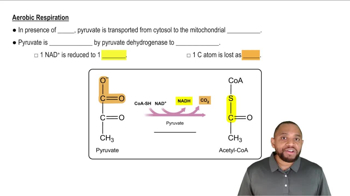
When pyruvate is used to form acetyl CoA, the product has only two carbon atoms. What happened to the third carbon?

검증된 단계별 안내
1
Understand the context: Pyruvate is a three-carbon molecule that undergoes a process called oxidative decarboxylation to form acetyl CoA, which is a two-carbon molecule. This reaction is catalyzed by the pyruvate dehydrogenase complex.
Recognize the key chemical change: During the conversion of pyruvate to acetyl CoA, one carbon atom is removed from pyruvate in the form of carbon dioxide (CO₂). This is why acetyl CoA has only two carbon atoms.
Identify the role of decarboxylation: The removal of the carbon atom as CO₂ is an example of a decarboxylation reaction, which is a common type of reaction in metabolic pathways.
Understand the fate of the third carbon: The carbon atom that is removed as CO₂ is released as a waste product during cellular respiration. This CO₂ can eventually be exhaled by the organism.
Connect to the bigger picture: This reaction is a critical step in the metabolic pathway, as acetyl CoA enters the citric acid cycle (Krebs cycle) to further produce energy in the form of ATP.

비슷한 문제에 대한 검증된 영상 답변:

이 영상 해법은 위 문제에 도움이 된다고 튜터들이 추천한 것입니다.
영상 길이:
3m

주요 개념

질문에 올바르게 답하기 위해 반드시 이해해야 하는 핵심 개념들은 다음과 같습니다.

Pyruvate Decarboxylation

Pyruvate decarboxylation is a crucial metabolic process that occurs in the mitochondria, where pyruvate, a three-carbon compound derived from glucose, is converted into acetyl CoA, a two-carbon molecule. During this reaction, one carbon atom is removed from pyruvate in the form of carbon dioxide (CO2), which is released as a byproduct. This step is essential for linking glycolysis to the citric acid cycle.
추천 영상:
가이드 코스
1:38
Pyruvate Oxidation Concept 2

Acetyl CoA

Acetyl CoA is a central metabolite in cellular respiration, formed from the decarboxylation of pyruvate. It serves as a key substrate for the citric acid cycle, where it combines with oxaloacetate to form citrate, initiating a series of reactions that produce energy. Acetyl CoA is also involved in fatty acid synthesis and other metabolic pathways, highlighting its importance in energy metabolism.
추천 영상:
가이드 코스
1:33
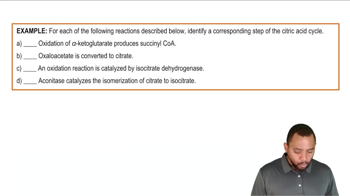
Phase B - Succinyl CoA Formation Example 2

Carbon Loss in Metabolism

The loss of carbon during metabolic processes, such as the conversion of pyruvate to acetyl CoA, is a common occurrence in cellular respiration. This loss typically manifests as carbon dioxide, which is a waste product of aerobic respiration. Understanding this concept is vital for grasping how organisms convert food into energy while also regulating carbon balance in biological systems.
추천 영상:
가이드 코스
0:52
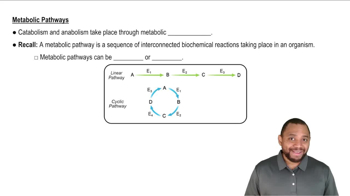
Metabolic Pathways Concept 2