Ch.18 Metabolic Pathways and ATP Production
Timberlake - Chemistry: An Introduction to General, Organic, and Biological Chemistry 14th Edition
Timberlake14th EditionChemistry: An Introduction to General, Organic, and Biological ChemistryISBN: 9781292472249당신이 사용하는 게 아니라요?교과서 변경
18장, 문제 98c

Which of the following molecules will produce the most ATP per mole?
c. two acetyl CoA or one palmitic acid (C16)

검증된 단계별 안내
1
Understand the context: ATP production is linked to the breakdown of molecules during cellular respiration. Acetyl CoA enters the citric acid cycle, while palmitic acid undergoes beta-oxidation before entering the cycle.
Step 1: Calculate ATP yield for two acetyl CoA molecules. Each acetyl CoA produces ATP through the citric acid cycle. Determine the number of ATP molecules generated per acetyl CoA, including contributions from NADH, FADH2, and GTP.
Step 2: Calculate ATP yield for one palmitic acid (C16). Palmitic acid undergoes beta-oxidation, which breaks it into multiple acetyl CoA molecules. Determine how many acetyl CoA molecules are produced from one palmitic acid and calculate the ATP yield from beta-oxidation itself.
Step 3: Add the ATP yield from beta-oxidation to the ATP yield from the citric acid cycle for all acetyl CoA molecules generated by palmitic acid. This gives the total ATP yield for one palmitic acid molecule.
Step 4: Compare the total ATP yield from two acetyl CoA molecules to the total ATP yield from one palmitic acid molecule. The molecule with the higher ATP yield per mole is the answer.

비슷한 문제에 대한 검증된 영상 답변:

이 영상 해법은 위 문제에 도움이 된다고 튜터들이 추천한 것입니다.
영상 길이:
4m
도움이 되었나요?

주요 개념

질문에 올바르게 답하기 위해 반드시 이해해야 하는 핵심 개념들은 다음과 같습니다.

ATP Production

Adenosine triphosphate (ATP) is the primary energy currency of the cell, produced during cellular respiration. The amount of ATP generated from a molecule depends on its metabolic pathway, with fatty acids typically yielding more ATP than carbohydrates due to their higher carbon content and the efficiency of beta-oxidation.
추천 영상:
가이드 코스
2:20
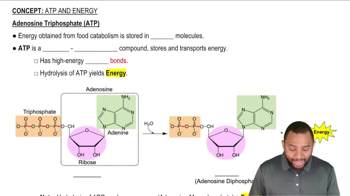
Adenosine Triphosphate (ATP) Concept 2

Beta-Oxidation

Beta-oxidation is the metabolic process by which fatty acids are broken down in the mitochondria to generate acetyl CoA. Each cycle of beta-oxidation shortens the fatty acid chain by two carbon atoms, producing NADH and FADH2, which are crucial for ATP production in the electron transport chain.
추천 영상:
가이드 코스
02:32
Characteristics of Beta Particles

Comparison of Molecules

When comparing the ATP yield from different molecules, it is essential to consider their structure and the number of carbon atoms. For instance, palmitic acid (C16) can produce more ATP than two acetyl CoA because it undergoes multiple cycles of beta-oxidation, leading to a greater overall yield of NADH and FADH2, which are converted to ATP.
추천 영상:
가이드 코스
01:13
Thermochemical Equations